


The British Gas EV tariff currently offers a cheaper overnight rate from 12am to 5am every day. British Gas says it works with any EV and home charger, but you need a smart electricity meter and Direct Debit.
The British Gas EV tariff gives EV owners a cheaper electricity rate overnight. That can make home charging less expensive, particularly for drivers who regularly charge at night. The tariff works alongside home EV chargers rather than requiring a British Gas charger. Your smart meter, charging habits and daytime electricity use also matter when deciding whether it suits your home.
Key Takeaways
- The cheaper rate applies to all household electricity used overnight, not only EV charging.
- You need an EV charged at home, a smart electricity meter and Direct Debit.
- The tariff works with different EV and charger brands, so you do not need a British Gas charger.
- The overall saving depends on how often you charge at home and how much electricity you use during the day.
What Is the British Gas EV Off-Peak Period?
The British Gas EV tariff gives you its cheaper electricity rate between 12am and 5am every day. British Gas currently publishes this overnight rate at 9p per kWh, although tariff rates can change and should be checked before switching.
During these five off peak hours, you can use the cheaper electricity to:
- Charge your EV
- Run a washing machine
- Operate a dishwasher
- Use a tumble dryer
- Power other household appliances
This means the tariff can work well for households that can shift several high use activities into the overnight period.
Electricity used outside the 12am–5am window is charged at the applicable daytime rate, so the 9p per kWh figure applies only to electricity used during the off peak period.
How Do You Use the British Gas EV Tariff?
Using the British Gas EV tariff involves a few simple steps. First, you need to qualify for the tariff, then switch your electricity account before planning how to use the cheaper overnight electricity.
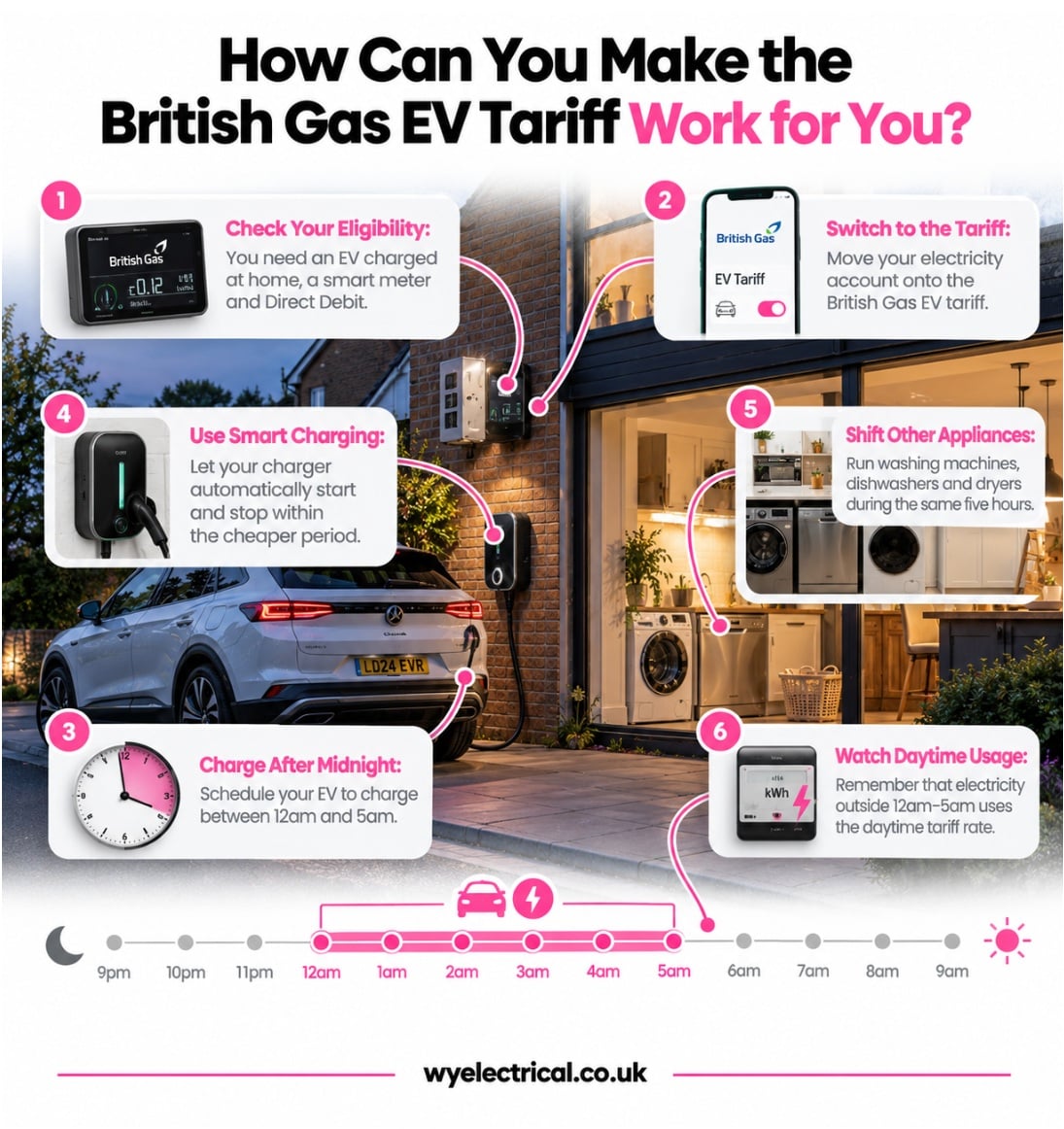
Check You Meet the Eligibility Requirements
Before switching, make sure you meet the basic requirements for the tariff.
You need an EV that you charge at home. British Gas may ask for proof of the vehicle.
You also need a smart electricity meter. British Gas says it can arrange a free smart meter installation if you do not already have one.
Payment by Direct Debit is also required.
Switch to the British Gas EV Tariff
Once you have confirmed your eligibility, the next step is moving your electricity account onto the EV tariff.
Existing British Gas customers can change tariff through their online account.
New customers need to join British Gas first. Their electricity account and smart meter must be set up before they can move onto the EV tariff.
Schedule Your EV Charging Overnight
Once the tariff is active, the easiest way to use it is to schedule your car to charge during the cheaper overnight period.
Your charger controls when the vehicle charges, while the tariff determines the electricity price at that time. A smart charger can automate this process, so charging starts after midnight and stops before the cheaper period ends.
Private smart charge points sold in Great Britain must include pre set off peak default charging hours. As per the guidance of GOV.UK on electric vehicle smart charge points, owners can accept, remove or change these default settings.
Use Other Appliances During the Cheap Period
The cheaper electricity can also be useful beyond EV charging. Once your car charging schedule is set, you can move other higher-use activities into the same overnight window.
This could include running a washing machine, dishwasher or tumble dryer. Doing so may help you make better use of the tariff.
Remember the Daytime Electricity Rate
Using the cheaper overnight period does not reduce the price of electricity at every other time. Electricity consumed during the rest of the day is charged at the tariff’s applicable daytime rate.
That means your overall savings depends on how much electricity you use during the cheaper hours compared with your daytime consumption.
Who Can Get the British Gas EV Tariff?
The standard British Gas EV tariff is available to households that have an EV charged at home, a smart electricity meter and a Direct Debit payment method. British Gas may also ask for proof that you have an eligible vehicle.
The tariff is not restricted to one EV brand or one charger manufacturer. Eligibility depends on your home, vehicle and electricity setup rather than buying a British Gas charging product.
Does the British Gas EV Tariff Work With Any EV Charger?
Yes, the standard British Gas EV tariff can work with different home charger brands. The tariff itself is not limited to a British Gas or Hive charger.
The key question is how each charger handles scheduled charging. Here are some common charger options to consider:
Can You Use a Zappi With the British Gas EV Tariff?
Yes, a myenergi Zappi can be used with the standard tariff.
The charger controls your charging schedule, while the tariff determines the electricity price at the time you use it. Our smart EV chargers page covers charger options that can support scheduled charging.
Can You Use an Ohme Charger?
Yes. An Ohme charger can be used alongside the standard British Gas EV tariff.
The important point is that your charger needs to let you control when the vehicle charges. That makes it easier to keep charging inside the cheaper overnight period.
Can You Use Wallbox, Pod Point or Other Chargers?
Yes. The standard tariff is not tied to a particular charger manufacturer.
Wallbox, Pod Point and other home charger brands can be used where the equipment is suitable for your vehicle and electrical installation. What matters is whether the charger can safely and practically manage your charging routine.
What Is the British Gas EV Tariff Rate?
The headline overnight rate is currently 9p per kWh, between 12am and 5am. That is the rate British Gas currently publishes, but energy tariffs can change, so check the live rate before switching.
For example, 30kWh of electricity used during the overnight period would cost about £2.70 at 9p per kWh. This is only an illustration and does not include the standing charge or any daytime electricity use.
It is also worth looking at the full tariff rather than focusing only on the night rate. Ofgem’s current benchmark for a standard default electricity tariff is 26.32p per kWh, with a 54.83p daily standing charge for 1 October to 31 December 2026.
How Much Could You Save With the British Gas EV Tariff?
There is no fixed savings figure. The benefit depends on how much electricity you use, how often you charge at home and how much of your charging happens during cheaper hours.
Your EV’s efficiency matters too. A driver covering high annual mileage and doing regular home charging can have a larger amount of electricity shifted into cheaper periods. Someone who charges only occasionally may see a smaller difference.
This type of tariff is still relatively uncommon. Research by Nesta on time of use tariff adoption found that around 91% of Great Britain households were on flat rate tariffs, compared with about 9% on time of use tariffs.
Electricity costs also remain an important consideration. UKERC’s research on electricity costs found that average domestic electricity bills increased in real terms from £643 to £968 over a decade. That makes it worth checking whether shifting more of your use into cheaper periods could work for your household.
How Does an EV Tariff Differ From a Standard Electricity Tariff?
The main difference is how the electricity price changes during the day. A standard flat rate tariff uses one unit rate, while an EV tariff can offer a cheaper period in return for different pricing outside it.
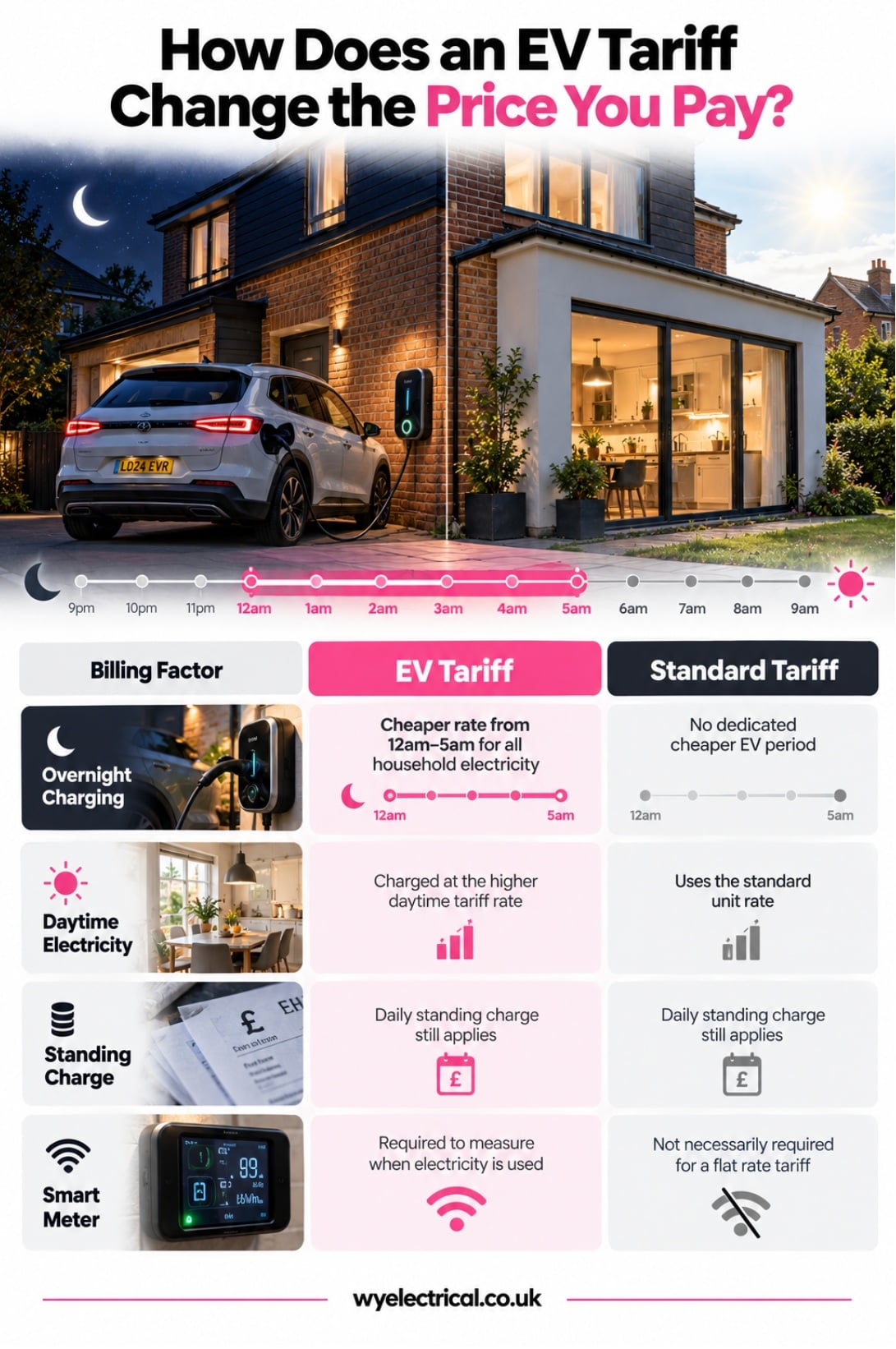
Off-Peak Electricity Rates
The EV tariff offers a specific cheaper period overnight.
A standard flat rate tariff does not normally give you a separate EV focused night rate in the same way.
Daytime Electricity Rates
The daytime rate matters because the cheaper overnight price does not apply all day.
British Gas says its daytime EV tariff rate is kept as close as possible to its normal electricity rates, but it is higher than the overnight rate.
Standing Charges
You still pay the daily standing charge on the tariff.
A low unit rate does not remove this fixed daily cost, so it needs to be included when comparing your likely total bill.
Smart Meter Requirements
A smart electricity meter is required for the British Gas EV tariff.
This allows electricity use to be measured according to when it happens, so the supplier can apply the appropriate rate to your consumption.
What Should You Consider Before Installing an EV Charger?
Before installing an EV charger, check that the equipment suits your car, electrical supply, parking space and charging routine. These factors can affect which charger you can install and how useful it will be.
Before choosing a charger, make sure you consider:
- The charging speed you need: Check how quickly your car needs to recharge during your normal charging window.
- Your home’s electrical supply: Make sure the installation can safely support the charger you want.
- Where the charger will be installed: Choose a position that works for the parking space and property layout.
- Cable routing and parking position: Plan where the car normally parks so the cable can reach it comfortably.
- Smart charging features: Look for scheduling and app controls if you want to make better use of an overnight tariff.
- Which EV tariffs you want to use: Check whether your chosen tariff has any charger specific conditions before buying equipment.
The IET Code of Practice for EV Charging Equipment Installation sets out technical guidance for the installation of EV charging equipment. This covers the electrical and installation considerations that need to be assessed before the charger is fitted.
Getting these points checked first helps you choose equipment that suits the vehicle, property and way you plan to charge.
Our home EV charger installation service can assess the property, electrical requirements and suitable charger options before installation.
Can Any Electric Car Be Charged at Home?
Yes. The British Gas EV tariff is designed for home charging and is not restricted to a particular EV manufacturer. Your car still needs to be compatible with the home charging equipment installed at the property.
The charger also needs to deliver power at a rate your vehicle can accept. For example, a 7kW home charger will not make an EV charge at 7kW if the car has a lower maximum AC charging rate.
Your charging setup matters too. The vehicle, charger, electrical installation and available supply all need to work together. That is why choosing a suitable home charger is important before relying on overnight charging.
FAQs
What time is the British Gas EV off-peak period?
The cheaper period currently runs from 12am to 5am every day.
How much is the British Gas EV tariff per kWh?
British Gas currently publishes 9p per kWh during the overnight period. Check the live tariff before switching.
Do I need a smart meter for the British Gas EV tariff?
Yes. British Gas requires a smart electricity meter for its EV tariff.
Can I use any EV charger with the British Gas EV tariff?
Yes. The standard tariff is not restricted to one home charger brand.
Do I need a British Gas charger to get the EV tariff?
No. You can use the standard tariff with different home EV charger brands.
Can I use the British Gas EV tariff with any electric car?
Yes, the tariff is designed for EV owners who charge their vehicles at home and is not restricted to a particular vehicle brand.
Conclusion
The British Gas EV tariff can suit drivers who regularly charge at home during cheaper overnight hours. It is not tied to one EV or charger brand, but the overall value depends on your charging habits, daytime use and full tariff costs.
Thinking about installing a home EV charger to make the most of an overnight tariff? Get a free quote and technical survey from our NICEIC approved electricians.
