

EV charger installation cost depends on the charger, cable route, electrical supply and extra work required. A property-specific quote confirms the final price, additional costs and any grant available.
The cost of installing an EV charger can vary widely from one UK home to another. The charger itself is only one part of the final bill. Cable length, electrical capacity, parking position and groundworks can all add to the cost. Some homes need little extra work. Others may need upgrades before home charging can begin.
Key Takeaways
- A domestic EV charger installation from Wye Electrical currently starts from £499, although the final cost depends on the property.
- Long cable routes, consumer unit upgrades, groundworks and additional electrical work can increase the installation price.
- The 2026 EV chargepoint grant covers 75% of eligible costs up to £500, but it is not available to people who own a house.
- The only reliable way to confirm the total installation cost is through a property specific electrical assessment and quote.
How Much Does EV Charger Installation Cost in the UK?
Current installer prices can start from around £499 for a standard installation, but this should not be treated as a national average.
The Department for Transport says its £500 chargepoint grant covers almost half the cost of a typical installation. That suggests a typical installation can be around £1,000 or more, although the actual price depends on the property and work required.
Cable length, electrical capacity, charger type, and any additional groundwork can all change the final cost.
Our EV charger installation service can assess the property and provide a quote based on the actual installation requirements.
What Are You Paying For When Installing an EV Charger?
Once the charger has been selected, the installation price covers more than simply fixing the unit to the wall. A proper quote can include the charger itself, fitting, testing, protective equipment and any additional work needed to connect it safely to the property’s electrical supply.
The table below shows what each part of the installation can involve:
| Cost Component | What It Covers | Cost Impact |
|---|---|---|
| Charger unit | Tethered or untethered charger and smart features | Depends on charger selected |
| Standard labour | Fitting, testing and commissioning | Included within the quoted installation where applicable |
| Cable run | Distance and route from consumer unit | Increases with length and difficulty |
| Consumer unit | Capacity check or replacement if required | Additional cost if an upgrade is needed |
| Earthing and protection | Protection equipment and open PEN requirements where applicable | Depends on existing setup |
| Groundworks | Trenching for detached or distant parking | Quoted case by case |
| Supply issues | DNO involvement, single phase or three phase requirements | Quoted case by case |
A proper installation quote should account for the charger, labour, cabling, testing, commissioning and certification. The installer will also normally handle registration with the Distribution Network Operator.
The installation must meet the relevant electrical safety requirements. According to the IET’s current BS 7671 wiring regulations update, BS 7671:2018+A4:2026 has now been published. As of October 2026, installers may work to Amendment 3:2024 or Amendment 4 until 15 October 2026.
That means compliance and certification should form part of the installation rather than being treated as an optional extra.
What Affects the Cost of Installing an EV Charger?
The final price can change significantly depending on the property and the charging setup you choose. A straightforward installation may need little beyond the standard fitting, while another home may require additional electrical work or a more complex installation route.
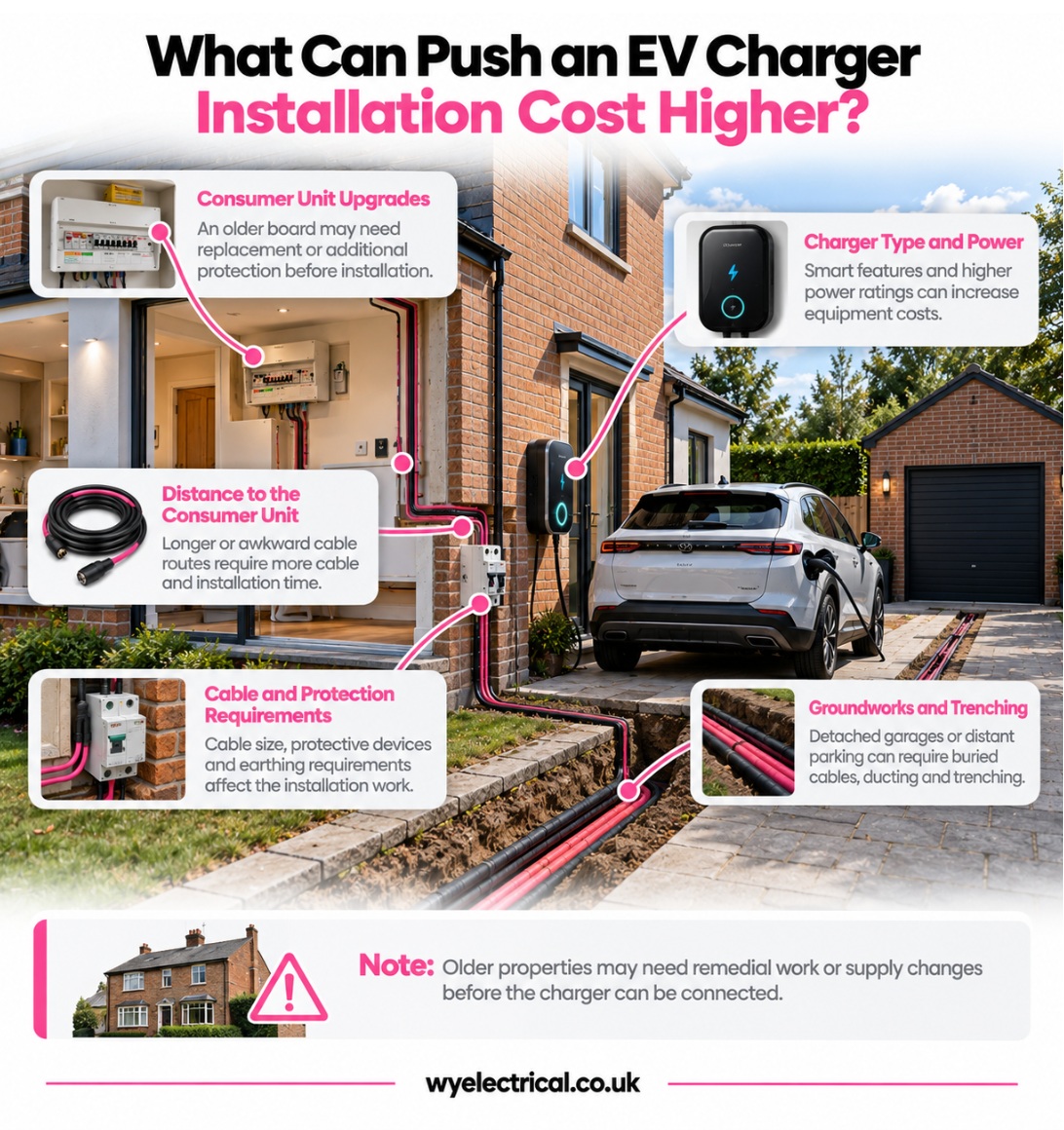
EV Charger Type and Power
Tethered and untethered chargers have different equipment requirements. Smart features can also affect the price, particularly where the charger includes scheduling, remote controls or energy management functions.
The charger also needs to suit the vehicle and the way you plan to charge. Choosing a higher-powered unit does not necessarily make every EV charge faster if the car has a lower charging limit.
Distance Between the Charger and Consumer Unit
A longer cable route usually means more cable and more installation time. Routes that pass around buildings, through walls or across awkward spaces can also require more work than a simple installation.
Consumer Unit Upgrades
The existing consumer unit needs enough capacity and suitable protection for the new charger. An upgrade may be needed where the unit is older, lacks space or does not provide the required protection.
Electrical Wiring and Cable Requirements
The cable size, protective devices and earthing arrangement need to suit the charger and installation. Open PEN protection may also be required depending on the electrical supply and equipment used.
Groundworks and Trenching
A charger positioned away from the property may need trenching and ducting to carry the cable safely. This can apply to detached garages, outbuildings or parking spaces at the end of a larger garden.
Additional Electrical Work
Older properties can need remedial work before a charger is installed. A supply assessment may also identify issues involving the DNO or whether the property uses single-phase or three-phase electricity.
How Much Does a 7kW EV Charger Cost to Install?
A 7kW home charger is a common choice for domestic charging, and Wye Electrical currently advertises installation from £499, subject to the property and installation requirements.
The independent UK charging cost and time benchmarks from the Energy Saving Trust give charging times from 20% at 7.4kW of around 3 hours 45 minutes for a 25kWh battery, 7 hours 45 minutes for 50kWh, 10 hours for 75kWh and 13 hours 30 minutes for 100kWh.
The same source puts a 220-mile charge at £17 at home, compared with £37 at a public fast charger and £53 at a public rapid charger. Petrol costs around £45 for the same distance.
According to Ofgem’s current electricity price cap, the October to December 2026 electricity rate averages 26.32p/kWh. At that rate, 60kWh of electricity would cost around £15.79 before standing charges.
Do I Need to Upgrade My Consumer Unit for an EV Charger?
No, you do not always need to upgrade your consumer unit for an EV charger. An assessment is needed to check whether the existing unit has enough capacity and the required protection.
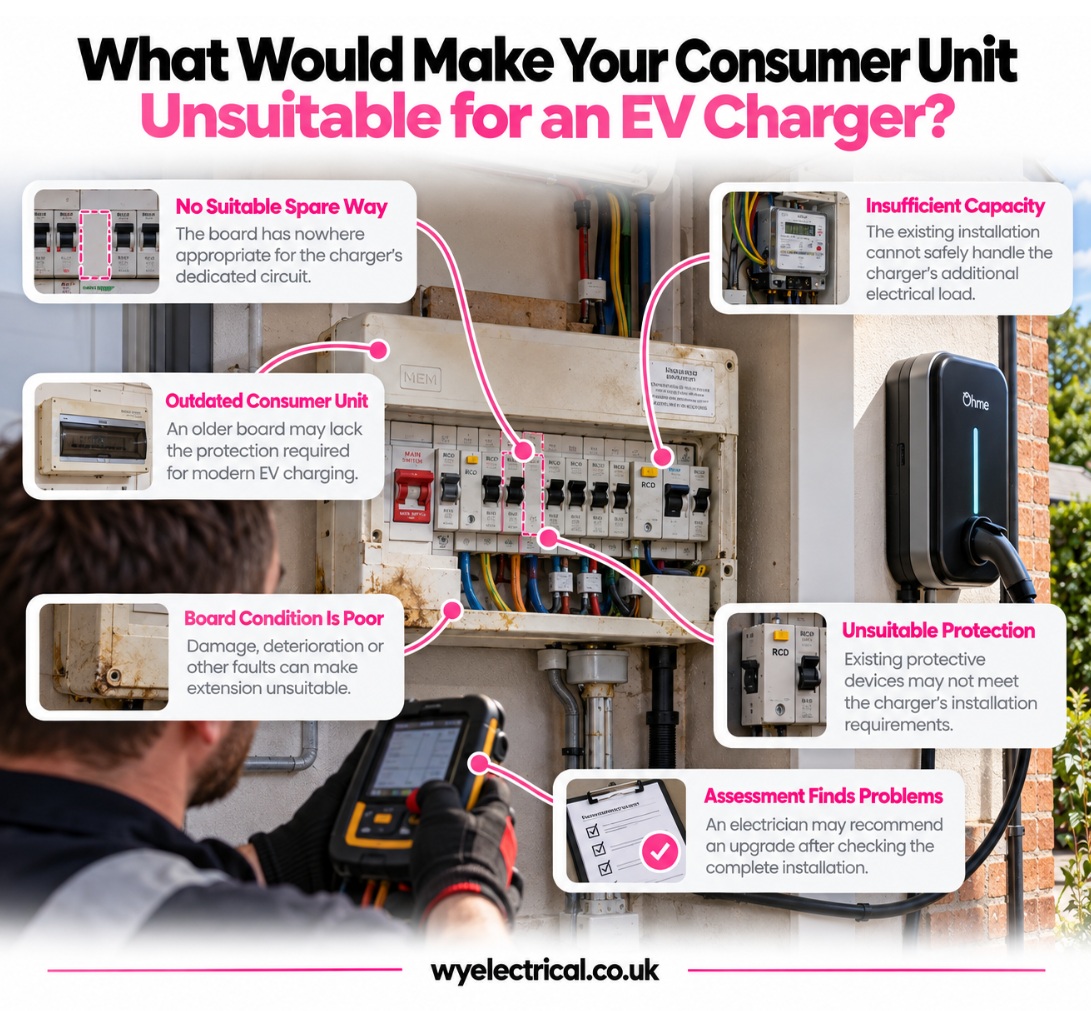
An upgrade may be needed where there is no suitable spare way, the unit is outdated or the existing protection does not meet the requirements of the charger.
Where an upgrade is required, Wye Electrical currently advertises consumer unit replacement from £299.
Many existing consumer units can support an EV charger. Only an electrical assessment can confirm whether yours is suitable and compliant.
Are There EV Charger Grants Available in 2026?
Yes, but the grant is not available to homeowners who own a house. It is aimed at people who own and live in a flat, including shared ownership, or rent a residential property.
According to the official EV chargepoint grant eligibility, the grant covers 75% of eligible purchase and installation costs up to £500 until 31 March 2027. Applicants also need eligible private off-street parking and an eligible vehicle.
The scheme excludes:
- People who own a house
- Lodgers
- People who have already claimed a previous EV chargepoint grant
- Properties where a chargepoint is already required by law
You may also need to provide evidence, such as a rental agreement.
The EV growth and off-street parking data from the Climate Change Committee shows that EVs on UK roads passed 2 million in the year to April 2026, while around one third of homes do not have off-street parking.
Does Installing an EV Charger Require Planning Permission?
Most home EV charger installations with suitable off-street parking do not need a planning application in England, provided the permitted development requirements are met.
Planning permission can become relevant for:
- Listed buildings
- Conservation areas
- On-street parking
- Properties without permitted development rights
Planning requirements also depend on the physical installation and where the charger is positioned.
Electrical compliance is a separate issue. Part P of the Building Regulations applies to electrical installations in dwellings, while work involving a new circuit or consumer unit replacement has specific building control requirements in England. Use a competent installer who can complete the required notifications and certification.
For homes without off-street parking, the position is changing. New permitted development rights for certain cross pavement charging solutions are due to come into force in England on 21 October 2026, but highway requirements and local authorisation still apply.
How Can You Get an EV Charger Installation Quote?
The only reliable way to know the real installation cost is to get a property-specific quote after the electrical setup and installation requirements have been assessed.
The assessment should consider the consumer unit, earthing, cable route and parking position. You should also decide which charger suits your vehicle, whether you want a tethered or untethered unit and whether smart charging features are important.
For a more accurate quote, have your postcode, parking position and clear photographs of the consumer unit ready. These details help the installer understand the property before the assessment.
FAQs
How much does it cost to install an EV charger at home in the UK?
Wye Electrical currently advertises domestic EV charger installation from £499. The final price depends on the charger, cable route and any additional work required.
How much does a 7kW EV charger cost to install?
A 7kW installation starts from £499 with Wye Electrical, subject to the property, charger and installation requirements.
Do EV chargers come with installation?
Some chargers are sold with installation packages, while others are supplied separately. Check exactly what the quoted price includes before buying.
Can I get a grant for an EV charger in 2026?
Yes, but the current household grant is for eligible renters and flat owners, not people who own a house.
Do I need to upgrade my consumer unit for an EV charger?
Not always. An electrician needs to assess the existing consumer unit to confirm whether it has enough capacity and suitable protection.
Can I install an EV charger without a driveway?
It is possible to charge an EV without a driveway, but different planning and highway requirements can apply to on street or cross pavement charging.
Conclusion
EV charger installation cost depends on the charger, cable route, consumer unit and any groundworks or additional electrical work required. The current grant is limited to eligible renters and flat owners. A property-specific assessment is the only reliable way to confirm the final price.
Get a free, no-obligation quote to find out what your installation will cost.
