
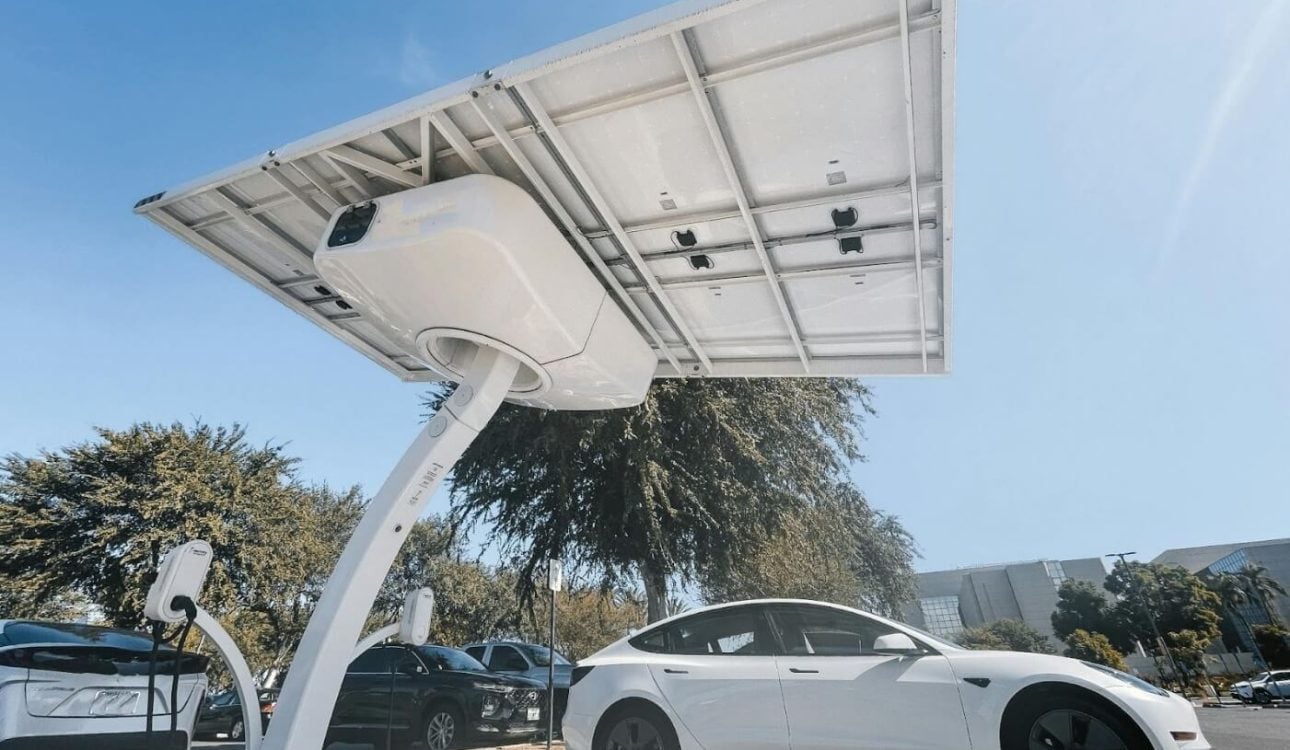

Yes, solar panels can charge electric vehicle batteries through a properly configured system. You’ll need solar panels, an inverter, and a smart EV charger. This setup converts sunlight into usable electricity, potentially saving £500-£900 annually on charging costs while providing sustainable, emissions-free driving.

Solar panels can indeed charge electric vehicle batteries, but not directly. The process requires a proper system setup that converts solar energy to the right type of electricity your EV can use. With rooftop solar panels connected to a smart EV charger, UK homeowners can power their cars using clean, renewable energy while significantly reducing charging costs. The right setup turns sunshine into driving miles, creating a truly sustainable transport solution.
Key Takeaways
- Solar panels can charge EVs with the right setup: solar panels, an inverter, and a smart solar-aware charger working together
- A typical 4 kWp system (10 panels) generates enough annual electricity to cover 8,000 miles of driving
- Annual savings of £500-£900 possible compared to public charging, with system payback in 7-10 years
How Solar EV Charging Works
Solar EV charging combines two technologies: photovoltaic (PV) solar panels and electric vehicle supply equipment (EVSE). The system creates a seamless flow of energy from the sun to your car.
Your roof-mounted solar panels capture sunlight and convert it into direct current (DC) electricity. This DC power travels to an inverter, which transforms it into alternating current (AC) that your home and EV charger can use. The smart EV charger then delivers this solar-generated electricity to your car.
For UK installations, you’ll need to comply with specific regulations, including EREC G98/G99 for grid connections and the Smart Charge Points Regulations. A typical home setup ranges from 3.6 to 6 kilowatts peak (kWp), which equates to approximately 9-15 modern solar panels.
| Component | Function | UK Considerations |
|---|---|---|
| Solar Panels | Convert sunlight to DC electricity | 3.6–6 kWp system (9–15 panels) typical for UK homes |
| Inverter | Converts DC to AC power | Must comply with G98/G99 standards |
| Smart EV Charger | Delivers electricity to vehicle | Must meet Smart Charge Points Regulations |
| Energy Meter/CT Clamps | Monitors energy flow | Essential for solar-aware charging |
The magic happens when these components work together. A well-designed system knows when you’re generating excess solar power and automatically directs it to your EV.
Smart Chargers and Solar Integration
Not all EV chargers can intelligently use solar power. You’ll need a “solar-aware” charger that communicates with your energy system to prioritise solar-generated electricity.
These smart chargers use current transformer (CT) clamps or Modbus energy meters to monitor electricity flow in your home. When your solar panels produce more power than your home is using, the charger automatically increases charging speed to utilise this free energy.
Leading Solar-Compatible Chargers in the UK
The UK market offers several excellent options for solar-aware charging:
- Myenergi Zappi features special ECO and ECO+ modes that detect and use surplus solar energy. The charger works with any EV and uses simple CT clamps to monitor energy flow.
- Rolec Zura supports solar integration through CT clamps or energy meters, with dynamic load management that adjusts charging based on available solar power.
- Elli Charger 2 (from VW Group) offers PV-surplus charging and even solar forecasting to optimise when your car charges. It can reduce charging power to as low as 1.4 kW to utilise even small amounts of solar surplus.
The best part? Because these chargers use standard Type 2 connections and control pilot signalling, they work with any modern electric vehicle regardless of brand.
Managing Your Energy Flow
Solar power isn’t constant. The sun doesn’t always shine in the UK, especially during the winter months. This reality means you need smart strategies to maximise solar EV charging.
A typical 4 kWp solar system in the UK generates around 3,000-3,400 kWh annually. For context, driving 8,000 miles in an average electric car requires approximately 2,300 kWh of energy.
Home Battery Storage
Adding a home battery system creates flexibility. During sunny periods, excess solar energy charges your battery instead of being exported to the grid. Later, when the sun isn’t shining but your car needs charging, you can draw from this stored solar energy.
UK households often find a 5-10 kWh battery complements their solar EV charging setup nicely. The battery acts as an energy buffer, capturing daytime solar production for evening charging sessions.
Smart Scheduling and Grid Backup
Smart chargers can schedule charging to align with peak solar production or cheaper off-peak grid rates. This intelligent approach ensures you’re always using the most cost-effective energy source.
During prolonged cloudy periods, your system automatically switches to grid power. Some smart tariffs offer extremely low overnight rates, making it economical to charge from the grid during these times and export your solar during peak price periods.

Real-World Performance and Requirements
How many solar panels do you need to charge your EV? This depends on several factors, including your driving habits, vehicle efficiency, and local solar conditions.
Most UK family EVs average 3-4 miles per kWh. For someone driving 8,000 miles yearly, this equals roughly 2,000-2,700 kWh of electricity needed annually.
In the UK, solar panels typically produce 800-1,100 kWh per kWp installed capacity each year. This means a 3 kWp system (about 8 panels) could theoretically generate enough electricity for your EV on an annual basis.
However, since solar production varies seasonally and daily, most households install larger systems of 3.6-6 kWp (9-15 panels) to better match real-world charging patterns.
| Driving Profile | Annual Mileage | Energy Needed | Recommended Solar Size |
|---|---|---|---|
| Light user | 5,000 miles | ~1,400 kWh | 2–3 kWp (5–8 panels) |
| Average commuter | 8,000 miles | ~2,300 kWh | 3–4 kWp (8–10 panels) |
| Heavy user | 12,000 miles | ~3,400 kWh | 4–6 kWp (10–15 panels) |
Real-world studies support these figures. Research from the University of Strathclyde found that a 200 kW solar array could fully offset charging for about 50 vehicles at a public hub, suggesting roughly 4 kW of solar per vehicle provides good coverage.
Cost Benefits and Considerations
Installing solar panels and an EV charger represents a significant investment that pays dividends over time.
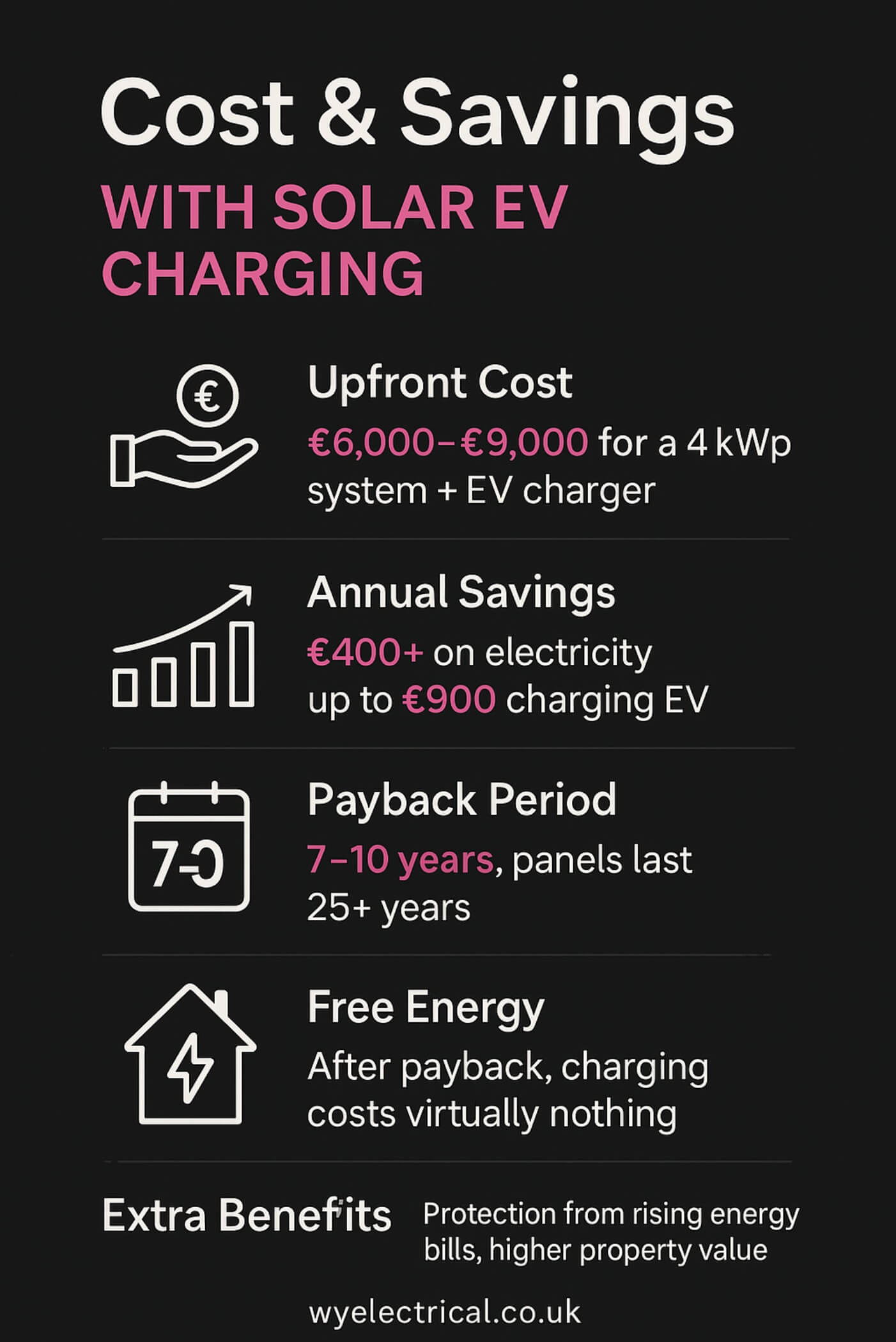
A typical 4 kWp solar system with EV charger installation costs between £6,000-£9,000 in the UK. This investment delivers multiple financial benefits.
The Energy Saving Trust estimates solar panels alone can save UK households over £400 annually on electricity bills. When used for EV charging, the savings increase substantially. Charging an EV with solar power costs effectively nothing once the system is paid for, compared to 28-40p per kWh at public chargers.
For a driver covering 8,000 miles yearly, solar charging could save £500-£900 annually compared to public charging, with payback periods typically between 7-10 years. Solar panels generally last 25+ years, providing many years of free energy after the payback period.
Beyond direct savings, solar EV charging provides protection against rising energy prices and can increase property values. Homes with solar panels and EV chargers are increasingly attractive to buyers as electric vehicles become mainstream.
Future-Ready Features
The solar EV charging landscape is evolving rapidly, with exciting new technologies on the horizon.
Vehicle-to-Grid (V2G) Technology
V2G technology allows your car to function as a power source, feeding electricity back to your home or the grid when needed. This bidirectional capability transforms your EV into a mobile energy storage system.
UK trials by Imperial College London demonstrated that each V2G charger could reduce annual grid operating costs by approximately £6,300 and avoid over 37 tonnes of CO₂ per year. The UK’s G99 standard already includes provisions for V2G connections, showing the country’s preparedness for this technology.
To implement V2G in your home, you’ll need a compatible vehicle, a bidirectional charger, and the appropriate grid connection agreement. The process typically takes about 62 days for approval, according to data from the Electric Nation V2G trial.
Conclusion
Solar EV charging represents the perfect marriage of renewable energy and sustainable transport. While it requires thoughtful planning and initial investment, the environmental benefits and long-term savings make it incredibly worthwhile for many UK homeowners.
So, if you’re ready, our expert team at West Yorkshire Electrical can design and install a complete solar EV charging solution tailored to your specific needs. We’ll help you navigate the transition to truly sustainable transport. Contact us today for a free consultation and join the growing community of solar-powered EV drivers.
FAQs
Do I need a special charger to use solar power?
Yes, for optimal solar integration, you’ll need a smart charger with solar-aware capabilities like the myenergi Zappi, Rolec Zura, or Elli Charger 2. These chargers can detect and prioritise solar energy.
Can solar-only charging work completely off-grid?
Technically, yes, but practically challenging in the UK climate. You’d need a substantial solar array and large battery storage to ensure reliable year-round charging without grid backup.
How long does it take to charge an EV with solar panels?
With a 4 kWp solar system generating at full capacity (approximately 3.2 kW after inverter losses), you could add roughly 10-12 miles of range per hour of charging. A full charge of a 60 kWh battery would take multiple days of good sunshine.
What happens on cloudy days or at night?
Smart systems automatically switch to grid power when solar isn’t available. If you have a home battery, the system will use stored solar energy before drawing from the grid.
