
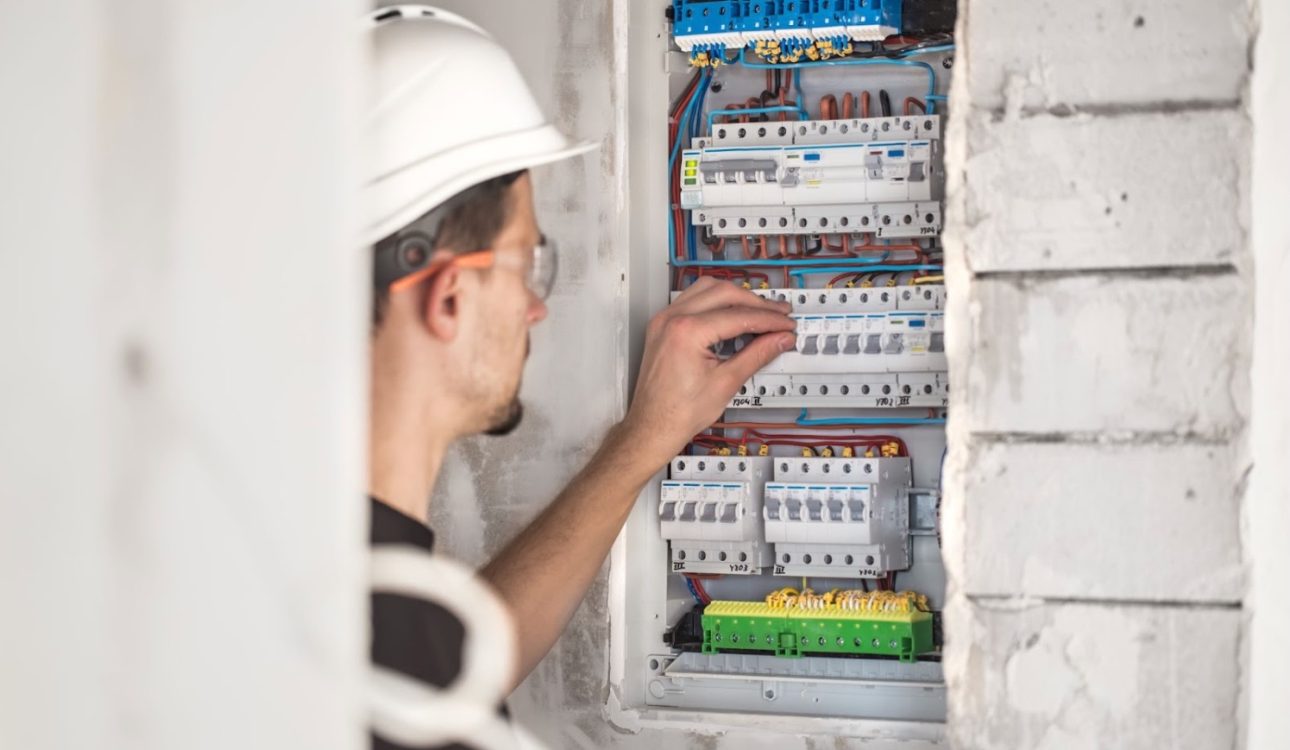

RCD trips indicate electrical faults from faulty appliances, moisture, damaged wiring, or cumulative leakage. Unplug devices systematically to identify problems. Call electricians for persistent issues or burning smells immediately.
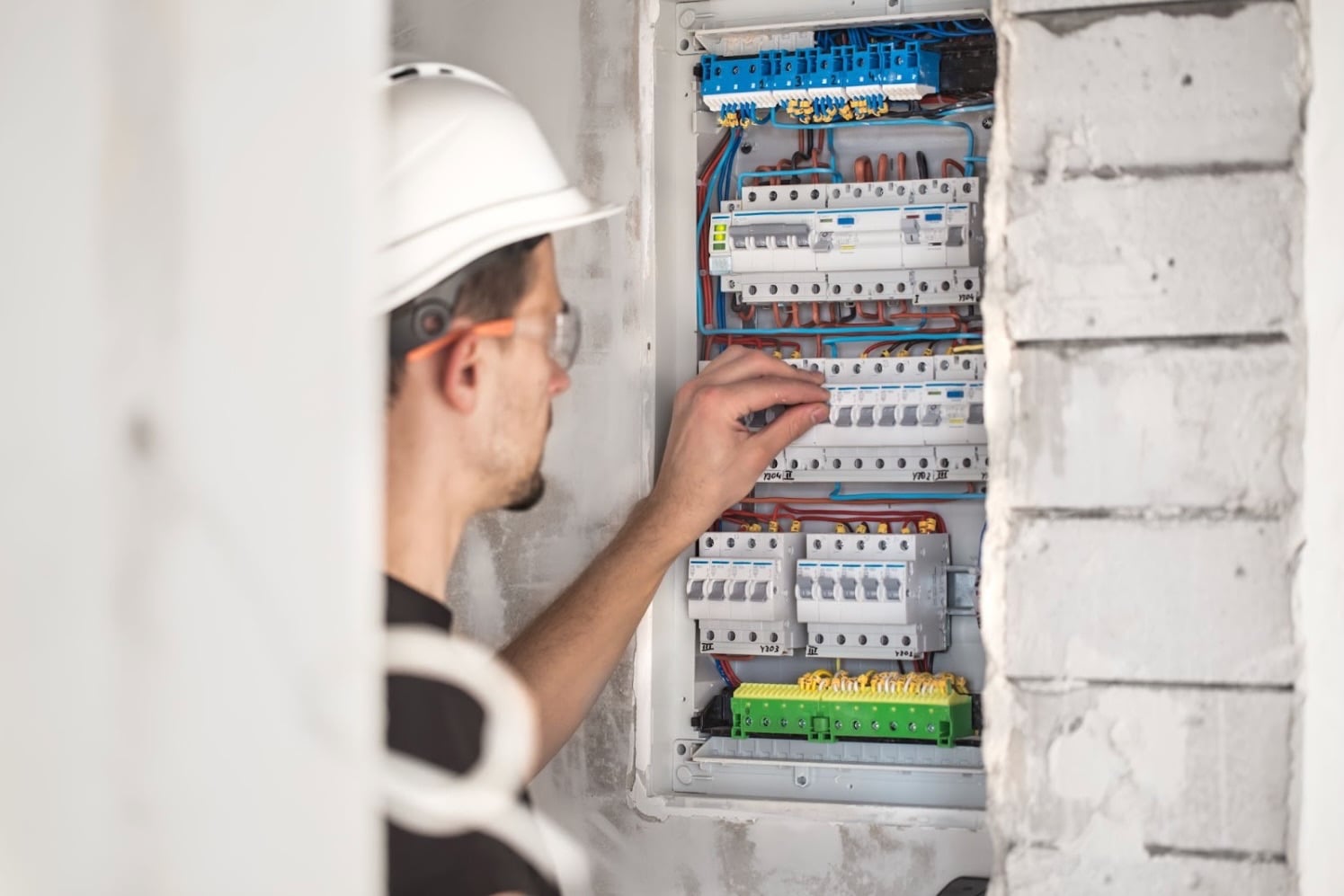
Electric vehicle charging involves a variety of connectors and sockets that can seem overwhelming at first. Each type serves a specific purpose and works with different vehicles. This guide breaks down everything you need to know about EV charging sockets and connector types in the UK, from the basics to the technical details.
Key Takeaways
- RCD trips protect against electric shocks by detecting current leakage, common causes include faulty appliances, moisture ingress, damaged wiring, or multiple devices creating cumulative leakage
- Systematically unplug appliances to identify the fault source, but call a qualified electrician if trips persist with nothing plugged in or you notice burning smells
- Prevent frequent trips through regular RCD testing every 6 months, replacing ageing appliances, and scheduling professional EICR inspections every 5-10 years
What Is an RCD and Why Does It Trip?
A Residual Current Device (RCD) monitors the flow of electricity through your circuits. It constantly compares the current flowing through the live wire with what’s returning through the neutral. In a healthy circuit, these should be equal.
When there’s a difference between these currents, it means electricity is escaping somewhere it shouldn’t be. This could be through damaged insulation, a faulty appliance, or even through a person receiving an electric shock. When the RCD detects this imbalance, it trips rapidly to cut the power.
Modern UK regulations require RCDs in most homes because they react much faster than standard fuses or circuit breakers. They can disconnect power within 40 milliseconds when they detect a serious fault, quick enough to potentially save lives.
According to UK electrical safety standards, domestic RCDs are typically set to trip when they detect a leakage current of 30 milliamps or more. That’s a tiny amount of current, but still enough to cause serious harm if it passed through a person.
Common Reasons an RCD Switch Keeps Tripping
When your RCD won’t stay on, several issues could be responsible. Knowing the most common ones helps narrow down the problem.

Faulty Appliances
The most common reason behind frequent RCD trips is a faulty appliance. Ageing washing machines, kettles, toasters, or any device with heating elements often develop internal faults that cause current leakage.
These faults might not be obvious, your device might still work normally until the moment the RCD detects the problem. Sometimes the issue only appears when the appliance heats up or gets damp.
Moisture Issues
Water and electricity don’t mix well. Moisture finding its way into electrical connections, outdoor sockets, or appliances is a major cause of RCD tripping.
Garden equipment left out in the rain, damp basements, or even high humidity in kitchens and bathrooms can create paths for current to leak. If your trips happen more during wet weather, this could be your culprit.
Wiring Problems
Hidden within your walls, old or damaged wiring can develop faults. Rodents sometimes chew through cable insulation, DIY projects might accidentally pierce wires, and general ageing can cause deterioration.
Our EICR testing can identify these hidden issues before they become dangerous. Regular electrical safety inspections are especially important in older properties where wiring may be past its prime.
Cumulative Leakage
Modern homes contain dozens of electronic devices, many with small built-in filters that naturally leak tiny amounts of current to earth. While each device alone is safe, having many plugged in simultaneously can add up to enough leakage to trip an RCD.
This is particularly common with computers, TVs, chargers, and other devices with switch-mode power supplies. UK wiring regulations now recommend limiting total leakage to less than 30% of the RCD’s rating to prevent nuisance tripping.
How to Identify Which Circuit or Appliance Is Causing the Trip
Finding the source of RCD trips often requires methodical detective work:
- Note when the tripping occurs, is it when you switch on a particular light or appliance?
- If your RCD protects multiple circuits, check which ones lose power when it trips. This narrows down the search area.
- For suspected appliance issues, unplug everything from the affected circuit, then reset the RCD.
- Reconnect appliances one by one, waiting a few minutes between each. When the RCD trips again, you’ve likely found your culprit.
For persistent issues, our professional testing services can pinpoint problems using specialised equipment that measures insulation resistance and leakage currents.
What Are RCD Controlled Circuits?
In UK homes, RCD protection is typically required for:
- Socket outlet circuits
- Outdoor supplies
- Bathroom circuits
- Lighting circuits in newer installations
- Immersion heaters and electric showers
Your consumer unit (fuse box) might have a single RCD protecting multiple circuits, or individual RCBOs (combined RCD and circuit breaker) for each circuit. The latter setup is increasingly common as it prevents one fault from affecting multiple circuits.
| RCD Type | Protection Level | Best For |
|---|---|---|
| Type AC | Basic protection for standard loads | Simple fixed equipment with no DC components |
| Type A | Enhanced protection for electronic loads | Most household circuits with modern appliances |
| Type F | Protection against high-frequency faults | Variable speed drives, washing machines |
| Type B | Comprehensive protection including DC | EV chargers, solar inverters, 3-phase equipment |
Ensuring you have appropriate security and safety systems is essential, especially when upgrading older installations to handle modern electronic loads.
DIY Checks vs When to Call a Qualified Electrician
While some troubleshooting is suitable for homeowners, electrical work carries risks that often require professional intervention.
You can safely:
- Note patterns of when trips occur
- Unplug appliances to see if trips stop
- Check for obvious signs of water or damage
- Test the RCD using its test button
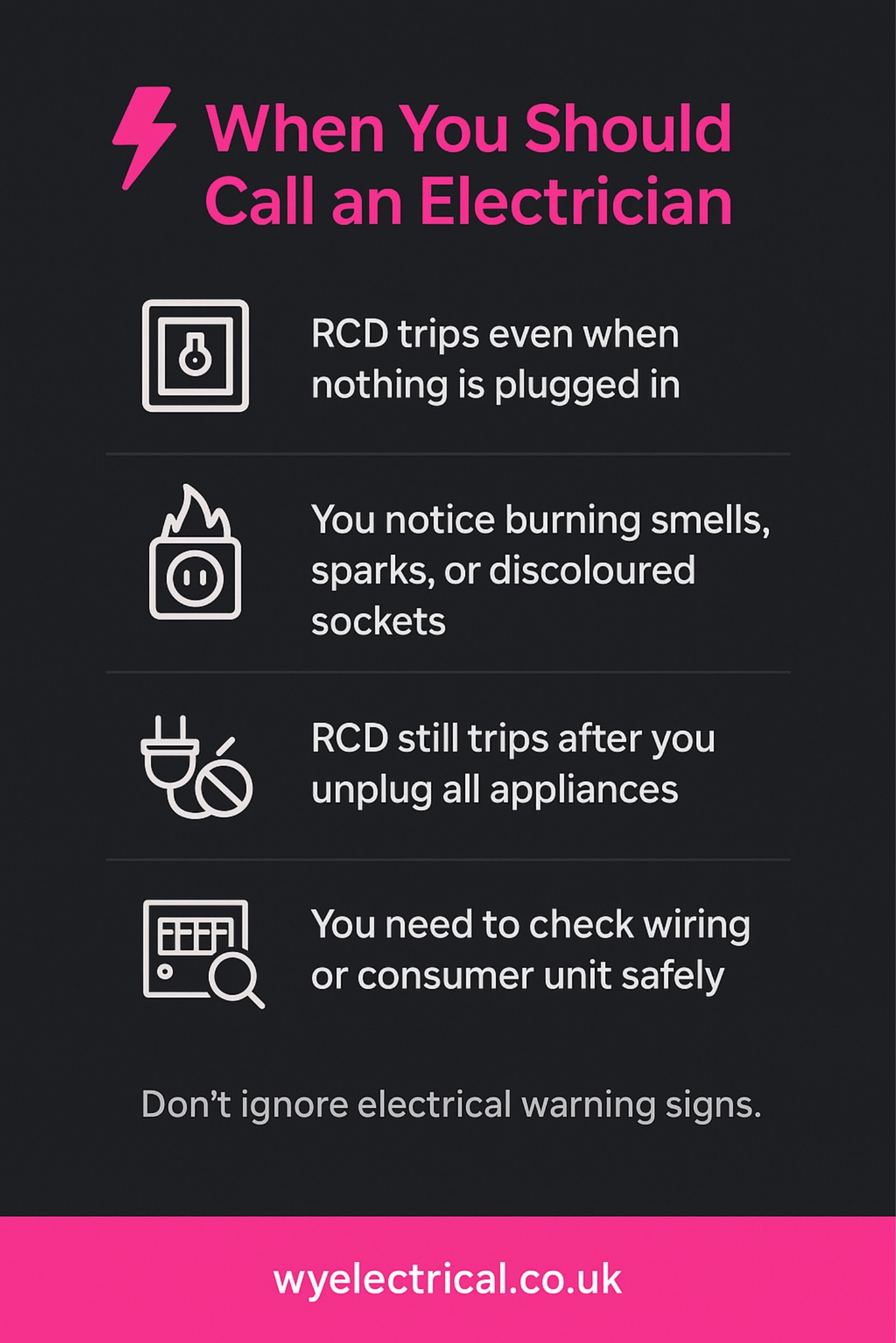
Remember, UK regulations require certain electrical work to be performed by qualified professionals. Attempting complex electrical work yourself isn’t just dangerous, it might also invalidate your home insurance.
How to Prevent Frequent RCD Trips
Prevention is always better than cure. These steps can help minimise RCD tripping:
- Replace ageing appliances before they develop faults. Most electrical appliances have a lifespan of 5-10 years.
- Ensure outdoor electrical equipment is properly protected from the elements with weatherproof covers and appropriate IP-rated enclosures.
- Consider upgrading to a consumer unit with individual RCBOs for each circuit. This contains faults to single circuits rather than affecting multiple areas of your home.
- Regular electrical inspections catch developing problems before they cause nuisance tripping. For rental properties, these are legally required every five years.
| Maintenance Task | Frequency | Benefit |
|---|---|---|
| RCD test button check | Every 6 months | Ensures RCD mechanism works properly |
| Visual inspection of sockets/cables | Annually | Identifies visible damage early |
| Professional EICR testing | Every 5–10 years | Thorough check of all circuits and connections |
| Appliance PAT testing | 1–4 years depending on type | Confirms appliances aren't causing leakage |
Final Note
When your RCD won’t stay on, don’t take chances. Contact our team for a thorough inspection of your electrical installation. Our NICEIC-registered electricians can diagnose complex RCD tripping issues and implement proper solutions.
FAQs
Why does my RCD keep tripping with nothing plugged in?
This typically indicates a fault in your fixed wiring rather than an appliance problem. Issues could include damaged cable insulation, water ingress to junction boxes, or neutral-to-earth faults. These require professional investigation as they pose serious safety risks.
How do I know if my RCD itself is faulty?
If your RCD trips inconsistently, feels warm to touch, or won’t reset properly, it may be failing. RCDs are highly reliable (96% pass rate in social housing tests) but do eventually wear out. A qualified electrician can test its operation and replace it if necessary.
Is it dangerous to keep resetting a tripping RCD?
Yes. Repeatedly resetting a tripping RCD without fixing the underlying issue is dangerous. Each trip indicates a potential shock or fire risk. If your RCD keeps tripping, find and fix the cause rather than treating the symptoms.
What’s the difference between an RCD trip and a circuit breaker trip?
An RCD trips when it detects current leakage to earth (possibly through a person), providing shock protection. A circuit breaker (MCB) trips when too much current flows through a circuit, providing overload protection. RCDs protect people; MCBs protect wiring.
Can modern electronics like computers and LED lights cause RCD trips?
Yes. Modern electronics contain EMI filters and switch-mode power supplies that naturally leak small amounts of current to earth. While each device’s leakage is minimal, multiple devices can collectively approach the 30mA threshold, especially on older RCD installations.
