
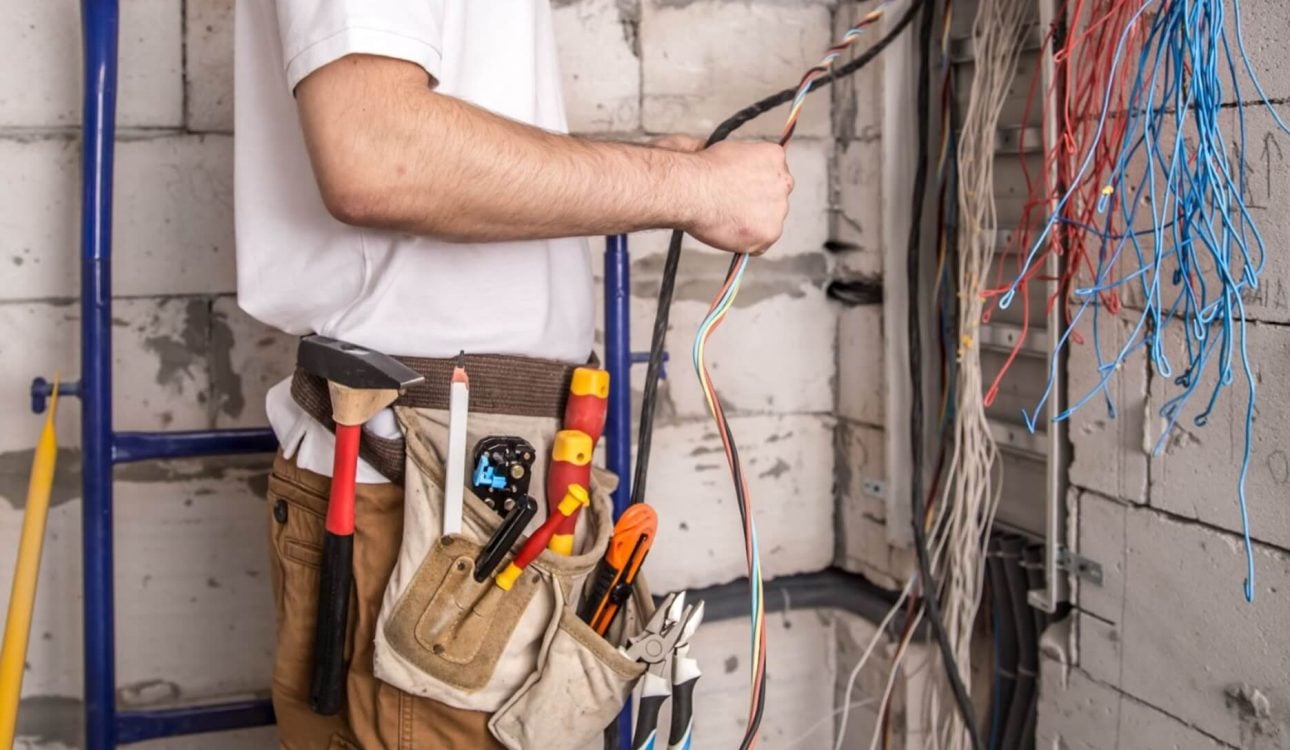

A full house rewire in the UK typically costs between £2,000 and £10,000+, depending on property size and complexity. Expect the work to take 3-10 days using qualified electricians.
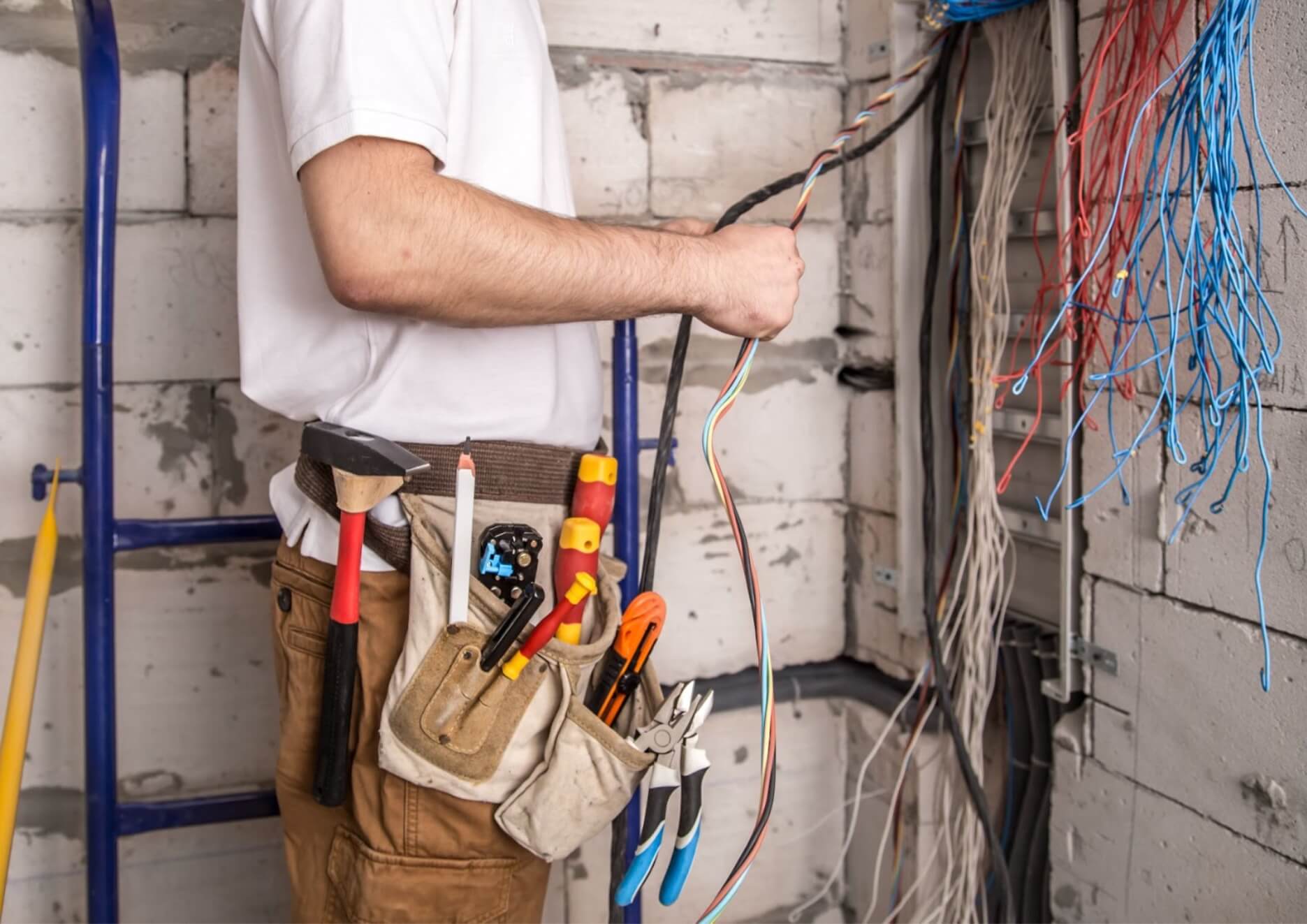
Your home’s wiring wasn’t built for modern life. Those cables were installed when households had a TV and a kettle. Now you’re running computers, phone chargers, washing machines, and EV chargers through the same ageing system. Research from 2024 shows 11,089 domestic electrical fires occurred in England alone during 2023/24, representing nearly 18% of all domestic fires that year. If your wiring is over 25 years old, rewiring isn’t optional anymore.
This guide explains what rewiring actually involves, what it costs across different property types, and how to avoid getting ripped off while ensuring the work meets current UK safety standards.
Key Takeaways
- Rewiring costs vary significantly by property size, age, and condition, with typical UK homes ranging from £2,000 for small flats to £10,000+ for large detached houses.
- Legal compliance is non-negotiable: all rewiring must meet BS 7671:2018 standards, and landlords must provide EICR certificates every 5 years under 2020 regulations.
- Hidden costs like plastering, decoration, and additional sockets can add £500-£2,500+ to your final bill, so always budget for contingencies.
What Does “Rewiring a House” Actually Mean?
A full rewire means stripping out every bit of old electrical cable in your property and replacing it with new wiring that meets current standards. We’re talking about the lot: cables running through walls and floors, the consumer unit (your fusebox), all your sockets and switches, and the circuits feeding your lights and appliances.
Think of it like replacing your home’s entire nervous system.
The work brings everything up to the 18th Edition Wiring Regulations (BS 7671:2018), which is the technical bible for electrical installations in the UK. Your electrician will test everything thoroughly and issue certificates proving the work complies with building regulations.
Full Rewire vs Partial Work
Not every electrical job requires ripping out every wire. Sometimes you just need a consumer unit upgrade or a few extra circuits adding. A partial rewire might sort specific problem areas without the full upheaval.
But here’s the thing: if your wiring is genuinely old (fabric insulation, rubber cables, ancient fuse boxes with rewireable fuses), a partial fix is just delaying the inevitable. You’ll end up doing it properly later anyway, probably at a higher cost.
According to the English Housing Survey 2022-23, 15% of UK dwellings failed the Decent Homes Standard, with electrical defects being a significant contributor. If your home falls into that category, patch jobs won’t cut it.
Why Rewiring Is More Common Now
Modern homes demand far more from their electrical systems than properties from even 20 years ago. Your parents’ generation had a TV, a fridge, and maybe a toaster. You’ve got multiple computers, phone chargers, smart home devices, electric showers, washing machines, dishwashers, and possibly an EV charger.
Old wiring simply wasn’t designed for this load. Chuck in deteriorating insulation and outdated safety features (no RCD protection, anyone?), and you’ve got a recipe for problems.
Typical UK Rewiring Costs by Property Size
Rewiring costs vary wildly depending on your property, but here are realistic figures based on current UK market rates:
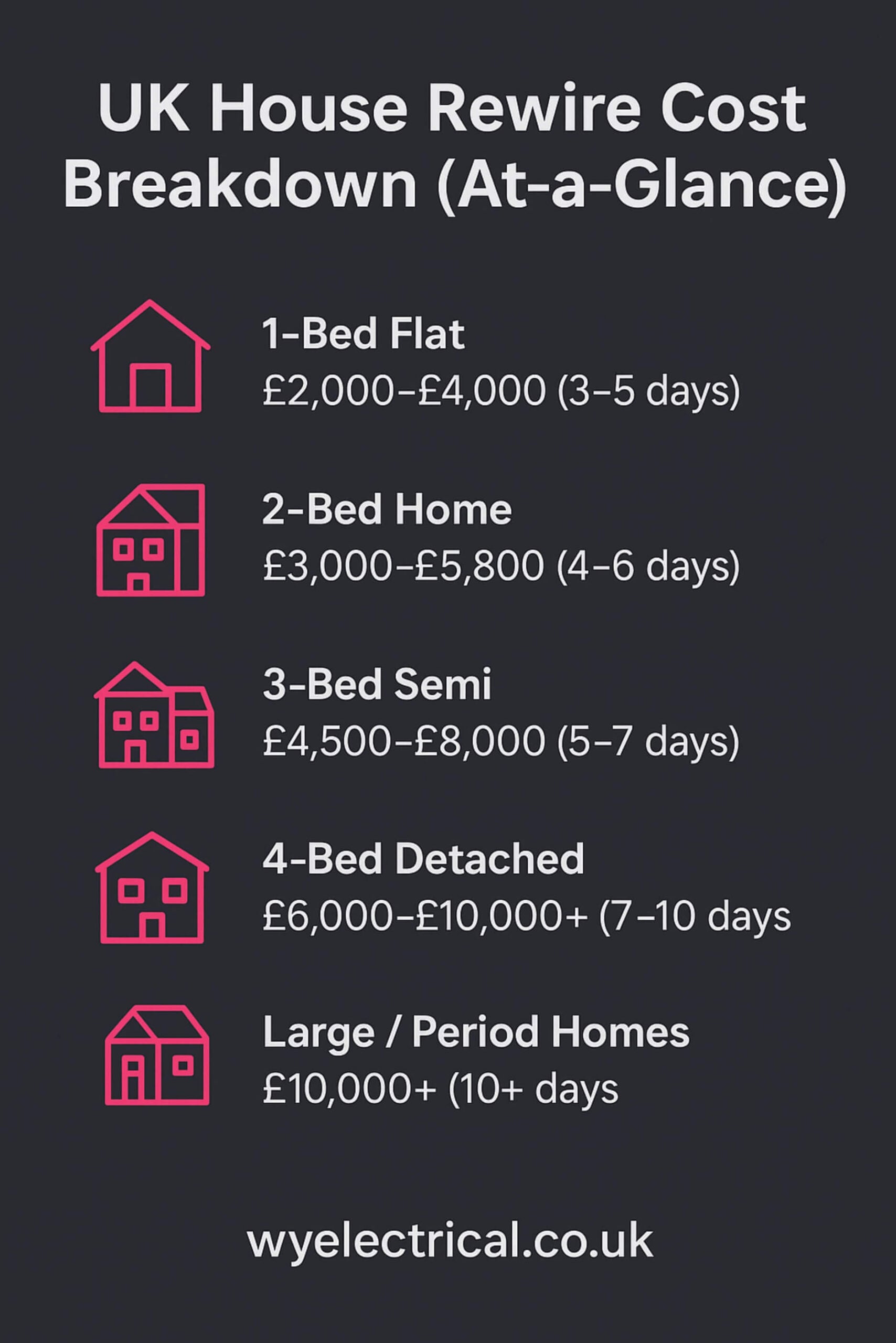
These figures include labour and materials for a standard rewire. What they might not include is plastering, decoration, or fancy extras like smart home wiring.
Labour typically accounts for 60-70% of the total cost. Materials (cables, consumer units, sockets, switches) make up the rest. A qualified electrician charges anywhere from £200-£400 per day, depending on location and experience.
Why Such Big Ranges?
Because every house is different. An empty 3-bed new build with easy access to all the wiring routes? Quick job, lower end of the scale. A Victorian terrace with solid walls, lath and plaster, and dodgy access to the loft is kind of upper end, possibly beyond.
Location matters too. London and the South East cost 20-30% more than the Midlands or North. If you’re in West Yorkshire, you’ll generally pay less than someone in Surrey for the exact same work.
How to Identify Which Circuit or Appliance Is Causing the Trip
Finding the source of RCD trips often requires methodical detective work:
- Note when the tripping occurs, is it when you switch on a particular light or appliance?
- If your RCD protects multiple circuits, check which ones lose power when it trips. This narrows down the search area.
- For suspected appliance issues, unplug everything from the affected circuit, then reset the RCD.
- Reconnect appliances one by one, waiting a few minutes between each. When the RCD trips again, you’ve likely found your culprit.
For persistent issues, our professional testing services can pinpoint problems using specialised equipment that measures insulation resistance and leakage currents.
What Impacts the Cost: Key Variables
Several key factors influence house rewiring costs, helping you budget accurately and avoid unexpected expenses:
| Factor | Impact on Cost |
|---|---|
| Property Age | Pre-1960s homes with cloth/rubber insulation: Higher costs |
| Existing Wiring | Disorganised or DIY systems: More labour to trace and fix |
| Project Scope | Full rewire vs. partial upgrade: Significant price difference |
| Renovation Timing | Combined with other work: Lower overall costs |
| Occupancy | Empty property: Less expensive than occupied homes |
| Customization | Additional features (USB/smart/EV): £100s–£1000s extra |
| Component Quality | Basic consumer unit: £250–£400 Premium unit: £600–£800 |
| Location | London/Southeast: 20–30% higher than the North/Midlands |
For accurate pricing in your area, obtain a quote from NICEIC-registered local professionals who can assess your specific situation.
What’s Typically Included in a Rewire Job (and What Might Be Extra)
Standard rewiring quotes usually cover the electrical work itself. That means new cables, a modern consumer unit with RCD protection, replacement sockets and switches, basic light fittings, full testing, certification, and waste removal.
Labour for the electrical work is obviously included. So is cable routing (running new wires through walls, floors, and ceilings), first-fix work (installing back boxes and cables), and second-fix work (connecting sockets, switches, and lights after plastering).
You’ll get an Electrical Installation Certificate on completion, proving the work complies with BS 7671 and building regulations. Without this certificate, you’re not legally compliant and could face issues selling your property later.
What Often Costs Extra
Plastering and decoration rarely come included unless explicitly stated. Electricians aren’t plasterers. They’ll chase walls and drill holes, but making them pretty again is usually a separate job.
Additional sockets beyond a standard number per room cost extra. Most quotes include enough sockets for normal use, but if you want doubles in every corner, expect to pay more.
Smart home wiring, data cabling, outdoor circuits, and security system preparation are all extras. The same goes for decorative switches and sockets… standard white plastic fittings come as standard, but brushed steel or designer options bump up the price.
According to Electrical Safety First, approximately 19,300 accidental domestic fires of electrical origin occur annually in the UK. Spending a bit extra on quality components and proper installation is worth every penny when you consider those statistics.
What to Ask an Electrician Before You Get a Quote
Don’t just ring someone and ask, “How much to rewire my house?” You’ll get a vague answer and waste yours and everyone’s time. Here’s what to ask for a proper, comparable quote.
First, confirm exactly what work you need. Is it a full rewire or specific upgrades? Be clear from the start.
Ask for an itemised breakdown showing labour costs, materials, consumer unit specification, number of sockets and lights included, testing and certification, and whether plastering or decoration is covered.
Check their qualifications. Are they NICEIC, NAPIT, or another competent person scheme member? Can they self-certify the work for building control?
Find out how long the work will take and whether you can stay in the property during it. Ask what happens if they find unexpected problems like asbestos or structural issues. Who pays for remedial work?
Get everything in writing. Compare at least three quotes before deciding. Don’t automatically pick the cheapest.
Conclusion
Rewiring your home isn’t cheap, but it’s one of the most important safety investments you’ll make. Ready to get your rewiring sorted properly? We provide expert house rewiring services across Leeds and the surrounding areas. Our NICEIC-registered electricians ensure full compliance with current regulations, provide detailed quotes with no hidden costs, and complete work to the highest standards. Get your free quote today and invest in your home’s safety.
FAQs
How long does a full house rewire take?
Small flats take 3-5 days, whilst typical 3-bed houses need 5-7 days. Larger properties or complex period homes can take 10+ days. Empty properties are always faster because electricians can work without navigating furniture or protecting occupied rooms.
Do I always need a full rewire, or can I do a partial repair?
If your wiring is over 30 years old, showing signs of damage, or has failed an EICR inspection, a full rewire is usually recommended. Partial work makes sense for newer systems needing upgrades, like adding circuits or replacing an old consumer unit.
Will I need to redecorate or repair plaster?
Almost certainly, yes. Rewiring involves chasing walls for new cable runs, which damages plaster. Budget £500-£2,500 for post-rewire plastering and decoration, depending on property size and finish quality.
Does rewiring meet UK safety standards?
Proper rewiring must comply with BS 7671:2018 and Approved Document P. You should receive an Electrical Installation Certificate proving compliance. Landlords in England must have electrical installations inspected every 5 years under the 2020 PRS Regulations.
Can I stay in the house while rewiring?
Smaller properties might allow you to stay if work is carefully phased by room. Larger rewires usually require you to move out. You’ll have power cuts, limited room access, and dust despite protective measures.
