


If your consumer unit has RCD protection you will see a clearly labelled switch with a TEST button. Press it to confirm the device trips and cuts power, then reset it to restore electricity.
Consumer units with RCD protection include devices labelled RCD or RCBO with a TEST button used for a quick safety check. Pressing the button should trip the switch and disconnect power to the protected circuits. Around 70 deaths and 350,000 injuries occur in UK homes annually from faulty electrics and electrical equipment, highlighting the importance of protective devices.
Key Takeaways
- RCD protection detects current leakage and trips within milliseconds to prevent fatal electric shocks and reduce fire risk.
- Pressing the TEST button on an RCD safely verifies it works, causing immediate power cut to protected circuits.
- Consumer units without RCD switches, TEST buttons, or working trip mechanisms need professional inspection and likely require upgrading.
What Is RCD Protection
Residual current devices monitor the balance between live and neutral currents continuously, tripping the circuit within milliseconds when imbalance indicates leakage, such as current flowing through a person to ground.
Typical RCD ratings used in electrical installations include:
- 30 milliamp (30 mA): provides personal protection by disconnecting power quickly to reduce the risk of fatal electric shock.
- 100 milliamp (100 mA): used mainly for fire protection and detecting earth faults in larger circuits.
- 300 milliamp (300 mA): installed for broader fire protection in larger installations or distribution circuits.
Modern UK wiring requires RCD protection for socket circuits up to 32 amps, outdoor circuits, bathroom installations, and all new or rewired domestic circuits to meet current safety standards.
How to Check If Your Consumer Unit Has RCD Protection
Finding RCD protection involves locating your consumer unit, identifying protective devices by their labels and features, and performing a safe functional test using the built-in TEST button.
These steps require no electrical knowledge and involve no contact with live parts when done correctly.
Step 1: Locate the Consumer Unit
Typical consumer unit locations include hallway cupboards, spaces under stairs, garages, utility rooms, or positions near the electricity meter. The unit appears as a white or grey plastic box mounted on the wall with multiple switches or fuses inside.
Step 2: Look for an RCD Switch
Look for devices labelled RCD, RCBO, Residual Current Device, or switches showing a small button marked T or TEST on the face.
RCD modules are usually wider than standard circuit breakers and may protect multiple circuits, while RCBOs combine RCD protection with overcurrent protection on individual circuits. The TEST button sits prominently on the device face and may be red, black, or blue depending on the manufacturer.
Step 3: Test the RCD
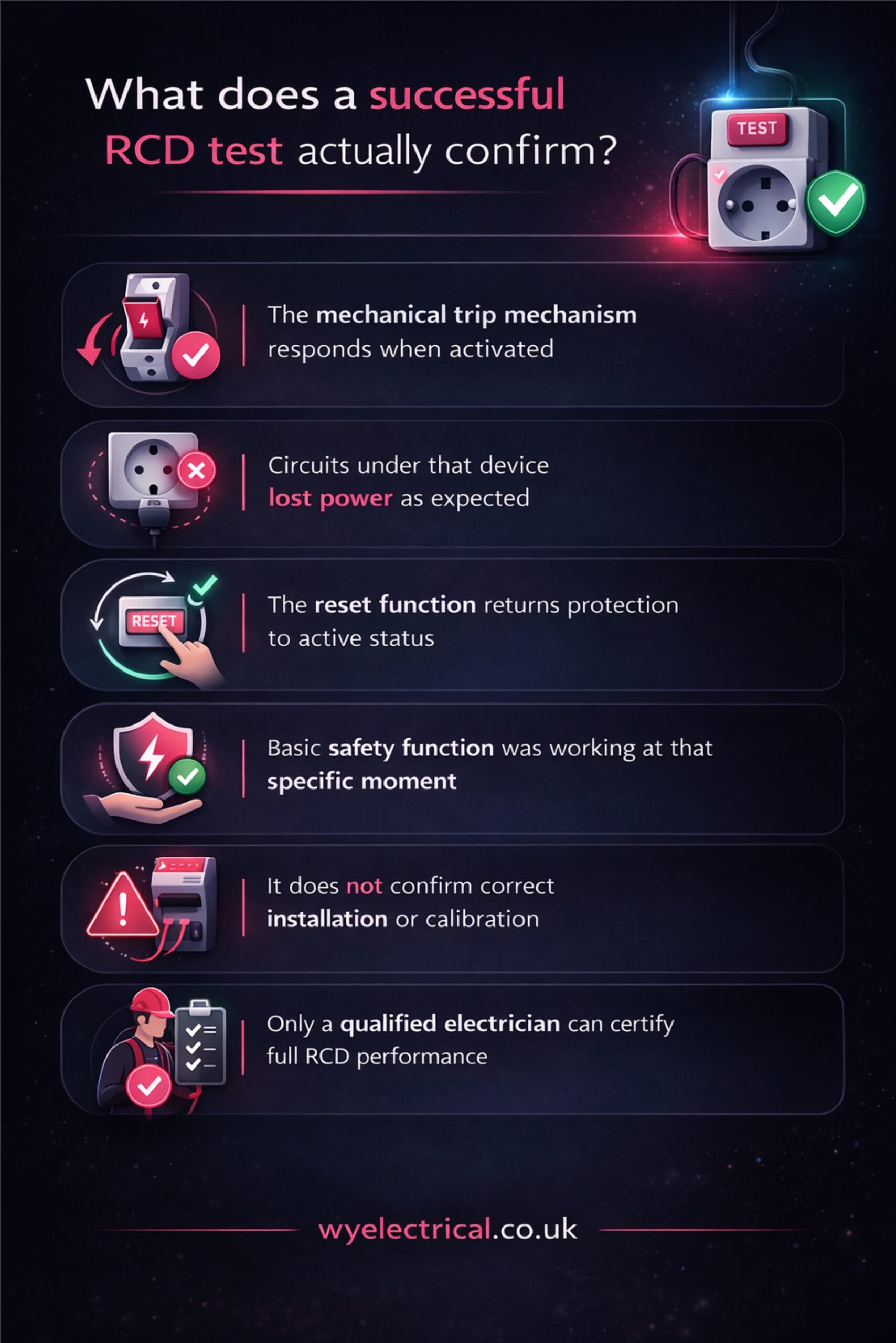
Press the TEST button once, and the device should trip immediately, cutting power to all circuits it protects.
You will hear a click and see the switch move to the off position. Reset the switch by pushing it back to the on position to restore power.
This basic functional check confirms the mechanical trip mechanism works, though it does not substitute for timed trip tests that qualified electricians perform and record on electrical installation condition reports.
Step 4: Reset the RCD
Do not open the consumer unit or touch any internal wiring if the RCD fails to trip when you press TEST or will not reset after tripping. Turn off sensitive equipment connected to those circuits and contact a qualified electrician immediately because failed RCD protection indicates a safety-critical fault requiring professional diagnosis.
What If Your Consumer Unit Has No RCD Protection
Older consumer units installed before modern safety standards became mandatory often lack RCD protection entirely. Rewirable fuse carriers with ceramic or plastic housings, circuit breakers without TEST buttons, and the absence of RCD labelling all indicate missing protection. Clear recognition of these visual signs helps identify when upgrades become necessary.
Here is what consumer units without RCD protection typically show when you inspect them:
| Sign | What It Indicates | Action Needed |
|---|---|---|
| Rewirable fuse carriers | Pre 1990s installation lacking modern protection | Professional upgrade assessment |
| Only MCBs with no TEST buttons | Overcurrent protection only, no earth leakage detection | RCD or RCBO installation required |
| No RCD labelling anywhere | Older board predating RCD requirements | Consumer unit replacement recommended |
| Wooden or Bakelite fuse box | Very old installation from 1950s or earlier | Immediate professional inspection |
These indicators suggest your electrical installation may not meet current safety expectations, and the assessment determines whether consumer unit upgrades bring installations to modern standards, including split load RCD protection or individual RCBO coverage for each circuit.
When to Call an Electrician Right Away
Certain conditions indicate that professional inspection is necessary rather than continuing DIY checks. Contact a qualified electrician if:
- No TEST button appears anywhere on the consumer unit
- Pressing the TEST button produces no response or fails to trip the switch
- The RCD trips immediately after resetting with no appliances running
- Circuits trip repeatedly during normal household use
These symptoms indicate either missing protection requiring installation or faulty devices needing replacement before they fail to operate during an actual earth fault.
RCD vs MCB vs RCBO: What’s the Difference
Different protective devices serve distinct safety functions within consumer units, and understanding these differences helps identify what protection your installation provides.
The following comparison shows how each device type works and what hazards it addresses:
| Device Type | What It Protects Against | How It Works |
|---|---|---|
| MCB (Miniature Circuit Breaker) | Overload and short circuit faults | Trips when current exceeds rated capacity |
| RCD (Residual Current Device) | Earth leakage and electric shock | Detects imbalance between live and neutral |
| RCBO (Combined RCD and MCB) | Overload, short circuit, and earth leakage | Provides both overcurrent and RCD protection per circuit |
Different RCD types suit different electrical loads because electronic equipment and inverters can produce DC current components that affect trip performance.
Laboratory testing shows RCD behaviour varies when DC components appear in earth fault currents, which explains why Type A, Type F, and Type B RCDs exist for circuits feeding electronic loads, frequency converters, or electric vehicle chargers where standard AC type RCDs may not provide reliable protection.
Should You Upgrade Your Consumer Unit
Upgrading your consumer unit is often necessary to maintain safety and meet current electrical standards.
If your unit has no RCD protection, it leaves you at risk of electric shock. Older units (typically over 20–25 years old) often use outdated components and lack modern safety features. Traditional fuse boxes with rewirable fuses or plastic casings do not provide the same level of protection as modern units with RCBOs or split-load RCD systems.
Frequent tripping or overloaded circuits can also indicate that your current unit is struggling to handle today’s electrical demands. In addition, home upgrades such as installing an EV charger or adding new circuits usually require a modern consumer unit to safely support the increased load and comply with current regulations.
If your fuse box is outdated or lacks modern RCD protection, we can carry out a professional consumer unit upgrade to bring your installation up to current safety standards.
Electrical Safety Checks and EICR Requirements
Professional electrical inspection confirms whether RCD protection exists and functions correctly through timed trip tests that measure response speed precisely.
Electricians perform these tests during electrical installation condition reports, checking that 30 milliamp RCDs trip within 40 milliseconds at rated current and recording results for compliance documentation.
Inspection intervals for private rented properties require landlords to arrange electrical safety checks every five years or at change of tenancy, whichever comes first, and these inspections verify protective devices, including RCDs, meet current requirements.
The best way to confirm whether your installation has working RCD protection is through a professionalEICR (Electrical Installation Condition Report) carried out by a qualified electrician who tests trip times, checks protective bonding, and identifies any remedial work needed for safety compliance.
Conclusion
RCD protection in a consumer unit is identified by switches labelled RCD or RCBO that include a TEST button designed to trip the circuit during a safety check. A missing RCD or a failed test indicates the need for professional inspection.
If uncertainty exists about fuse box safety, our electricians can inspect the installation or carry out a consumer unit upgrade. Get a free quote, and we will arrange a safe assessment of your electrical installation.


FAQs
What does an RCD test button look like?
The RCD test button is a small button labelled T or Test located on the RCD or RCBO inside the consumer unit. Pressing it simulates an electrical fault and should cause the switch to trip.
How often should you test RCD protection?
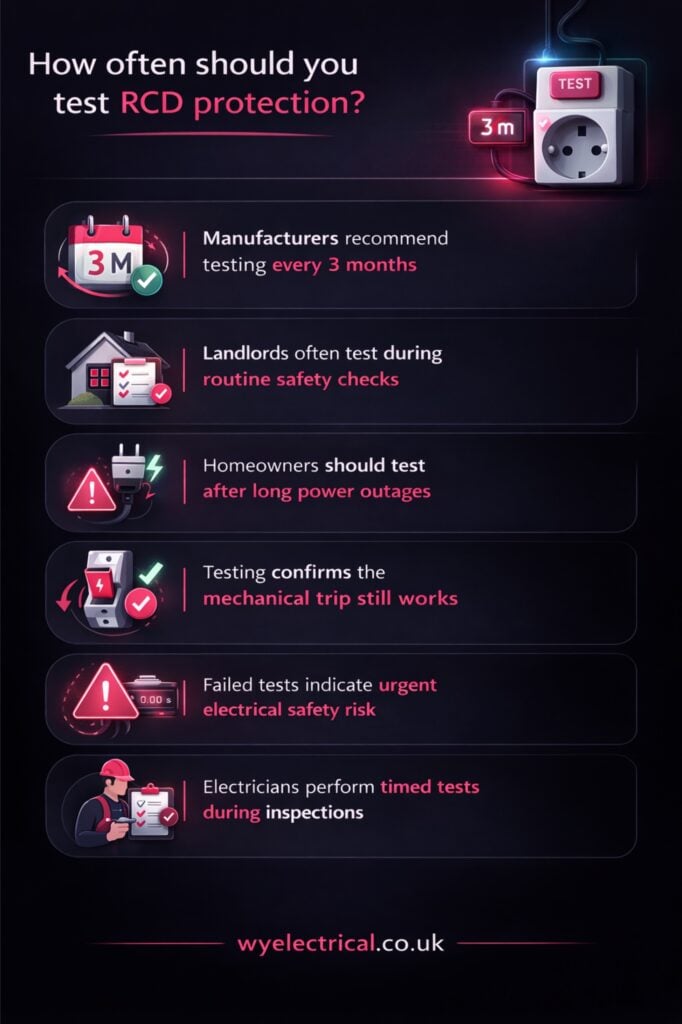
Manufacturers recommend testing every three months by pressing the test button. This ensures the mechanism still trips correctly and has not seized through lack of use.
Why does my RCD trip when I press the test button?
This is normal and correct behaviour. The test button intentionally creates an imbalance to confirm the device works properly. If the RCD does not trip, it may require professional inspection.
Is it dangerous if my fuse box has no RCD protection?
Older installations may still operate safely but lack modern shock protection that could prevent fatal accidents. An electrician can assess whether upgrading the consumer unit is recommended.
Can you add RCD protection without replacing the consumer unit?
In some cases RCD protection can be added through RCBO breakers or external RCD devices. However, many older boards get upgraded entirely to improve safety and compliance.
