
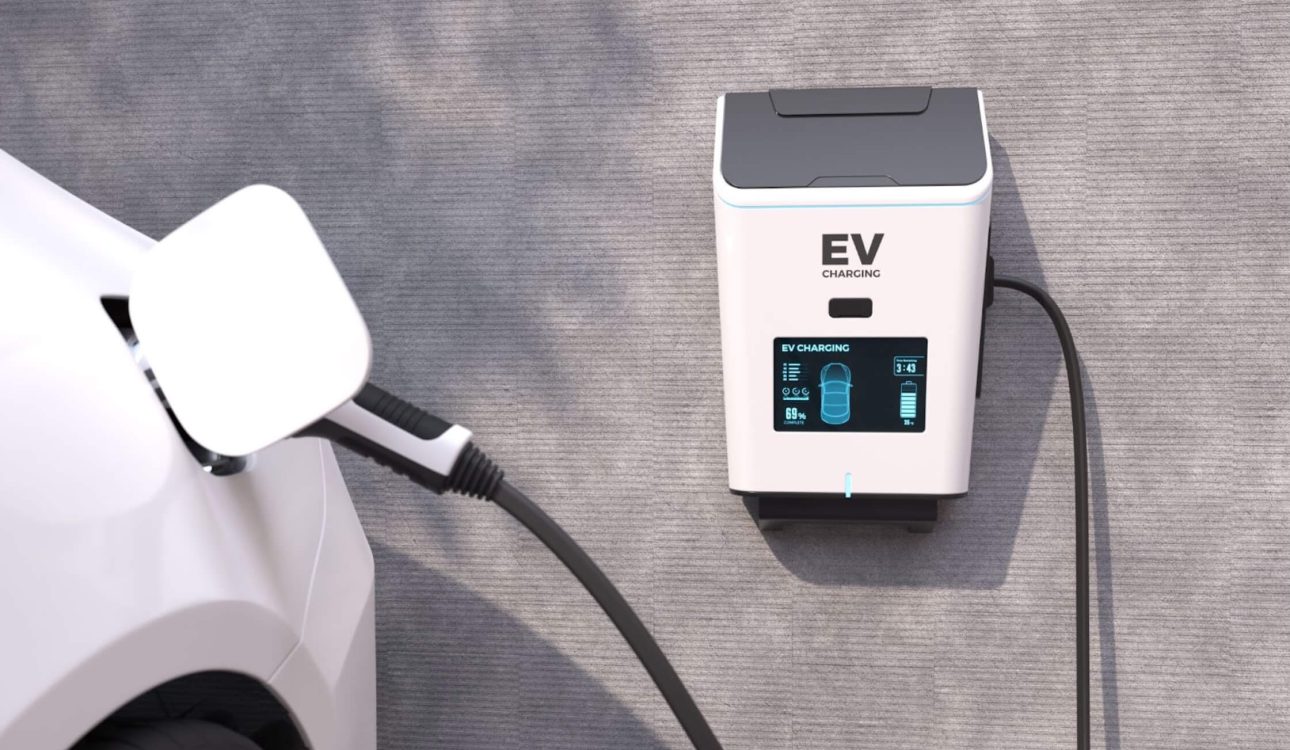

The best spot is close to where you park, near your consumer unit, with safe cable routing that keeps costs down and charging convenient.
The right location saves money, makes charging safe every night, and keeps cables tucked away without expensive electrical work. The wrong spot leaves the charger too far from where the car actually parks, or you end up paying extra for cable runs that could have been avoided. The ideal spot depends on your property layout, where the electrics route through, and how you use the space day to day.
What Determines the Best Home EV Charger Installation Location
Location matters because it affects cost, safety, and whether you actually use the charger without hassle every single night.
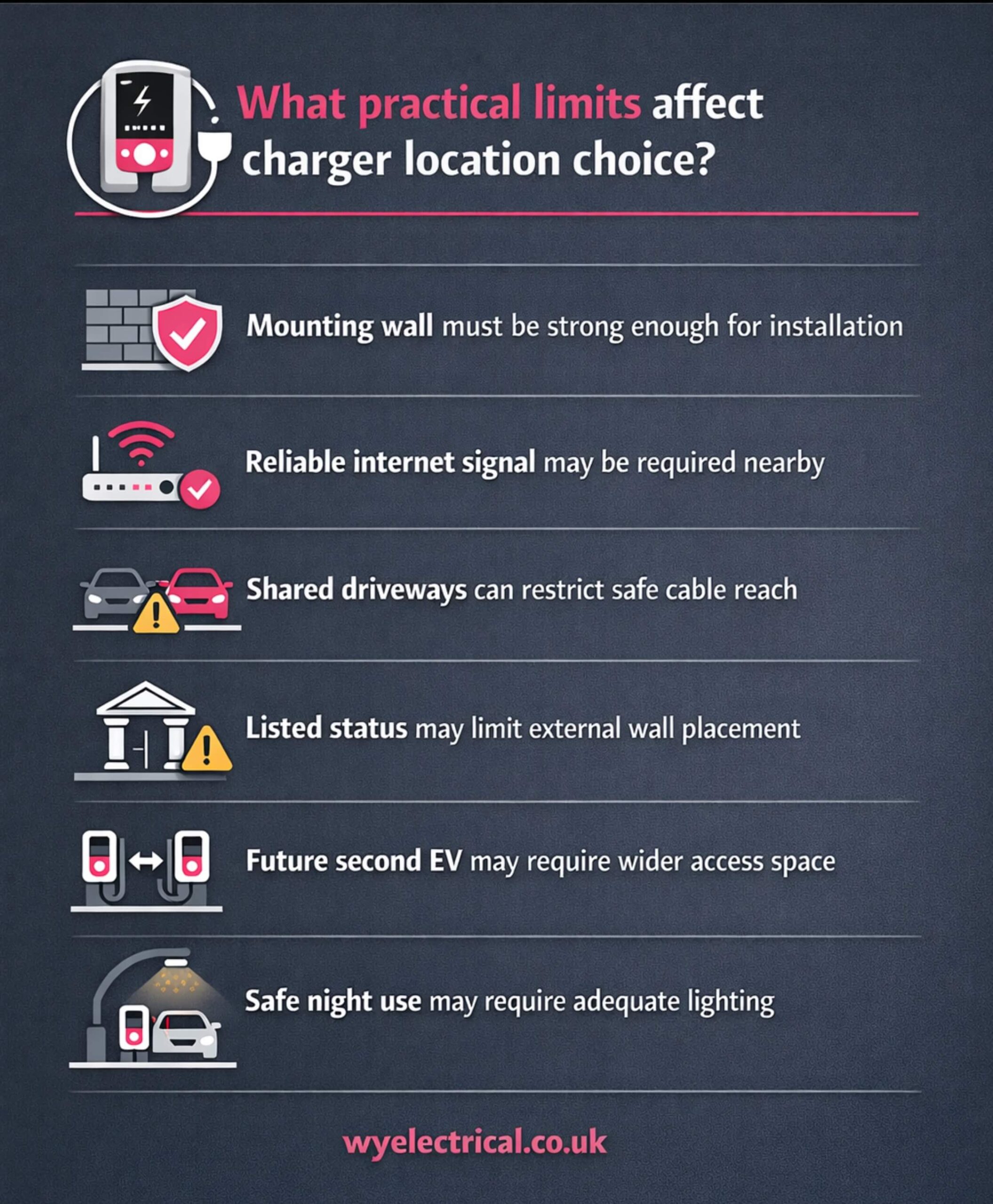
The best spot is close to where the vehicle parks regularly, ideally with a short cable run back to the fuse board. Outdoor chargers need weather protection built in, while indoor ones need clearance and ventilation that actually works. Cable length limits how far you can stretch, and trailing leads across pavements create trip hazards that UK regulations specifically discourage.
Installation cost depends heavily on the distance to the consumer unit. Longer cable runs increase material use, labour time, and the need to manage possible voltage drop. Early awareness of EV charger installation requirements helps prevent unexpected issues when your property is assessed.
Daily convenience counts too, because a charger that sits in an awkward spot or poorly lit area gets skipped on busy evenings, leaving you short on charge the next morning.
Best Places at Home to Install an EV Charger
The right location depends on where the car parks and how the electrics route through your property. Different homes suit different setups, and comparing the main options helps match the charger to your actual layout without guesswork.
Around 67.2% (roughly 68%) of households in England have access to a private driveway or garage, which means many homes can install a private charger without relying on shared infrastructure.
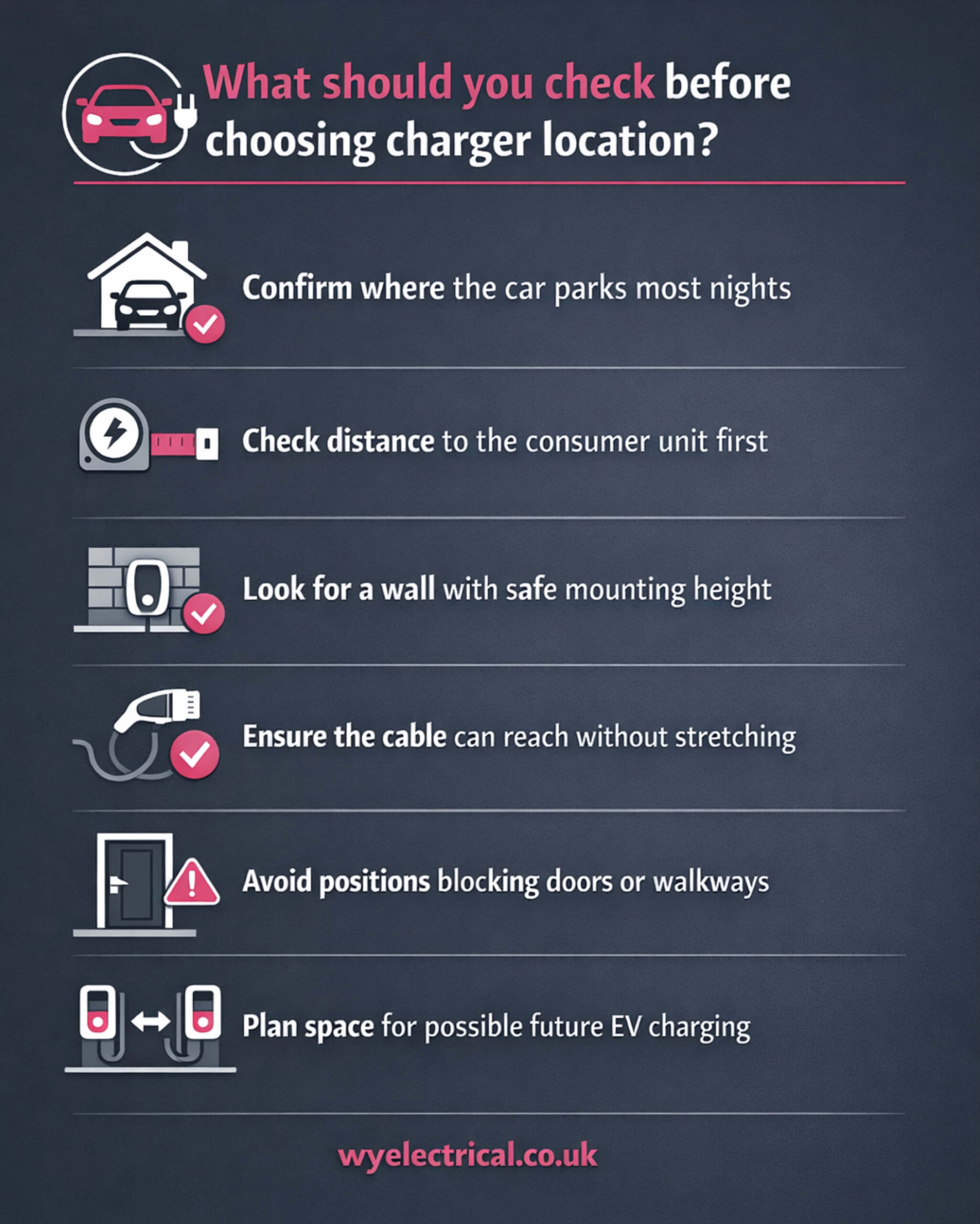
Installing an EV Charger on a Driveway
Wall mounted units fix to the house exterior, keeping cables short and installation costs lower. The charger sits near where the car parks every night, so plugging in becomes routine rather than a chore that gets forgotten.
Outdoor units need IP65 weather ratings or higher, meaning protection from rain and dust when properly certified.
Cables should never trail across pavements or walkways.
UK safety standards discourage this because of trip hazards and liability concerns, so positioning matters to ensure the cable reaches the car port without crossing public paths.
Post mounted chargers suit wider driveways or properties planning for a second EV later, but they need trenching and protective conduit, which adds expense. Your property layout determines which driveway setup makes sense, and professional EV charger installation can assess cable routing and positioning to avoid costly mistakes.
Installing an EV Charger in a Garage
Garages offer weather protection and secure cable routing, which appeals to anyone wanting the charger and vehicle sheltered overnight. Wall space and clearance matter though, because the unit needs mounting between roughly 750 mm and 1200 mm from ground level for safe daily use.
Enclosed garages may need ventilation considerations, and the consumer unit sitting elsewhere in the property could mean the cable run ends up longer than a driveway install, raising costs. Garage installs work brilliantly when the car parks inside every night and the electrics route nearby. They become less practical when the garage doubles as storage, the vehicle parks outside regularly, or structural limitations prevent wall mounting at a sensible height.
Installing an EV Charger Outside the Home
External wall mounting suits homes without garages or where the driveway sits too far from the house.
The charger fixes to an exterior wall, ideally near the consumer unit to keep cable runs short and installation straightforward.
Weatherproof ratings protect the unit year round, and visible positioning can discourage tampering, though some prefer discreet placement for aesthetic reasons.
External installs depend on having suitable wall space, a parking spot within cable reach, and electrics that route without major structural work.
EV Charger Placement for Different Property Types
The best charger position also depends on property layout and parking access.
Cable routing shapes feasibility just as much as the charger itself, because long runs or awkward routes add cost and complexity that could have been avoided.
Homes fall into two practical categories.
Those with easy private parking and straightforward electrical access, and those facing shared parking or tighter restrictions. Your property falling into one category or the other helps set realistic expectations before installation begins.
Detached, Semi Detached and New Build Homes
These properties usually allow the easiest installations. Shorter cable routes connect the charger to the consumer unit without complex routing, and there is flexibility for wall or post mounting depending on preference.
New builds often include EV ready electrical capacity, which removes the need for consumer unit upgrades. Detached homes especially suit post mounted chargers when planning for multiple EVs or future expansion, because there is space to trench safely without disturbing neighbours or shared boundaries.
Terraced Houses, Flats and Shared Parking
Parking distance becomes the main challenge here. Terraced homes may park on street or in allocated bays some distance from the property, making cable routing impractical or impossible without crossing public pavements.
Flats and leasehold properties often need freeholder or landlord approval before installation, and shared electrics can complicate who pays for upgrades or how capacity gets divided. Alternatives include dedicated EV bays with chargers already installed, workplace charging schemes, or public rapid chargers nearby.
Tethered chargers (with cables attached) suit private driveways, while untethered units (requiring your own cable) work better for shared spaces where cables might otherwise get damaged or tangled. Typical cable lengths on tethered units reach 5 to 7 metres, which covers standard parking arrangements without excess slack trailing around.
Electrical Safety and Compliance Basics
Distance from the consumer unit affects installation cost, voltage drop, and compliance with wiring regulations.
Home chargers typically operate at 7 kW single phase, drawing around 30 to 32 amps continuously, which is roughly the same load as an electric shower running without stopping. That sustained demand requires a dedicated circuit, proper earthing arrangements, RCD protection, and surge protection meeting BS 7671 standards.
A qualified electrician, preferably one certified for EV charger work, should always complete installation to ensure safety and compliance from the start.
Planning Permission and Property Approvals
Standard houses usually don’t require planning permission for a domestic EV charger. Permission may be needed in conservation areas where external alterations are controlled, or listed buildings where wall mounting could affect protected features.
Flats and leasehold properties may require freeholder or landlord approval, agreement on electrical supply and installation location, and permission for equipment in shared parking areas.
Since new domestic installations must include smart functionality for grid demand management, confirming approvals (and following smart charging point rules) early helps avoid delays or costly repositioning.
Where Not to Install an EV Charger
Some locations create safety risks or compliance problems, even if they seem convenient initially.
The places you should avoid are:
- Locations crossing pavements or walkways (as these can create trip hazards and potential liability in poor weather or low light.
- Positions exposed to vehicle impact during parking and increase the risk of damage and costly repairs).
- Poorly lit or awkward access points that make daily charging inconvenient and harder to use safely.
- Setups needing long, tightly stretched cables that strain connectors and shorten equipment lifespan.
- Shared or communal areas without formal permission, which can lead to disputes or forced removal.
Eliminating these locations early helps avoid rework and keeps charging safe, reliable, and practical.
Convenient & Future-Proof Charger Location
The right charger location should work effortlessly every evening, not feel like a chore. Easy access encourages regular charging, while poor placement often leads to skipped sessions and low battery the next day.
Good lighting, weather protection, and sensible mounting height also make a noticeable difference during dark winter months or heavy rain. Planning ahead for household changes or future vehicles prevents costly relocation later.
These points highlight what influences everyday convenience and long-term value:
| Factor | Why It Matters |
|---|---|
| Easy daily access | Encourages consistent home charging without hassle |
| Adequate lighting | Safer connections in dark winter conditions |
| Weather protection | Reduces exposure and prolongs charger life |
| Suitable height and reach | Works comfortably for all drivers |
| Future EV planning | Avoids expensive upgrades or second installation |
| Reliable WiFi signal | Enables smart scheduling and tariff savings |
| Property appeal | Installed charging can support resale value |
Future vehicles may support faster charging, and strong connectivity brings cost-saving smart features.
Thinking beyond the first year ensures the charger location serves you properly without needing expensive relocation or upgrades that could have been planned from the start.
Conclusion
The best place to install your EV charger sits near where you park, with safe cable routing, suitable electrics, and daily convenience baked in. Driveways and garages usually work best, but property layout, parking access, and electrical capacity shape the final decision. A professional assessment avoids costly relocation, ensures compliance, and matches the install to how you actually use the space. Help choosing the safest and most practical location is available through our free EV charger installation quote today.

FAQs
Can an EV charger be installed far from the meter?
Yes, but longer cable runs increase installation cost, voltage drop, and complexity. The distance kept short saves money and improves efficiency without compromising safety or performance.
Is it better to install an EV charger inside or outside?
Inside (garage) offers weather protection and security. Outside (driveway) suits homes without garages or where the car parks externally regularly. Both work fine when installed properly.
Can I install a charger without a driveway?
Difficult without private off street parking. Alternatives include dedicated EV bays, workplace charging, or public chargers, but trailing cables across pavements should be avoided entirely.
How long can the charging cable be?
Tethered cables on domestic chargers typically reach 5 to 7 metres. Untethered setups let you use your own cable length, but runs kept short improve safety and reduce wear.
Can I move an EV charger later?
Yes, but relocation involves new cable routing, wall repairs, and additional labour costs. The right spot chosen initially avoids this expense and disruption.
