
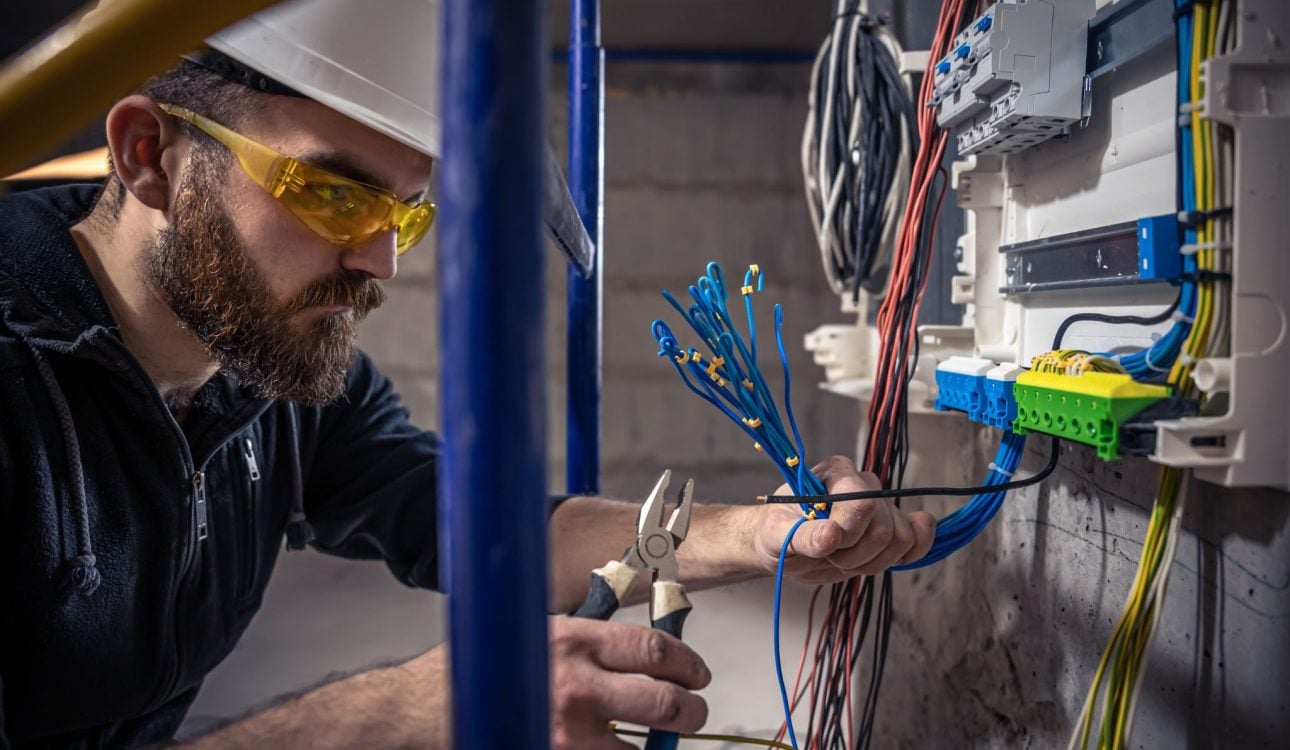

Faulty wiring rarely announces itself all at once. Repeated tripping, burning smells, warm sockets, and buzzing sounds are the warning signs that something needs attention before a fault becomes a danger.
Faulty wiring is not always easy to spot. The first signs are often things people ignore, such as burning smells, warm sockets, flickering lights, or circuit breakers that keep tripping. These warning signs can point to a bigger issue behind the scenes. Spotting them early gives you the chance to fix the problem before it becomes a serious safety risk.
Key Takeaways
- Faulty wiring often shows clear warning signs before it becomes dangerous.
- Repeated tripping, burning smells, and hot sockets need urgent attention.
- Older homes with original wiring may require upgrades or rewiring.
- An EICR can identify whether repairs, upgrades, or rewiring are needed.
What Are the Most Common Signs of Faulty Wiring?
Electrical faults often develop gradually rather than appearing overnight. Early warning signs can show up in everyday use of the installation, from lights behaving differently to sockets overheating.
Recognising these problems early can help prevent more serious electrical hazards and avoid costly repairs later.
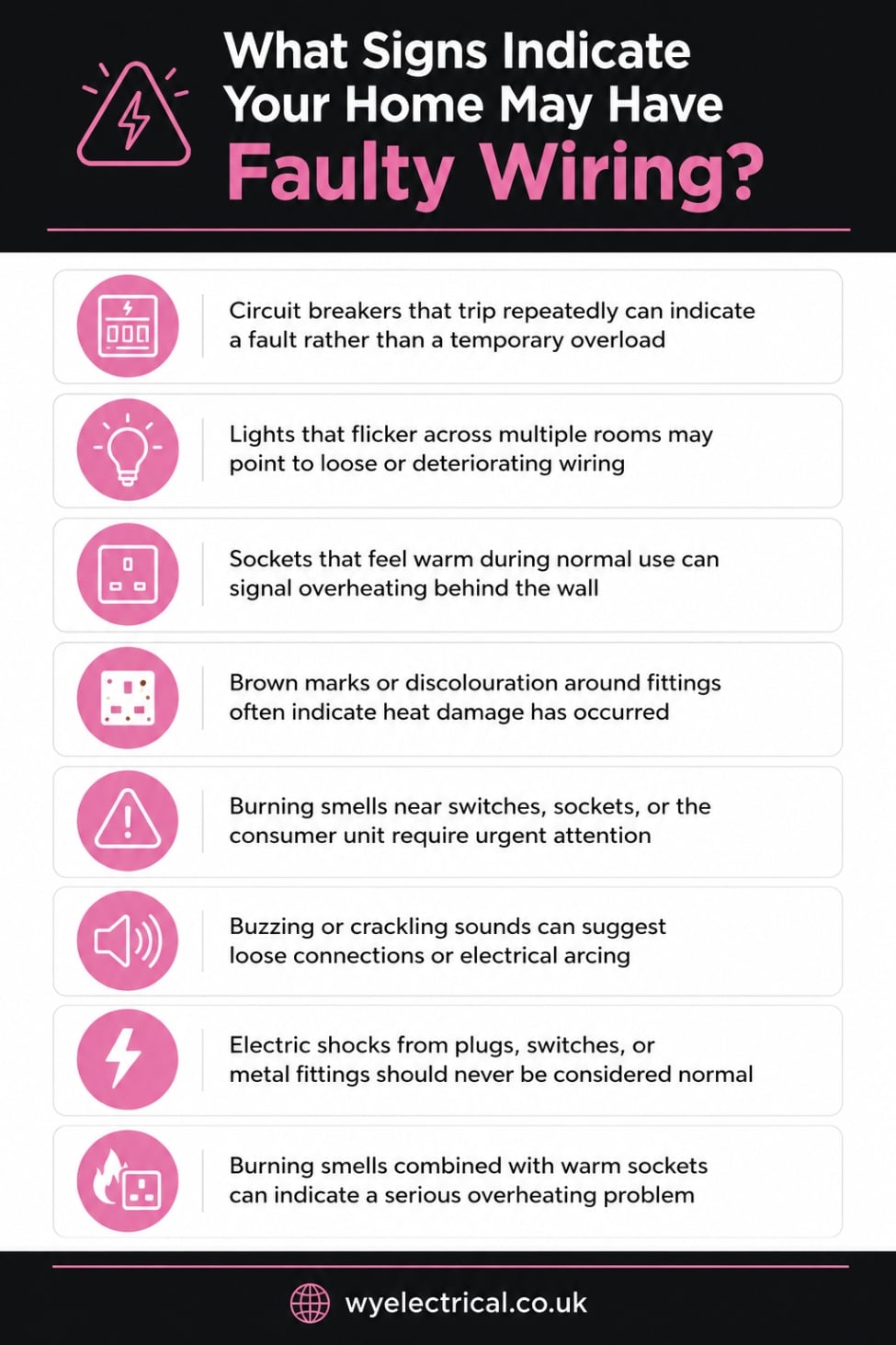
Some of the most common signs to look out for include:
Frequent Fuse Box Tripping
Circuit breakers and RCDs are designed to cut power when they detect a fault. Occasional tripping can happen, but repeated tripping often indicates an underlying wiring problem that requires investigation.
Flickering or Dimming Lights
Loose connections, damaged wiring, or overloaded circuits can cause lights to flicker or dim. If the issue affects multiple lights or happens regularly, it should be checked by an electrician.
Hot or Discoloured Sockets
Sockets and switches should remain cool during normal use. Warm surfaces, scorch marks, cracking, or discolouration can indicate overheating or damaged wiring.
Burning Smells
A burning smell near sockets, switches, or the consumer unit can be a sign of overheating wires or electrical components. Power should be isolated immediately and the fault inspected as soon as possible.
Buzzing Sounds
Electrical installations should operate silently. Buzzing, crackling, or sizzling sounds can indicate loose connections, arcing, or other electrical faults.
Electric Shocks from Sockets or Switches
Even a mild electric shock is a warning sign. It may indicate faulty wiring, poor earthing, or damaged electrical accessories and should always be investigated by a qualified electrician.
The table below summarises common warning signs of faulty wiring and what they may indicate:
| Warning Sign | What It May Indicate |
|---|---|
| Repeated circuit trips | Underlying fault on that circuit |
| Flickering lights | Loose connection or overloaded circuit |
| Warm or discoloured sockets | Heat damage or wiring fault |
| Burning smell | Overheating wires |
| Buzzing or crackling sounds | Loose connection or arcing fault |
| Electric shocks from fittings | Wiring fault or faulty device |
Any combination of these signs raises the level of concern. An electrician should assess the installation rather than the homeowner investigating further.
Why Does Electrical Wiring Become Faulty
Electrical wiring is designed to last for many years, but no installation remains in perfect condition forever. Ageing cables, outdated wiring systems, and everyday wear can all increase the risk of faults over time.
Problems can also develop when electrical work is carried out incorrectly or without proper testing.
Wiring damage can occur as a result of:
- Drilling into walls and cables
- Rodent activity in hidden spaces
- Moisture entering the installation
- Accidental damage during building work
Older electrical installations can present additional risks because they may lack the safety features found in modern consumer units, such as RCD protection. As wiring deteriorates, faults become more likely, and electrical safety can be compromised.
Does Your Home Need Rewiring
A single damaged cable or faulty accessory does not always cause electrical problems. In some properties, issues are isolated to a specific area. In others, they point to wider problems within the installation.
The signs below can help indicate whether a partial rewire or a full rewire may be required:
Signs a Partial Rewire May Be Needed
A partial rewire is often considered when electrical problems are limited to a specific circuit, room, or section of the property.
A partial rewire may be needed following:
- Damage to existing wiring
- Alterations from previous electrical work
- Property extensions
- Major renovation projects
The rest of the installation should still be in good condition and capable of meeting current electrical demands.
Signs a Full Rewire May Be Needed
A full rewire may be recommended when faults affect multiple circuits or the installation shows signs of deterioration throughout the property.
Common indicators include:
- Ageing wiring,
- Repeated electrical faults,
- Outdated fuse boxes
- A lack of modern safety protection.
Older installations may also fall short of modern safety expectations.
UK electrical safety regulations require electrical systems to be maintained in a condition that prevents danger, which is why widespread defects often warrant more than a simple repair.
Our house rewiring service covers both full and partial rewires. And our consumer unit replacement service can upgrade outdated fuse boxes that no longer provide modern levels of protection.
Is Faulty Wiring Dangerous
Faulty wiring creates risks that extend far beyond inconvenience. What starts as a minor electrical fault can develop into a serious safety issue if left unchecked.
Fire presents the greatest concern. Government figures show that 88% of accidental dwelling fires linked to electrical distribution systems in England during 2020/21 were caused by faults. Research into domestic electrical fire injuries also found that many incidents involved smoke or toxic fumes, while more than a third occurred overnight when occupants were asleep.
Electric shock is another hazard. The risk of electric shock can increase because of:
- Damaged wiring insulation
- Loose electrical connections
- Faulty sockets or switches
- Defective electrical accessories
Electrical faults can also affect appliances and electronic devices. Overheating, irregular current, and recurring faults may damage equipment or shorten its lifespan. The HSE recommends periodic inspection and testing of fixed wiring to identify deterioration before it becomes dangerous.
Beyond fire, faulty wiring causes electric shocks from everyday contact with sockets and switches. Over time, it also damages appliances and electronic devices through irregular current.
What Should You Do If You Suspect Faulty Wiring
Suspected wiring faults should be investigated before they have an opportunity to worsen. While homeowners can carry out basic visual checks, such as looking for damaged accessories or signs of overheating, electrical work itself should never be treated as a DIY job.
Covers should not be removed, and wiring should not be handled without the necessary training and equipment.
Where there are concerns about the condition of the installation, a qualified electrician can carry out further testing to identify the cause of the problem.
An Electrical Installation Condition Report (EICR) is often used to uncover hidden faults that cannot be seen during a visual inspection. Depending on the findings, repairs, rewiring work, or a consumer unit upgrade may be recommended to improve electrical safety.
FAQs
What are the signs of faulty wiring?
Burning smells, flickering lights, repeated tripping, warm sockets, buzzing sounds, and electric shocks are common warning signs. These issues should not be ignored.
How do I know if my house needs rewiring?
Widespread faults, ageing wiring, and outdated safety protection can all point towards the need for rewiring. An EICR can confirm the condition of the installation.
Can faulty wiring cause a fuse box to trip?
Yes. Repeated tripping often indicates an underlying electrical fault rather than a temporary overload.
Is old wiring dangerous?
Older wiring can deteriorate with age. This may increase the risk of faults and safety issues.
How often should wiring be checked?
Electrical installations should be inspected periodically. Typical intervals are every 10 years for homeowners and every 5 years for rental properties.
Conclusion
Faulty wiring rarely shows dramatic signs early on. Repeated tripping, burning smells, warm sockets, and buzzing sounds all point to issues that need professional assessment. An EICR confirms what needs attention before costs and risks grow.
If you have noticed any of these signs, contact us for expert advice and a professional electrical inspection.
