
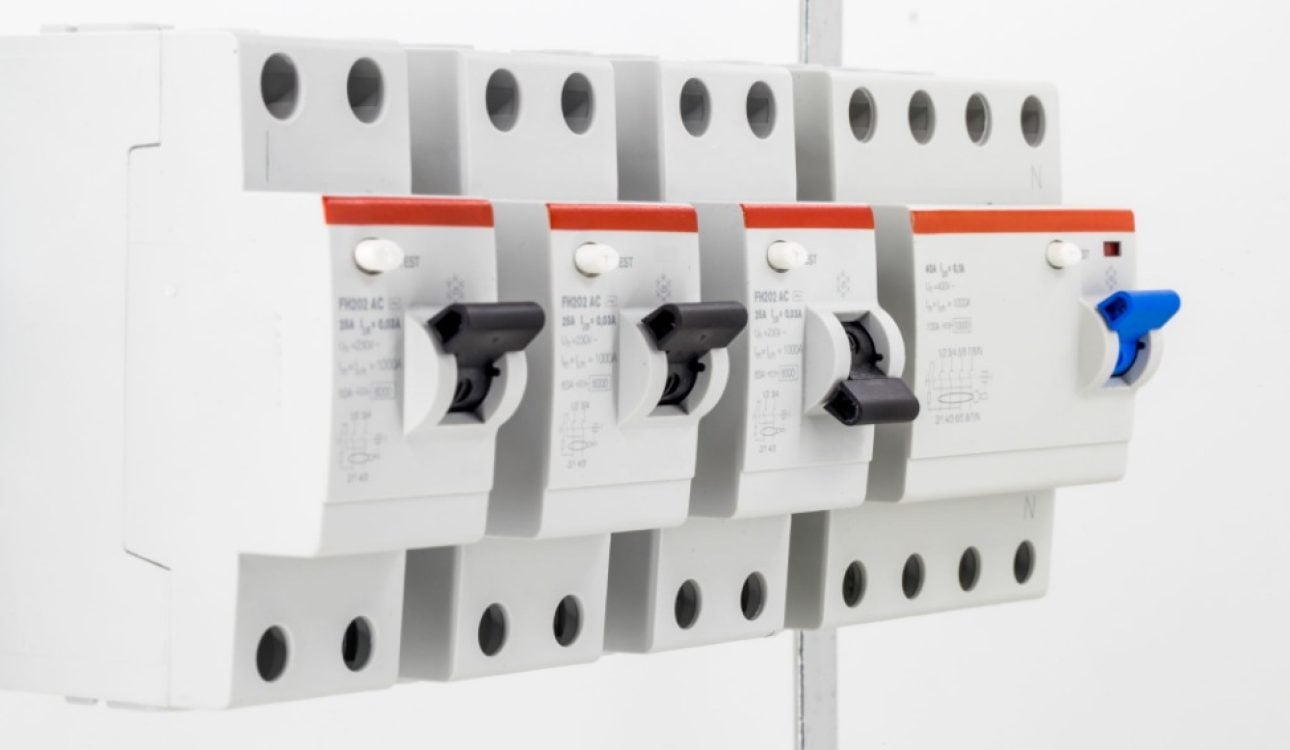

One switch down in a fuse box usually means a protective device has operated on that circuit. Check your appliances, attempt a safe reset, and call an electrician if the switch keeps dropping.
A single switch in the down position is the consumer unit doing exactly what it was designed to do. Modern boards split protection across multiple circuits, so one trip rarely means a total power failure. Frequent trips, however, can point to an underlying fault. Regular inspections help identify wiring issues before problems worsen.
Key Takeaways
- One switch down usually means a breaker, RCD, or RCBO has operated to protect that circuit.
- The three common causes are an overloaded circuit, a faulty appliance, or a wiring fault.
- Do not keep resetting a switch that immediately trips again after being restored.
- Burning smells, heat, buzzing, or scorch marks mean stopping and calling an electrician rather than attempting a reset.
What Does It Mean When a Fuse Box Switch Is Down?
Fuse box switches are normally in the up position when everything is working as it should.
If one switch is down, it has usually tripped for safety. The consumer unit has detected a problem and automatically shut off power to that circuit.
This is different from someone manually switching a circuit off. The switch may look the same, but a tripped switch is the result of a fault, overload, or electrical leakage that needs attention.
Important Note: We handle house rewiring from initial inspection through to certification, ensuring both full and partial rewires are completed with proper testing, compliance, and documentation.
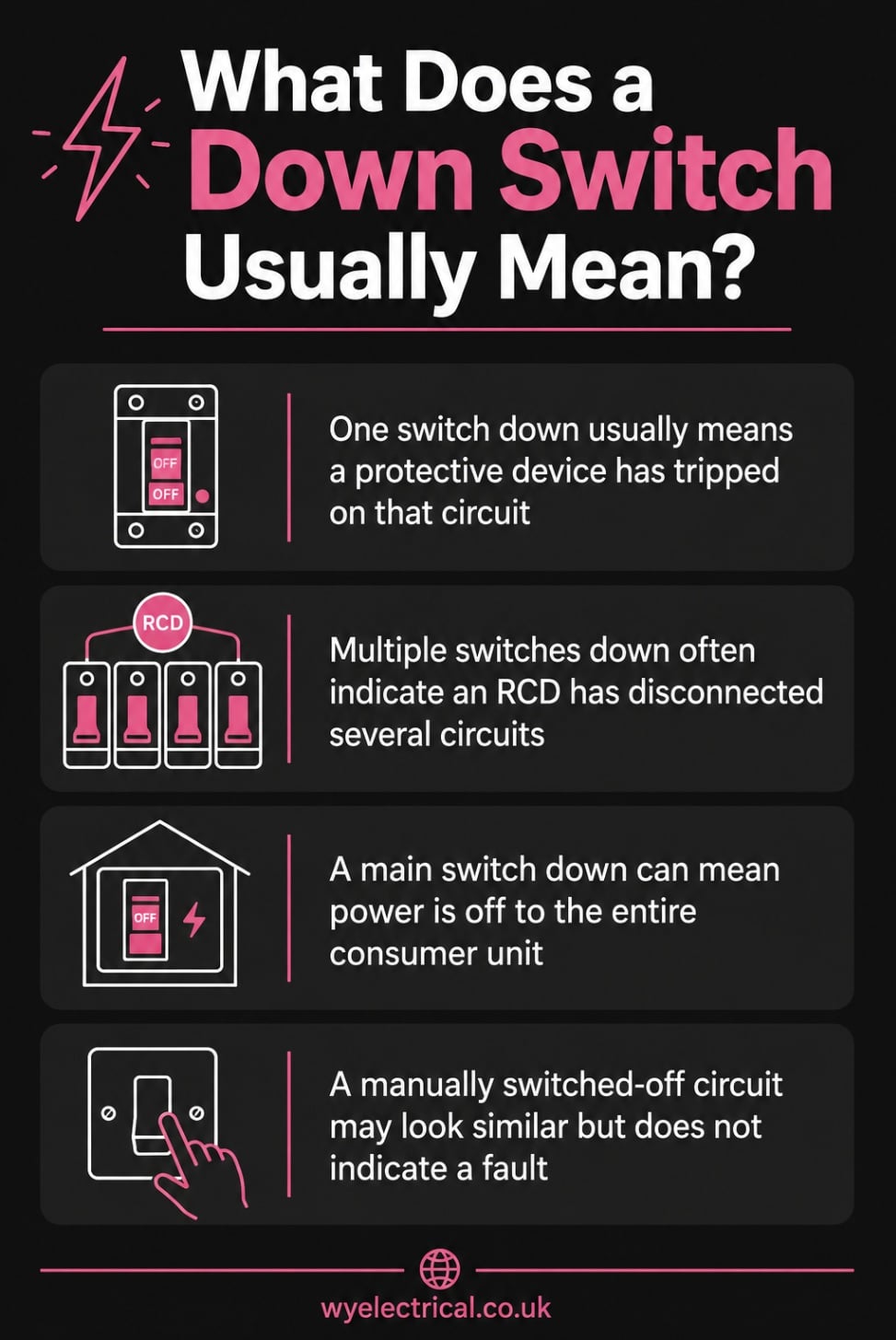
Modern consumer units use different protective devices to keep your home safe.
An MCB (Miniature Circuit Breaker) trips when a circuit becomes overloaded or a short circuit occurs.
An RCD (Residual Current Device) cuts power when it detects electricity flowing where it should not, helping reduce the risk of electric shock.
An RCBO combines both types of protection in a single device.
The reason a switch may trip even when there is no obvious problem is that RCDs are extremely sensitive.
According to guidance from the Institution of Engineering and Technology (IET), they are thousands of times more sensitive than traditional fuses and circuit-breakers. That allows them to disconnect power quickly when a fault is detected.
The IET also notes that modern consumer units often use RCD protection across several circuits. As a result, a fault on one circuit can sometimes cause power loss in more than one room at the same time.
The table below shows what different switch positions usually mean:
| Switch Position | Likely Meaning | What To Do |
|---|---|---|
| All switches up | The consumer unit is operating normally | No action required |
| One switch down | A single circuit has tripped | Find the likely cause before resetting the switch |
| Multiple switches down | A RCD has likely disconnected several circuits | Check which circuits are linked to that RCD |
| Main switch down | Power is off to the entire consumer unit | Check for a power cut or contact your electricity supplier |
A quick look at the switch positions can often tell you whether the problem is limited to one circuit or affecting a larger part of the electrical system.
Are Fuse Box Switches Supposed to Be Up or Down?
Fuse box switches should normally be in the up position. This means the circuit is live and operating as intended.
A switch in the down position means it is off. It may have been switched off manually, or it may have tripped automatically to protect the circuit.
If only one switch is down, the problem is usually limited to that circuit. It does not necessarily mean there is a fault with the entire consumer unit.
Modern consumer units divide the electrical installation into separate circuits, including:
- Lighting circuits
- Socket circuits
- Kitchen appliance circuits
- Dedicated circuits for items like showers or cookers
This arrangement helps contain faults and makes the electrical system easier to manage safely. Because each circuit has its own protection, a fault can affect one area of the home without cutting power everywhere else.
Why Has One Fuse Box Switch Tripped Down?
A single switch dropping while the rest of the board stays on almost always points to a fault on that specific circuit. The protective device responds to whatever has pushed conditions outside safe limits.
The cause almost always traces back to one of three things.
Overloaded Circuits
Running too many appliances from one circuit pushes demand beyond what the wiring can safely carry. The MCB detects the excess current and trips before the cables overheat.
Heaters, kettles, and high-draw appliances sharing a single extension lead are among the most common causes of an overload trip.
Faulty Appliances
A kettle, washing machine, heater, or extension lead with an internal fault can draw abnormal current or create a leakage path to earth. Either will trigger a trip.
Unplugging every appliance on the affected circuit and reintroducing them one at a time is the most reliable way to identify which device is responsible.
Serious Electrical Fault
A short circuit or earth fault causes an immediate trip, sometimes with no prior warning at all. Damaged wiring, loose connections, or water ingress can all produce this result. Wiring faults sit within a broader fire risk picture for UK homes.
England recorded 23,010 accidental dwelling fires in the year ending March 2024, with appliance misuse and equipment faults among the leading causes.
Data on accidental dwelling fires shows electrical faults remain a consistent part of that pattern. A fault left uninvestigated is not a neutral outcome. If your consumer unit is ageing or trips keep returning, our consumer unit replacement service in Leeds covers safety upgrades and full board changes.
Different types of electrical faults produce different symptoms. The table below explains what to look for and how to respond:
| Cause | Common Signs | Recommended Action |
|---|---|---|
| Overloaded circuit | Trip after using multiple appliances | Reduce the load, reset, and monitor |
| Faulty appliance | Trip when one device is plugged in | Unplug all, reintroduce one at a time |
| Short circuit or earth fault | Immediate trip, possible burning smell | Do not reset. Call an electrician |
| Wiring fault | Repeated trips with no clear appliance cause | Professional inspection needed |
Consumer units are designed to disconnect power before dangerous conditions develop. When a circuit keeps tripping, the protective device is usually doing exactly what it was designed to do.
How to Find the Tripped Circuit
Step 1: Check the Consumer Unit
Look for a switch sitting lower than the others or in the off position. Modern consumer units usually label each circuit, helping you identify the affected area or appliance group.
Step 2: Identify the Type of Protective Device
- RCD: Can disconnect multiple circuits at once, affecting several areas of the property.
- RCBO: Protects a single circuit, so the power loss is usually limited to one area.
Step 3: Check Circuit Labels
Clear labels make fault finding much easier. If labels are missing, faded, or inaccurate, consider having them updated during the next electrical inspection
What To Do If a Switch Is Down
Before touching the consumer unit, check for any signs of burning, heat, or scorch marks around sockets or switches on the affected circuit. If anything looks or smells wrong, stop and call an electrician rather than attempting a reset.
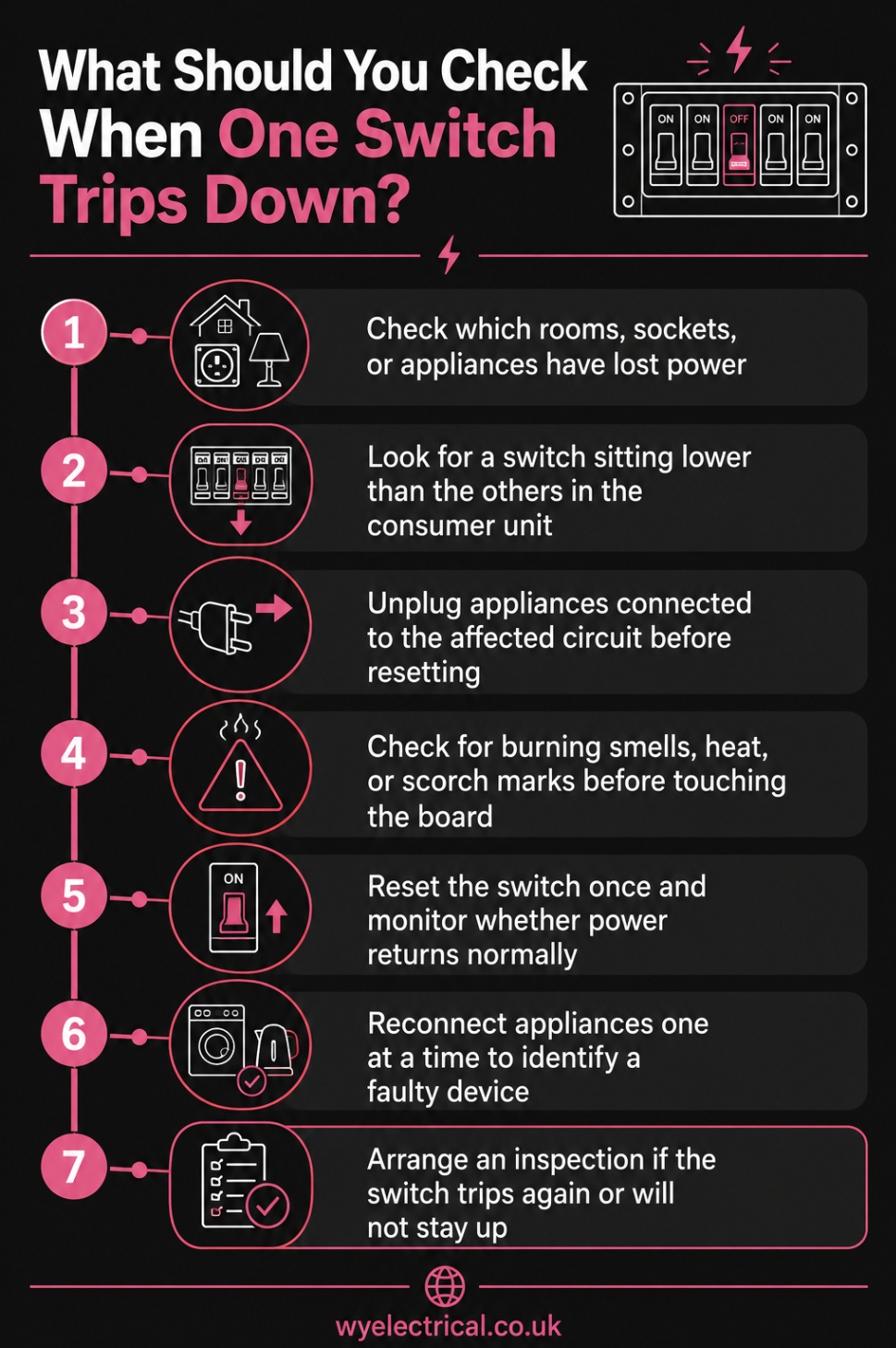
For a straightforward trip with no warning signs, work through the following steps methodically:
Unplug Appliances
Start by removing every appliance from the affected circuit. Attempting a reset with devices still plugged in risks reintroducing the same fault immediately, which tells you nothing useful and puts unnecessary stress on the protective device.
Reset the Switch
Push the tripped switch firmly upward until it clicks. Guidance on electrical equipment safety is clear that a trip signals a fault on the circuit rather than a random event to override. One attempt is enough. If it drops straight away, the fault is still present and a second reset will not change that.
Restore Power Safely
Reintroduce appliances one at a time with a short pause between each. This gradual approach lets you match the trip to a specific device rather than guessing. Once the circuit is live and stable, you have a working starting point for the rest of the investigation.
What If the Switch Will Not Stay Up
A switch that keeps dropping regardless of what is plugged in has not cleared the underlying fault. Repeated resetting does not fix the problem and can mask a fault that needs proper diagnosis. Stop attempting resets and arrange a professional inspection.
If there are no signs of damage or overheating, the following steps can help determine why the circuit tripped:
| Step | What To Do | When To Stop |
|---|---|---|
| 1 | Unplug all appliances on the affected circuit | Stop if you see scorch marks or smell burning |
| 2 | Push the tripped switch firmly upward | Stop if it immediately trips again |
| 3 | Plug appliances back in one at a time | Stop if one appliance triggers a repeat trip |
| 4 | Switch will not stay up after one attempt | Call an electrician |
When To Call an Electrician
Not every consumer unit trip can be fixed by resetting the switch. If the underlying fault is still present, the device will trip again as soon as the circuit is energised.
Some warning signs indicate a more serious problem. Repeated trips, overheating, visible damage, or an ageing consumer unit should not be ignored.
In these situations, further reset attempts are unlikely to solve the issue.
The following signs helps separate routine situations from those that indicate a potentially serious electrical fault:
| Situation | Action |
|---|---|
| Single trip, no smell or damage | Safe to reset following the steps above |
| Trip clears after removing one appliance | Leave that appliance unplugged |
| Repeated trips on the same circuit | Call an electrician |
| Burning smell or scorch marks | Call an electrician |
| Heat around sockets or switches | Call an electrician |
| Switch will not stay up after one reset | Call an electrician |
| Old or visibly damaged consumer unit | Call an electrician |
Electrical safety obligations extend beyond restoring power. Part P of the Building Regulations requires electrical installations in dwellings to provide reasonable protection against fire and electric shock. Rental properties must also undergo regular electrical inspections, with checks required at least every five years.
Early action can prevent larger problems later. A recurring trip may be the first sign of a developing fault. Professional testing can identify the cause and confirm whether repairs, upgrades, or consumer unit replacement are needed.
Our domestic electrician services cover fault finding, repairs, and consumer unit checks across West Yorkshire.
FAQs
Should fuse box switches be up or down?
Up means on. All switches should sit in the up position during normal operation.
Why is one switch down on my fuse box?
A protective device has operated on that circuit. The common causes are an overloaded circuit, a faulty appliance, or a wiring fault.
Why will my fuse box switch not stay up?
A fault is still present on the circuit. Unplug all appliances and try once. If it keeps dropping, call an electrician.
Can a faulty appliance trip a fuse box?
Yes. A faulty kettle, heater, or washing machine can cause an RCD or MCB to operate immediately when plugged in.
Is a tripped fuse box dangerous?
The trip itself is a safety response. Leaving the underlying fault uninvestigated is where the real risk lies.
Conclusion
A switch down in your fuse box is the consumer unit responding to a fault, not a failure of the board itself. Repeated tripping, burning smells, or a switch that will not stay up are all signs the fault needs investigating rather than resetting again.
Contact us for help with a tripped fuse box switch, and we will arrange a prompt inspection.
