
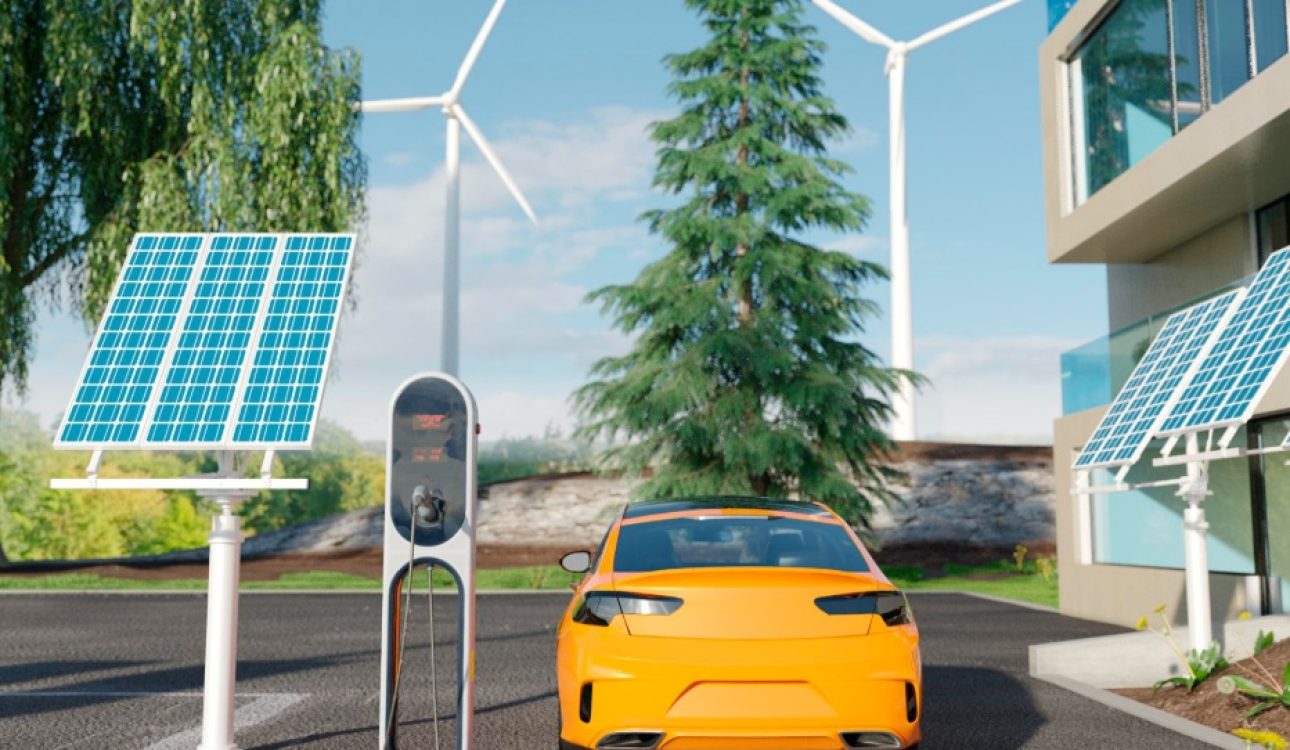

A solar-powered EV charger directs surplus electricity from your solar panels into your electric car, reducing how much grid electricity you need to buy. Not all smart chargers do this automatically.
More UK homeowners are pairing solar panels with a solar powered electric car charger to lower running costs. The idea is simple: use your own solar electricity to charge your car instead of buying power from the grid. This helps you make better use of the energy your panels generate. It can also reduce wasted surplus generation. For many households, that means cheaper EV charging.
Key Takeaways
- A solar-compatible EV charger can automatically divert surplus solar electricity to your car rather than exporting it to the grid.
- Smart charging and solar diversion are not the same thing. Your charger needs specific solar functionality to do this.
- The best charger for you depends on how you want to use your solar electricity, whether that is maximising diversion, balancing home demand or combining solar with a cheaper tariff.
What Is a Solar-Powered EV Charger?
A solar-powered EV charger is a smart home charger that can use electricity generated by your solar panels to charge your car. Specifically, it can detect when your panels are producing more electricity than your home needs and direct that surplus power to your vehicle.
A standard home EV charger does not do this. It simply draws from the grid whenever you plug in.
Smart charging and solar charging are not the same thing. Since 30 June 2022, most private charge points sold in the UK must have smart functionality under the Electric Vehicles (Smart Charge Points) Regulations 2021. That means they can communicate over a network and track energy use.
However, smart functionality alone does not mean the charger can divert surplus solar energy. You need a charger specifically designed for solar integration.
How Does a Solar-Powered EV Charger Work?
The system constantly monitors two things, how much electricity your solar panels are producing and how much your home is using. When your panels generate more electricity than your home needs, the excess power is sent to your car instead of being wasted or exported to the grid. The charger adjusts automatically as solar production and household demand change throughout the day.
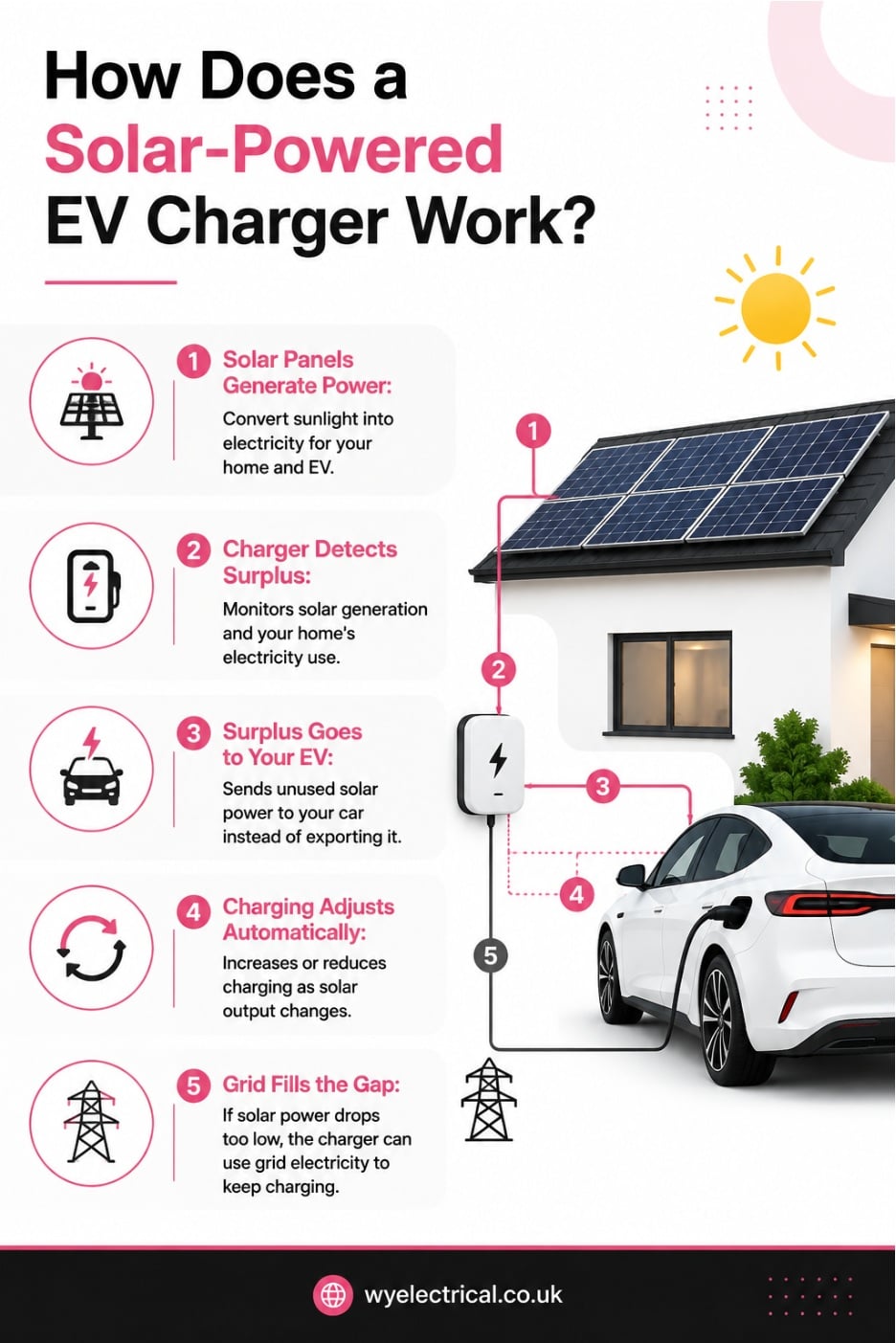
Here is how the process works in practice:
Solar Panels Generate Electricity
Solar panels convert sunlight into usable electricity. Your home appliances use what they need, and anything left over is the surplus that can go towards charging your EV.
People often assume the UK does not get enough sun for solar to be worthwhile. That is not accurate. According to UK sunshine data from the Met Office, the UK averages 1,403 hours of sunshine per year based on 30 years of recorded data. Solar panels work in daylight, not just direct sunlight, so generation happens even on overcast days.
The UK solar deployment statistics back this up too. By March 2025, the UK had around 1.8 million solar installations with a total capacity of 18.1 gigawatts, generating 14.8 TWh of electricity in 2024 alone.
The Charger Detects Surplus Solar Power
A solar-compatible charger continuously monitors both generation and household demand. When it detects that more electricity is being produced than the home is consuming, it identifies that surplus as available for EV charging.
Surplus Energy Is Sent to Your EV
Rather than letting that unused electricity flow back to the grid, the charger captures it and sends it to your car. This is the core benefit. You are using energy you have already generated rather than buying it from a supplier.
The Charger Adjusts Power as Generation Changes
Solar output is not constant throughout the day. Cloud cover, time of day and the season can all affect how much electricity your panels produce. A solar-compatible charger responds to these changes automatically, increasing charging speed when more surplus power is available and slowing down when less is available.
If solar output drops too low, the charger can pause charging altogether. When solar power alone is not enough, most chargers can also draw electricity from the grid to top up your car and keep it charging when needed.
Which EV Chargers Work Best with Solar Panels?
The right charger depends on what matters most to you. Some people want full automatic solar diversion with no fuss. Others want app controls, load balancing or the ability to schedule charging around a cheaper tariff.
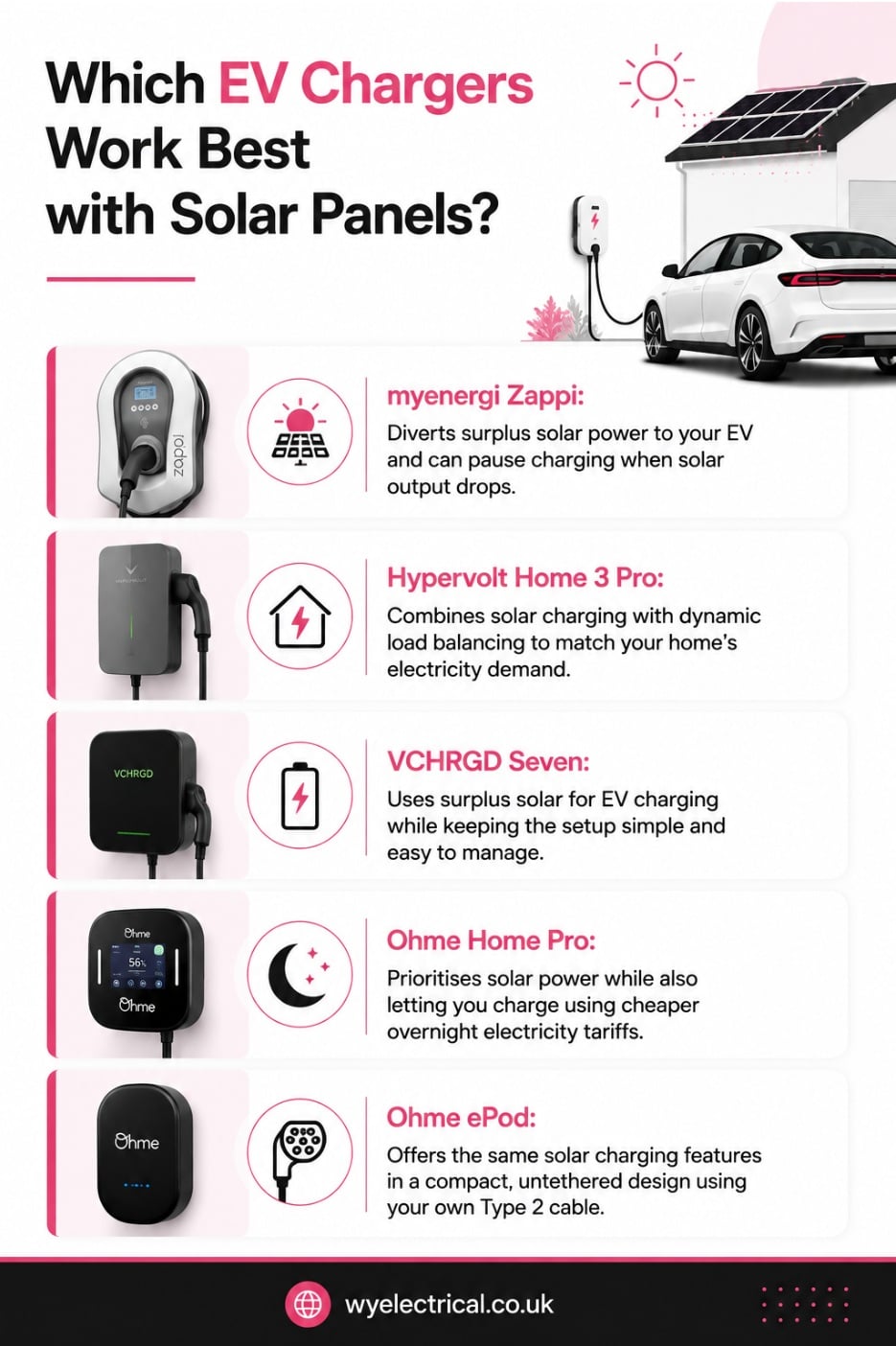
If you are thinking about home EV charger installation alongside your solar setup, here are the main options worth considering:
myenergi Zappi
Best for: Reducing reliance on grid electricity
The Zappi is probably the most well-known solar-diverting charger in the UK, and for good reason. Its Eco mode blends surplus solar with a small amount of grid electricity to keep charging going. Eco+ mode goes further, only charging when surplus solar is available and pausing automatically when it is not.
Key feature: Eco+ automatically pauses charging when there is not enough surplus solar.
Hypervolt Home 3 Pro
Best for: Detailed control over charging
The Home 3 Pro brings together solar integration, dynamic load balancing and strong app controls. Load balancing means the charger monitors your home’s total electrical demand and adjusts output to avoid tripping your supply. It is a good fit if you want solar compatibility alongside more detailed control of how and when charging happens.
Key feature: Dynamic load balancing adjusts charging output to suit your home’s electricity demand.
VCHRGD Seven
Best for: Straightforward solar charging
The VCHRGD Seven takes a more straightforward approach. It can use surplus solar generation for EV charging without overcomplicating the process. If you want a clean, reliable solar-compatible charger without layers of settings to navigate, the Seven is worth a look.
Key feature: A simple approach makes it easier to use without dealing with numerous settings.
Ohme Home Pro
Best for: Using solar alongside smart tariffs
The Home Pro uses Ohme’s Solar Boost feature to prioritise available solar energy for charging. It also connects with smart tariffs, so you can combine solar diversion during the day with cheaper grid electricity overnight. It is a practical choice if you want to get the most from both solar generation and an off-peak tariff.
Key feature: Smart tariff integration lets you take advantage of cheaper overnight electricity.
Ohme ePod
Best for: Flexible cable setup
The ePod offers the same Solar Boost functionality in a compact, untethered design. You bring your own Type 2 cable rather than having one permanently attached to the unit. That makes it a good option if you want a smaller wall unit or if you already have a cable and prefer the flexibility.
Key feature: The untethered design lets you use your preferred Type 2 cable.
Can You Charge an Electric Car Using Only Solar Power?
Yes, it is possible to charge your electric car entirely from solar power. Whether you can do it consistently is a different question.
On a long summer day with a decent-sized array, your panels may generate enough surplus to fully charge your car. In winter or on cloudy days, solar output drops and grid electricity usually needs to fill the gap.
Adding battery storage helps significantly. It holds surplus solar electricity generated during the day and makes it available for charging later, even when your panels are no longer producing much power.
Without battery storage, full solar-only charging is realistic in good conditions but not guaranteed year-round. Most households end up using a mix of solar and grid electricity, with the balance shifting depending on the season.
Solar Charging vs Grid Charging (Which Is Cheaper?)
Charging from surplus solar electricity is generally cheaper than using grid electricity. The electricity is generated on site, so you are not paying a supplier for those units. How much you save overall depends on:
- Your solar installation costs
- How much electricity your EV needs
- When you charge your car
Grid charging costs whatever your electricity tariff says per kilowatt-hour. Solar charging reduces how many of those kilowatt-hours you need to buy. A battery storage system extends the window in which you can use your own solar electricity, while an off-peak tariff gives you a lower-cost grid option for overnight charging when solar is unavailable.
Any surplus solar electricity that is not used by your home, battery or EV can be sold back to the grid through the Smart Export Guarantee, which pays you a rate per unit exported.
The table below compares the typical cost considerations of solar, grid and combined EV charging:
| Charging Method | Main Electricity Source | Cost Consideration | Best Suited To |
|---|---|---|---|
| Solar Charging | Self-generated solar energy | Reduces grid electricity purchases | Daytime charging when solar generation is available |
| Grid Charging | Electricity grid | Depends on your electricity tariff | Charging when solar generation is insufficient |
| Solar + Battery + Off-Peak | Solar, stored energy and grid electricity | Can minimise grid electricity costs | Maximising savings across different charging times |
FAQs
How many solar panels do I need to charge an EV?
A typical home EV charger runs at 7kW. A 3.5kW to 4kW solar array can generate enough surplus to contribute meaningfully, but a larger array gives you more to work with.
Do I need battery storage for solar EV charging?
No, but it helps. Without storage, surplus solar can only charge your car while the sun is shining. A battery lets you use that energy later.
Can I charge my EV overnight using solar energy?
Not directly from panels, since they produce nothing at night. A battery charged during the day can supply overnight charging.
Can I add a solar EV charger to my existing solar PV system?
Yes. A solar-compatible charger can work alongside an existing solar PV system without needing to replace it.
Does a solar-powered EV charger work during winter?
Yes, though solar generation is lower. The charger will still divert whatever surplus is available and can top up from the grid when needed.
How much solar electricity does an EV typically use per mile?
Most electric cars use around 3 to 4 miles per kilowatt-hour, so roughly 0.25 to 0.33kWh per mile.
Conclusion
Solar EV charging lets you use more of the electricity your panels generate while reducing your reliance on the grid. The right setup depends on your solar system, driving needs and charging habits. We install solar compatible EV chargers across Leeds and West Yorkshire. Get your free quote, and we can help you choose the right setup.
