
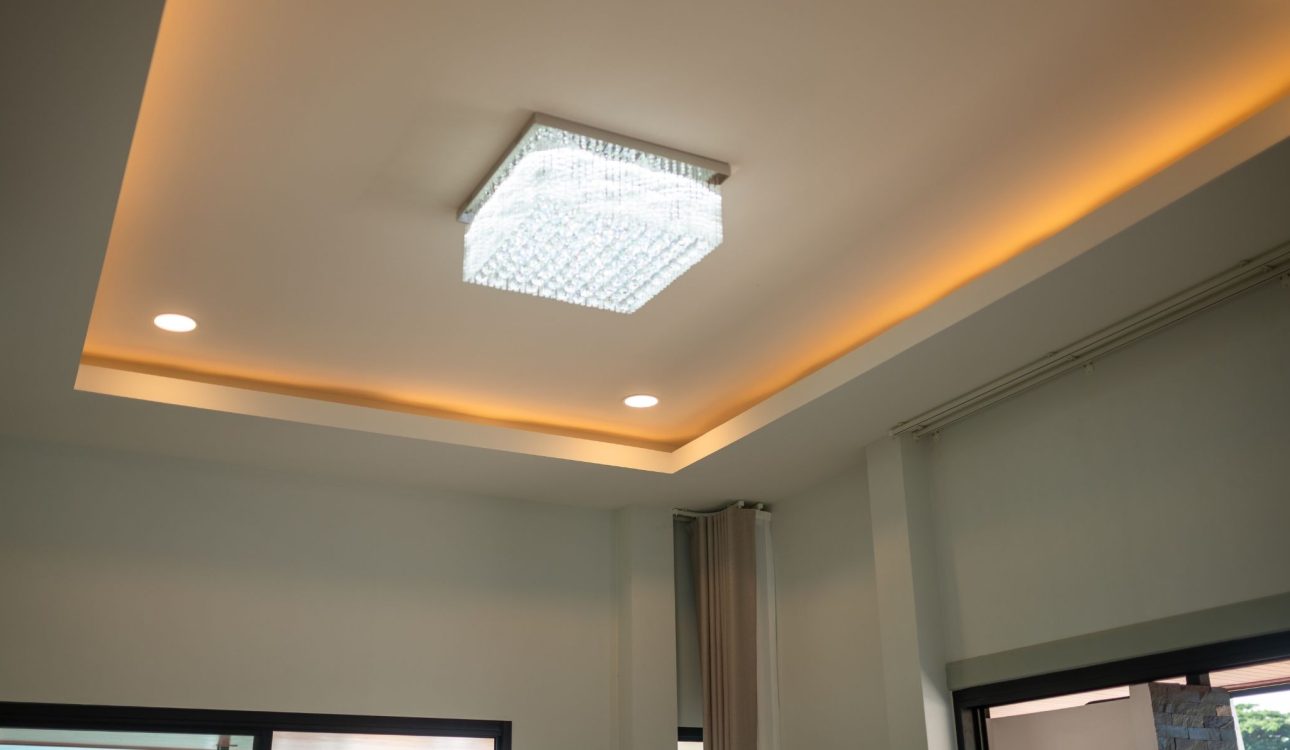

Choose IP20 for dry indoor rooms, IP44 for bathrooms and sheltered outdoor areas, and IP65+ for exposed outdoor lighting and UK weather conditions.
Getting the IP rating wrong on a lighting installation causes real problems. If you use the wrong fitting in a bathroom, you’re risking electric shock, and if you install IP20 lights on your porch, you’ll be replacing them within months. With the UK’s increasingly wet weather and around 6.3 million properties at flood risk, choosing the correct IP rating matters more than ever.
Key Takeaways
- The two-digit code tells you exactly what protection a fitting has against solids (first digit) and liquids (second digit), with UK regulations requiring specific minimums for bathrooms and outdoor locations.
- With 2023 rainfall at 111-113% of the long-term average and flood risks increasing, exposed outdoor fittings need at least IP65 to survive our climate long-term.
- S 7671 Section 701 requires a minimum IPX4 in bathroom zones 1 and 2, rising to IPX5 where water jets are likely during cleaning or showering.
What an IP Rating Means for UK Lighting Installations
IP stands for Ingress Protection. It’s a two-digit code that tells you exactly how well a fitting keeps out solid objects and water.
The first digit covers solids. Zero means no protection at all. Six means completely dust-tight (nothing gets in). The second digit covers liquids, from zero (no protection) up to eight (submersion).
An IP rating is based on proper testing to Ingress Protection (IP) ratings standards. Manufacturers have to prove their fittings meet the code through independent laboratory tests.
UK electricians rely on IP ratings during every lighting selection. We’re not guessing whether a fitting will cope with bathroom steam or garden rain. The IP code tells us definitively.
There’s a crucial difference between something described as “water resistant” and an IP-rated fitting. Water-resistant is vague marketing speak. An IP rating is a testable, provable standard that we can specify with confidence.
IP Rating Chart for Common Lighting Installations
Each IP rating offers specific levels of protection that correspond directly to UK installation environments and regulatory requirements.
| IP Rating | Solid Protection | Liquid Protection | Typical UK Applications |
|---|---|---|---|
| IP20 | Protected against objects larger than 12.5mm (e.g. fingers) | No water protection | Living rooms, bedrooms, offices, hallways, dry commercial spaces |
| IP44 | Protected against objects larger than 1mm | Splash-proof from any direction | Bathroom zones 1 & 2, kitchens, sheltered porches, covered garages |
| IP65 | Completely dust-tight | Protected against water jets | Exposed gardens, driveways, building facades, pathway lighting, security lights |
| IP66 | Completely dust-tight | Protected against powerful water jets | Coastal properties, floodlit car parks, industrial sites, pressure-wash areas |
The jump from IP44 to IP65 represents a significant increase in weather resistance. Whilst IP44 handles occasional splashes brilliantly, it won’t survive sustained exposure to driving rain or the kind of downpours that UK weather delivers regularly. The dust-tight seal in IP65 and IP66 fittings also prevents the gradual ingress of fine particles that can cause internal corrosion over the years of service.
IP Ratings for Indoor Lighting in UK Homes and Businesses
Many indoor lighting installations need nothing more than IP20. Your office ceiling panels, bedroom pendant lights, living room downlights and hallway spots all sit comfortably at this rating.
IP20 protects against fingers and typical indoor dust. Unless you’re specifically near moisture sources, it’s perfectly adequate and keeps costs sensible.
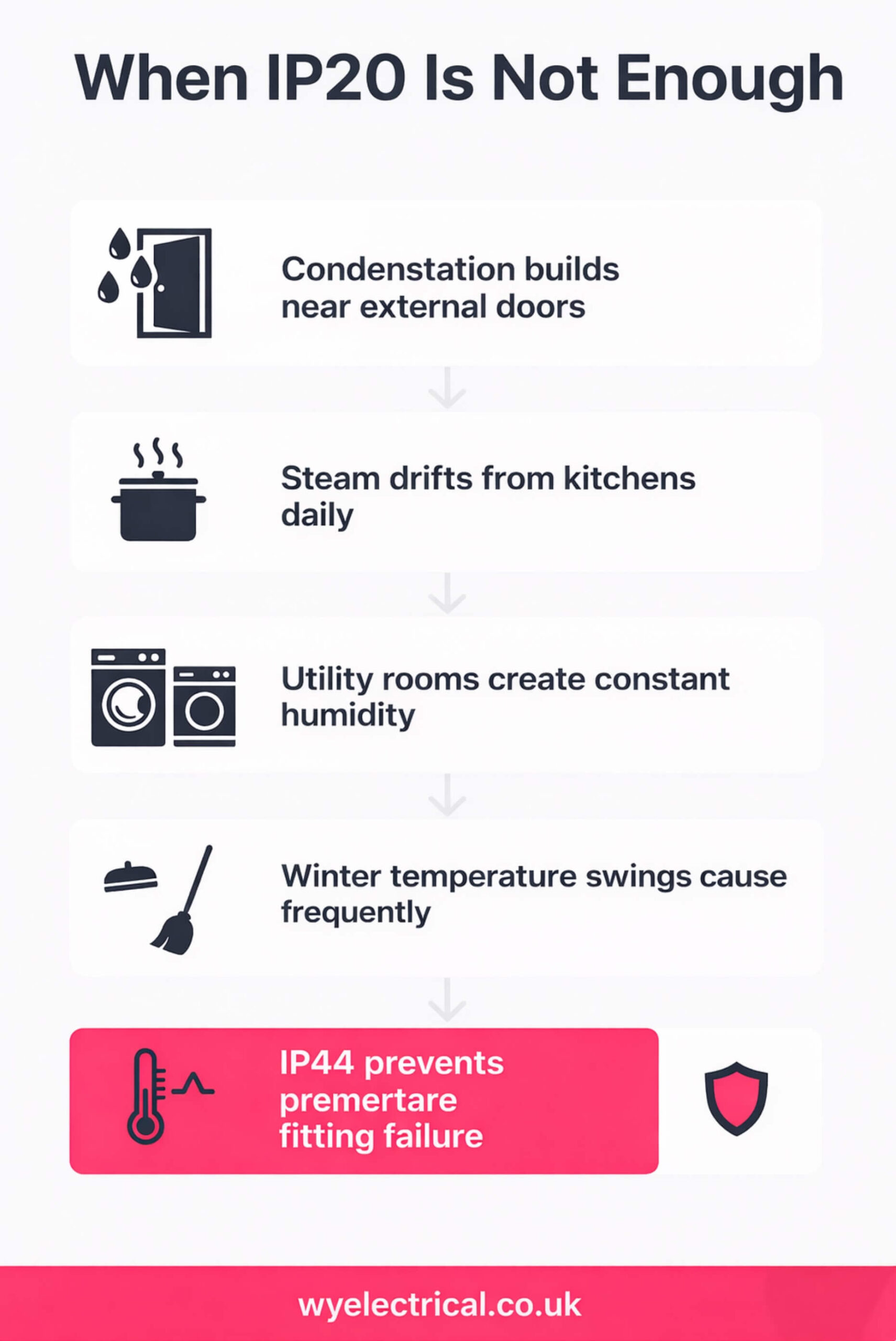
There are exceptions though. Rooms with external doors might experience condensation during winter. Utility rooms with washing machines create humidity. Commercial kitchens (even domestic ones) generate steam that drifts across ceilings.
In these borderline cases, stepping up to IP44 adds peace of mind without breaking the budget. It’s insurance against moisture you didn’t anticipate.
Bathroom and Kitchen Lighting IP Ratings Under UK Regulations
Bathrooms aren’t optional when it comes to IP ratings. They’re governed by strict legal requirements under BS 7671 Section 701, which divides bathrooms into zones based on water exposure risk.
| Zone | Location | Minimum IP Rating | Notes |
|---|---|---|---|
| Zone 0 | Inside bath or shower tray | IPX7 (immersion-proof) | Rarely used for lighting; specialist low-voltage fittings only |
| Zone 1 | Directly above bath or shower up to 2.25m | IPX4 (splash-proof) | IPX5 required if powerful showers or cleaning jets are likely |
| Zone 2 | Within 60cm horizontally of bath or shower | IPX4 (splash-proof) | Standard requirement for most bathroom ceiling and wall lights |
| Outside Zones | Beyond 60cm from water sources | IP20 acceptable | IP44 recommended for additional protection against general humidity |
Water and electricity together are lethal. BS 7671 bathroom zones exist because people have died from inadequate protection. Professional assessment ensures your bathroom lighting meets both the letter and spirit of these safety requirements.
Kitchens sit in a grey area.
General kitchen ceiling lights can often be IP20 if they’re well away from steam sources. Above hobs or near sinks, you want IP44 minimum. Grease accumulation is another consideration (higher IP ratings mean better sealed fittings that clean more easily).
Outdoor Lighting IP Ratings for UK Weather Conditions
The UK weather is getting wetter.
2023 rainfall reached 111-113% of the 1991-2020 average. We’re seeing more intense rainfall events, longer wet periods, and increased flood risk across the country. The Environment Agency reports that almost 6.3 million properties in England now sit in areas at risk from flooding (rivers, sea, or surface water).
For sheltered locations like covered porches or garage entrances, IP44 still works. But anything genuinely exposed to the elements needs IP65 minimum. Garden wall lights, driveway bollards, pathway lighting, external building spots, and security lighting all face driving rain, standing water, and temperature fluctuations that IP44 simply won’t handle.
When we install outdoor lighting, we assess exposure levels and recommend IP-rated fittings designed for long-term UK weather conditions, not just what will work on installation day.
UK Safety Standards That Affect IP Rating Selection
IP ratings don’t exist in isolation. They’re part of broader electrical safety compliance under UK law.
Building Regulations Part P covers electrical safety in dwellings. Any fixed electrical installation work must be designed and installed to protect people from fire and electric shock. That means following BS 7671 (the IET Wiring Regulations), which specifies IP requirements for different locations.
Competent person schemes allow qualified electricians to self-certify work. Otherwise, you must notify building control before starting. Either way, the IP rating must be appropriate for the location, and the installation must include proper RCD protection, correct earthing, and suitable circuit design.
Using the correct IP rating is a fundamental safety practice. It’s not gold-plating or an unnecessary expense. It’s the baseline requirement for keeping people safe from electric shock and fire risk.
Common IP Rating Mistakes We See on UK Lighting Installations
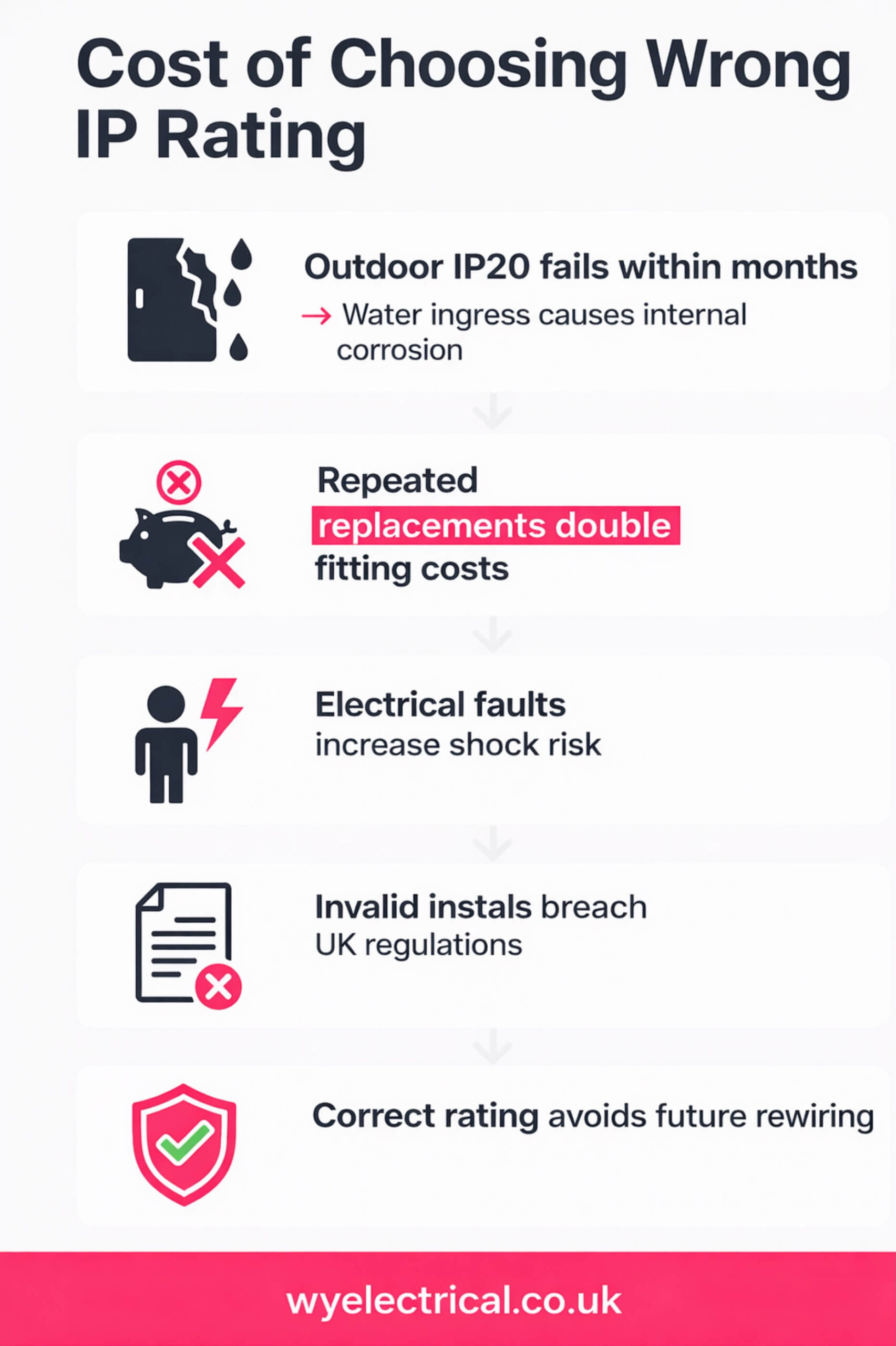
The most frequent mistake is using indoor fittings outdoors. Someone installs a lovely IP20 pendant on their porch because it matches the hallway. Six months later, it’s corroded and dangerous.
Here are the mistakes we encounter most often on site:
- Assuming IP44 equals waterproof (it handles splashes, not sustained rain or water jets)
- Ignoring manufacturer test certification (a sticker claiming IP65 means nothing without proper IEC/BS test reports)
- Installing fittings that will be pressure-washed without IPX5 minimum protection (the first clean destroys them)
- Forgetting impact resistance (IK rating) in vandal-prone areas (IP65 keeps water out whilst being smashed by footballs)
- Using inadequate IP ratings in flood-risk areas despite clear Environment Agency warnings
These aren’t theoretical concerns. Each mistake leads to premature failure, replacement costs, and potential safety hazards that could have been avoided with proper specification from the start.
Conclusion
Picking the right IP rating is straightforward. IP20 suits dry indoors, IP44 works for bathrooms and sheltered outdoors, IP65 is best for exposed areas, and IP66 for harsh coastal conditions.
If you’re unsure which IP rating is right for your lighting installation, we’ll assess your setup and recommend the right fittings, fully compliant and built to last.
Get in touch with us today for expert advice or a free quote on your lighting installation.
FAQs
What IP rating do I need for bathroom ceiling lights in the UK?
It depends on the zone. Zones 1 and 2 need at least IPX4 (IPX5 if water jets are likely). Zone 0 needs specialist fittings. Outside zones, IP20 is allowed, but IP44 is recommended.
Is IP44 good enough for outdoor lighting in the UK?
Only for sheltered areas like porches. Exposed outdoor lighting should be IP65 minimum. Coastal locations are better suited to IP66.
Can I use IP20 lights in kitchens?
Yes, for general areas away from steam and splashes. Near sinks or hobs, IP44 is safer. Commercial kitchens should use IP44 throughout.
What is the difference between IP65 and IP66 lighting?
Both are dust-tight. IP65 resists water jets; IP66 withstands powerful jets. IP65 suits most outdoor use, IP66 is better for harsh or coastal conditions.
Do UK regulations legally require a specific IP rating?
Yes, in bathrooms. BS 7671 requires IPX4 in zones 1 and 2. Elsewhere, fittings must simply be suitable for their environment.
