
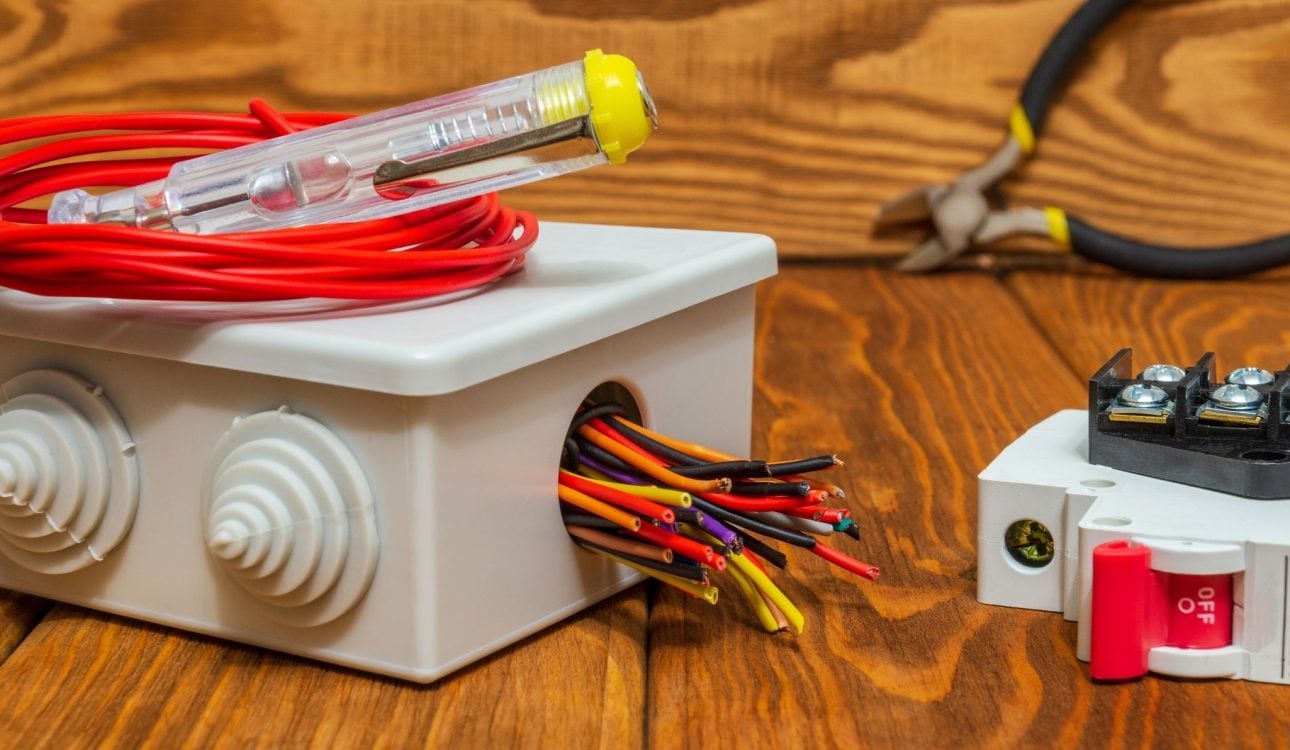

Modern UK live wires are brown, neutral wires are blue, and earth wires are green and yellow. Older pre 2004 wiring uses red for live, black for neutral, and plain green for earth.
Modern UK live conductors are brown, but older wiring installed before 2004 uses red for the live conductor. Colour identification matters for safety, proper testing, and legal compliance with technical standards that govern electrical installations. This article explains current and older wire colours and why the UK changed systems.
Key Takeaways
- Brown indicates live conductors in modern UK wiring, while red shows live wires in older pre 2004 installations.
- Visual colour checks help initial identification, but voltage testing with proper isolation remains mandatory for safe work.
- Mixed colour systems exist in properties where work happened across different periods, requiring careful verification before touching conductors.
What Colour Is the Live Wire in the UK
The live wire in modern UK electrical installations is brown, following harmonised European standards adopted in 2004.
Older wiring installed before 2004 uses red for the live conductor, and many UK homes still contain this legacy colour scheme.
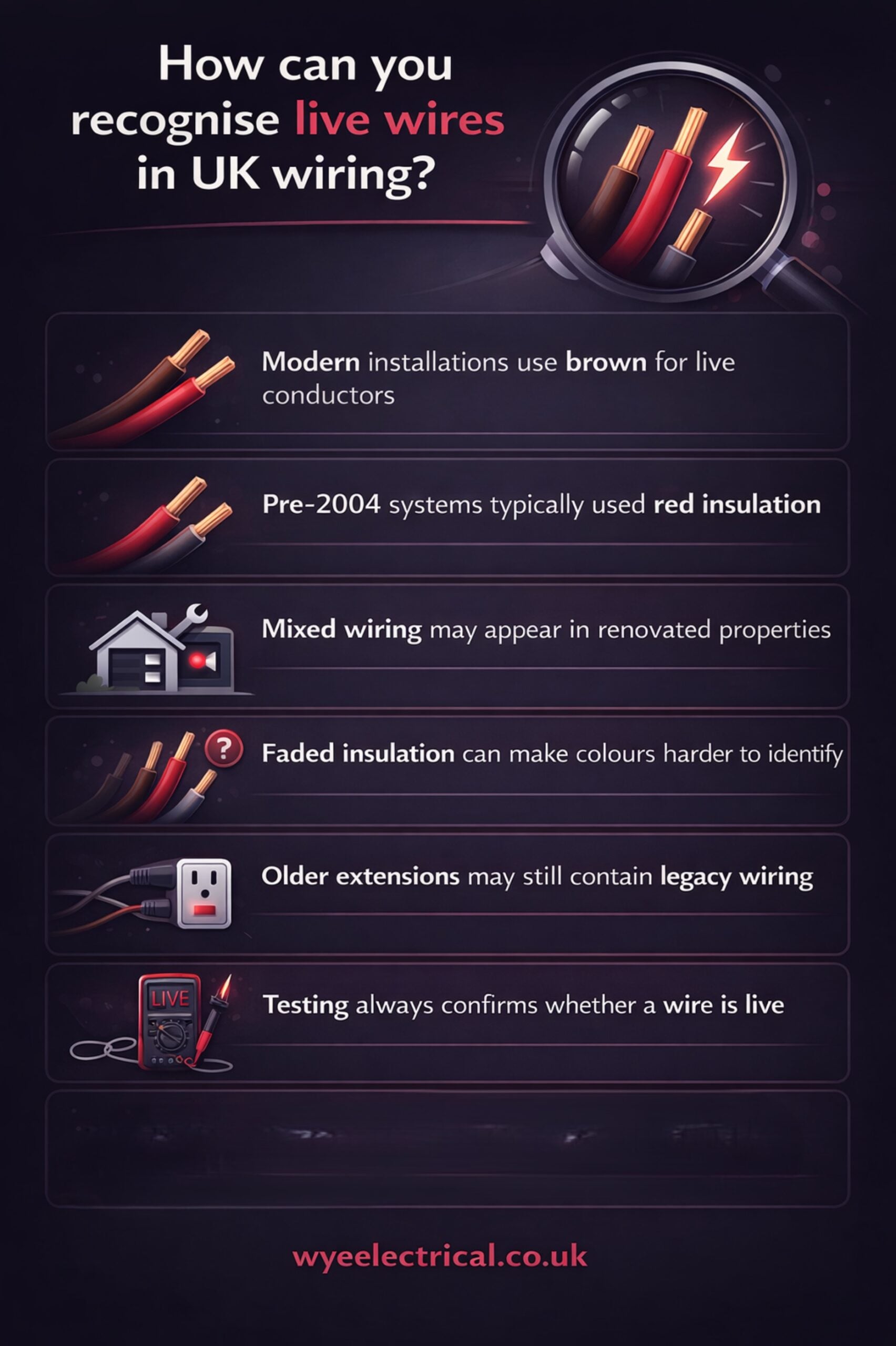
Colour identification helps initial recognition, but you should never assume conductors are dead based on colour alone because mixed systems, faded insulation, and non-standard installations all create confusion. Always isolate circuits at the consumer unit and verify with a proper voltage tester before touching any conductor.
Wiring Colour Standards in the UK
UK wiring colour standards changed during the mid 2000s when harmonised IEC colours replaced the previous British system. The transition aimed to align UK electrical practice with European standards and improve safety through consistent identification across international installations.
The table below shows current and legacy wire colour identification used in UK properties:
| Conductor | Modern Colours (2004 onwards) | Older Colours (pre 2004) |
|---|---|---|
| Live (Phase) | Brown | Red |
| Neutral | Blue | Black |
| Earth (Protective) | Green and Yellow | Plain Green |
Technical standards for conductor identification and installation verification define requirements for selection, erection, and safety compliance in UK electrical work.
Homeowners should understand these standards because electrical installation condition reports assess compliance, landlords face legal inspection requirements every five years, and insurance claims may require evidence of compliant installations after electrical fires or faults.
Why UK Wiring Colours Changed
The UK adopted a harmonised colour system used across Europe to align with IEC electrical identification rules.
This alignment made electrical training, installation procedures, and safety practices more consistent across international borders. The transition period from 2004 to 2006 allowed both colour systems to appear in installations as stockists cleared old cable inventory and electricians adapted to new requirements.
During this period, electricians had to label circuits clearly where colours were mixed to prevent future confusion during maintenance work.
Because both colour systems may exist in UK homes today, electricians always verify wiring with proper voltage testing rather than relying on colour identification alone.
How to Identify Live, Neutral and Earth Wires Safely
Visual checks provide initial clues, but voltage testing with proper isolation remains mandatory before touching any conductor.
Visual Checks to Use First
Look for conductor colours matching either modern or legacy standards, check for coloured sleeving at terminals where cores might be re-identified, examine markings printed on cable sheaths, assess insulation age and brittleness, and note visible joins or junction boxes that might indicate mixed installations.
Pitfalls include faded colours on old cables where brown and blue can look similar under poor lighting, taped joints covering original colours, and non-compliant DIY work using whatever cable colours were available.
Testing and Isolation Steps
Before working on any wiring, the circuit must be safely isolated and tested. These steps confirm the power is off and the conductors are safe to handle:
- Switch off the power at the consumer unit and lock out the relevant circuit breaker or remove the appropriate fuse.
- Turn off the RCD protecting the circuit if your consumer unit has split RCD protection.
- Test your voltage tester on a known live circuit to confirm it works properly.
- Use a two-pole voltage tester or non-contact voltage detector to check for live conductors.
- Test each conductor individually to identify which carries voltage and which remains at earth potential.
- Confirm the circuit is completely dead before touching bare conductors or making any connections.
When testing produces ambiguous results because colours do not match either standard system or cables show signs of tampering, stop work immediately and call a qualified electrician.
Electrical shock injuries occur through direct contact, arcing, and secondary trauma from falls when people touch live conductors without proper isolation.
Personal protective equipment including insulated gloves helps, but never rely on fuses or light switch positions alone because switches can be wired incorrectly and fuses may not protect all conductors in a circuit.
Live Wires in Different Scenarios
Different circuits and work histories explain why wire colours vary across properties and why testing becomes essential.
Single-Phase Residential Circuits
Typical cable layouts use brown for live and blue for neutral in modern installations, and you will see these in socket circuits, lighting circuits, and appliance connections throughout residential properties.
You can usually find these wiring connections in several common locations, including:
- Behind sockets where cables terminate at back boxes
- Inside ceiling roses where lighting circuits connect
- At consumer units where circuits originate
Flexible cables and appliance leads differ from fixed wiring because plug leads use the same brown, blue, green and yellow scheme but employ stranded conductors for flexibility rather than solid cores used in fixed installations.
Three-Phase and Multi-Core Installations
Multiple live conductors in three-phase systems use brown, black, and grey for the three phases in modern installations, while older three-phase work used red, yellow, and blue phase identification.
Homeowners might encounter three-phase systems in large properties with high power demands, commercial premises converted to residential use, and some newer developments where developers installed three-phase supplies for future proofing.
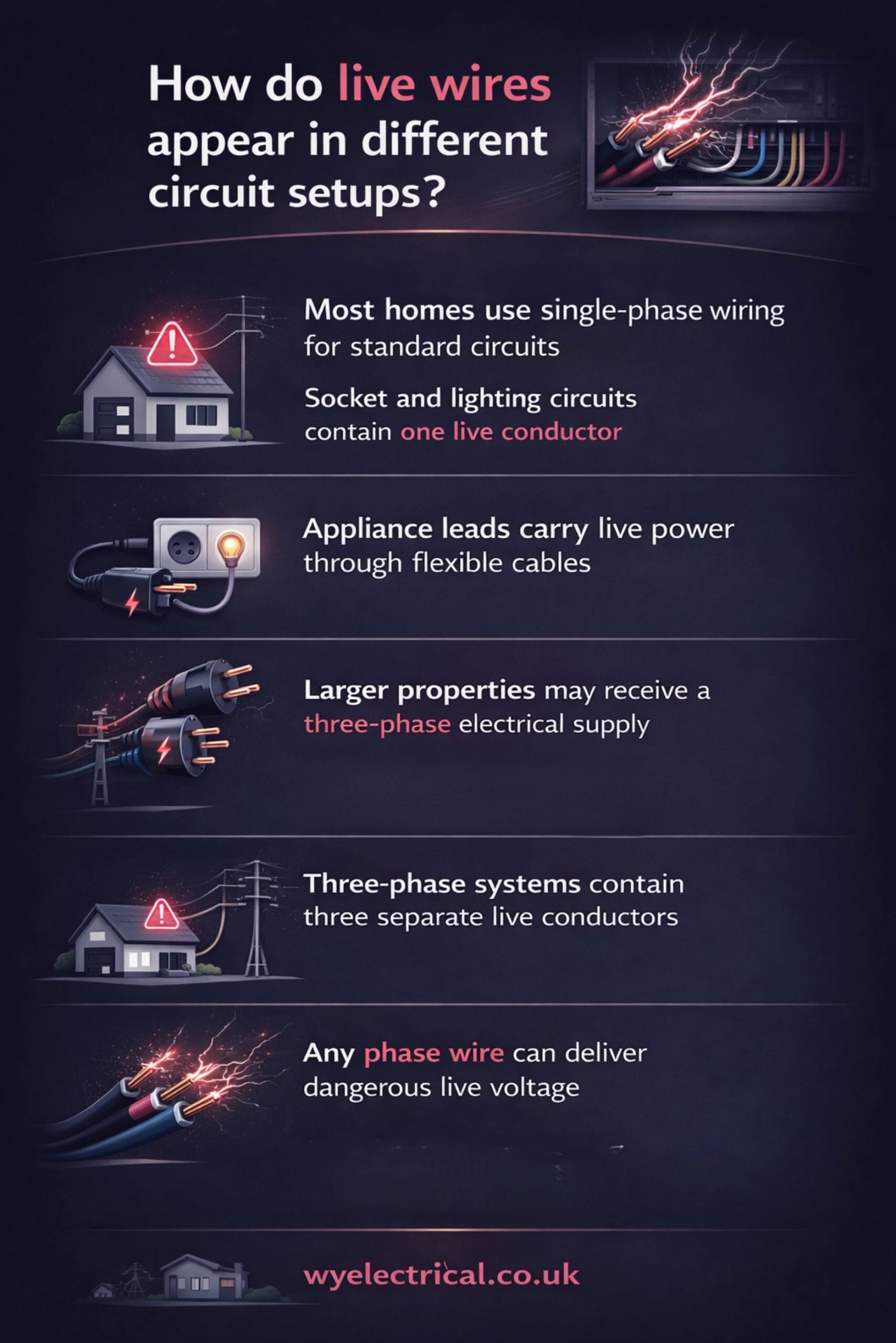
Each phase carries live voltage relative to neutral and earth, which means any of the phase conductors can deliver dangerous shocks if touched without proper isolation.
Common Mistakes with Live Wire Identification
Common mistakes create serious safety risks when people work on electrical installations without proper knowledge. Mixing old and new wire colours after partial rewires confuses future maintenance because colour identification becomes unreliable.
Assuming black is always neutral can be dangerous in mixed systems, where it may represent an old neutral or a re-identified phase conductor. Confusing plug lead colours with fixed wiring also causes errors, since many homes still use older red and black wiring.
If anything seems uncertain, stop work and call a qualified electrician immediately.
Here is a summary of rewiring indicators that suggest professional inspection or replacement becomes necessary:
| Warning Sign | What It Indicates | Action Required |
|---|---|---|
| Fabric insulation or rubber cables | Very old installation from 1950s or earlier | Immediate professional rewiring assessment |
| Brittle or cracked insulation | Degraded protection increasing shock risk | Urgent replacement of affected circuits |
| Consumer unit without RCDs | Does not meet current safety standards | Upgrade consumer unit and possibly full rewire |
| Frequent circuit breaker tripping | Overloaded circuits or developing faults | Load assessment and possible circuit additions |
| C1 or C2 codes on EICR | Dangerous or potentially dangerous defects | Remedial work within statutory timeframes |
Inspection regime guidance and classification codes explain that C1 codes indicate danger requiring immediate remedial action, C2 codes show potentially dangerous situations needing urgent attention, and landlords must remediate these within legal timeframes to maintain compliance.
Obvious signs including burning smells, warm sockets, or flickering lights all indicate urgent professional assessment regardless of wire colours present.
Conclusion
Colour identification helps recognise conductors, but isolation and voltage testing are essential before touching any wire. Modern systems use brown for live, while older wiring uses red, and both may exist in one property. If legacy wiring or faults appear, professional electrical inspection and upgrades may be necessary.
Get a free quote and we will arrange a safe inspection to assess your wiring.
FAQs
What colour is the live wire in the UK?
Brown in modern installations from 2004 onwards, and red in older pre 2004 wiring. Always test before touching because colour alone cannot guarantee conductor status.
What were the old live wire colours?
Red indicated live, black showed neutral, and plain green marked earth in UK wiring installed before the mid 2000s harmonisation changes.
How do I know if I have old wiring?
Visible signs include red and black cables, fabric or rubber insulation, round pin sockets, and consumer units with rewirable fuses rather than modern circuit breakers.
Can black ever be live?
Yes in mixed systems where electricians re-identified neutral conductors as live using sleeving, or in older three-phase installations using different colour schemes.
Do flexible cables follow the same colours?
Modern plug leads use brown live, blue neutral, and green and yellow earth matching fixed wiring colours, though older appliances may have different schemes.
