


A 3-bedroom house rewire in the UK typically costs £3,000 to £7,000 and usually takes 5 days to 2 weeks to complete, depending on the property size, wiring condition, and upgrade requirements.
A full rewire replaces old electrical systems to improve safety, reliability, and compliance with current UK regulations. Costs vary based on the property’s age, layout, accessibility, and the amount of electrical work required. Some projects are completed within a week, while larger or more complex homes can take considerably longer and require additional upgrades.
Key Takeaways
- A 3-bedroom rewire costs £3,000 to £7,000 typically, but older properties with difficult access cost more.
- Full rewires include new circuits, sockets, switches, lighting points, and consumer unit replacement under current UK standards.
- Part P Building Regulations and BS 7671 wiring standards apply to all domestic rewiring work in England and Wales.
What Is Included in a Full House Rewire
A full rewire replaces all the wiring, circuits, sockets, switches, and lighting points throughout the property. The consumer unit gets upgraded to meet current safety standards. New cables run through walls, floors, and ceilings to every room. Some projects include upgraded fittings or extra sockets beyond the original layout. A complete rewiring project typically covers:- New circuits for lighting, power, and appliances throughout the property
- Consumer unit replacement with modern RCD protection and adequate capacity
- Socket and switch replacement with proper earthing and circuit protection
- Testing, inspection, and certification proving compliance with UK wiring regulations
- Cable routing through walls, floors, and ceilings following safe installation practices
Important Note: We handle house rewiring from survey through to certification, which means full and partial rewires get completed with proper testing and documentation.
Cost Breakdown for a 3 Bedroom House
The final quote depends on the property survey rather than just the bedroom count. Several major factors change how much labour and materials the job needs.
The following factors often have the biggest impact on rewiring costs:
| Cost Factor | What It Changes | Why It Affects Price |
|---|---|---|
| Property age | Access routes, wiring complexity | Older homes need more chasing and cable routing |
| Wiring condition | Extent of replacement work | Damaged systems need full replacement, not repair |
| Access difficulty | Labour time and disruption | Occupied homes or awkward layouts slow progress |
| Occupancy | Working hours and protection needed | Empty properties allow faster, unrestricted work |
| Consumer unit upgrade | Equipment and certification costs | Modern units with RCD protection cost more |
| Socket and light count | Material quantity and circuit planning | More points mean more cable and labour time |
A terraced Victorian home with solid walls costs more than a modern semi with accessible routes. Occupied properties take longer because electricians work around furniture and daily routines (which adds labour hours to the final bill).
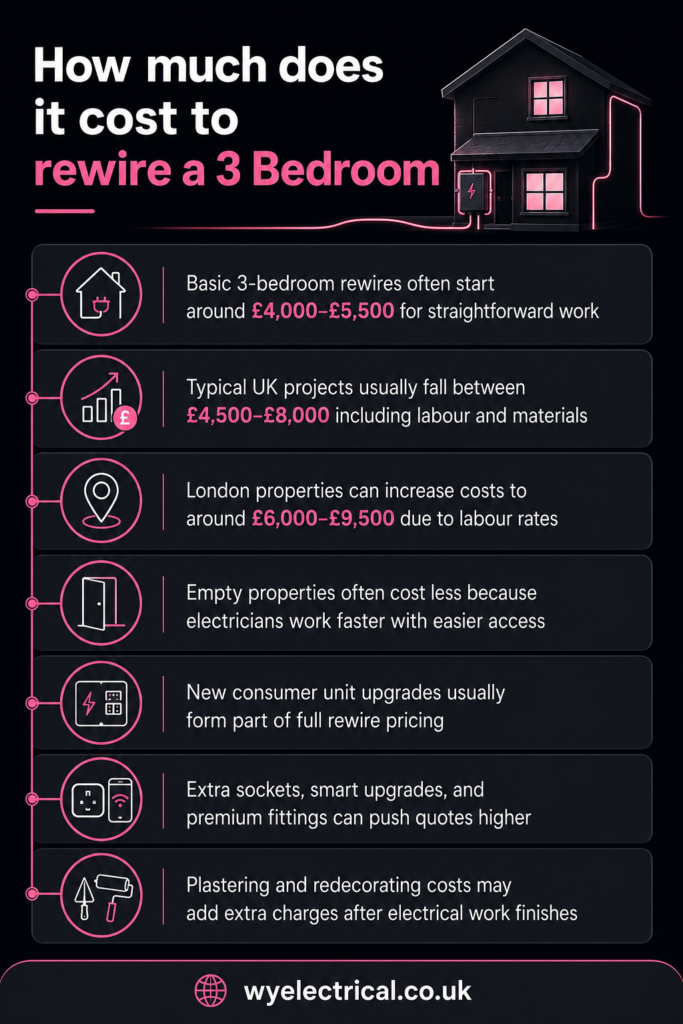
What Affects the Cost of Rewiring
Several property-specific factors push rewiring costs up or down beyond the basic bedroom count.
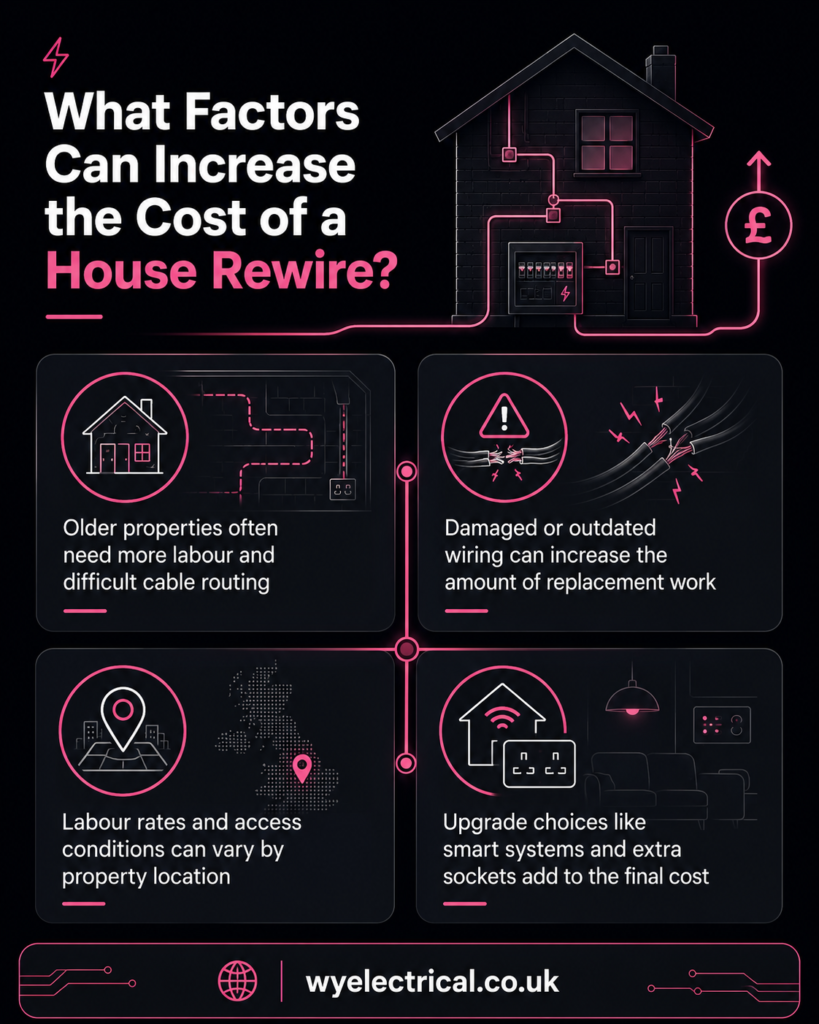
Each one changes labour time, material quantity, or both.
Property Age
Older properties often cost more to rewire because access is more difficult. Solid walls need chasing into brick or plaster, while period homes can have awkward layouts and longer cable runs.
Older housing stock also commonly contains outdated wiring that falls below modern safety standards. These factors increase labour time and complexity, which can push rewiring costs higher than those for newer properties.
Wiring Condition
Damaged or outdated systems need full replacement rather than partial upgrades. Rubber or fabric-insulated cables cannot be repaired safely. Mixed systems from multiple decades create compatibility problems.
Ageing wiring creates real fire risk beyond just inconvenience. Electrical wiring, cabling, and plugs cause a significant proportion of domestic electrical fires.
Research on Merseyside homes between 2011 and 2022 found that these components caused 57.8 percent of electrical fire injuries. The same study showed 36.7 percent of these injuries happened overnight between 22:00 and 06:00 when detection is slower. That timing creates serious safety risks because people are asleep when fires start.
Location
Labour rates vary across the UK, with London and the southeast usually charging more than northern regions. Skilled electrical work carries higher costs due to training, certification and responsibility requirements.
Labour often makes up the largest part of rewiring costs. Travel time, parking restrictions and difficult property access can also increase overall costs in both urban and rural areas.
Upgrade Choices
Additional sockets, smart systems, upgraded fittings, and improved consumer units all increase the bill. Extra circuits for home offices or electric vehicle charging add material and labour costs. Future-proofing choices made during the rewire save money compared to adding them later.
How Long It Takes to Rewire a 3 Bedroom House
A standard 3-bedroom rewire takes one to two weeks, depending on property layout and access.
Occupied homes take longer because electricians work around furniture and daily routines. Empty properties allow faster unrestricted access to all areas.
Property layout affects speed considerably. Open-plan layouts with accessible cable routes progress faster than properties with solid walls. Period features or listed building restrictions slow work because of heritage protection requirements.
Access, occupancy, and property layout all change how quickly the work progresses. Complex layouts with multiple floors or extensions add time. Coordination with other trades like plasterers extends the overall timeline.
How Room Type Affects Electrical Installation Costs
Different rooms have different electrical demands and safety requirements. That affects both material costs and labour time during installation.
Electrical Planning for Modern Kitchens
Kitchens need multiple dedicated circuits for appliances. Ovens, hobs, dishwashers, and washing machines each require proper capacity planning. Socket placement around worktops needs careful positioning under current regulations.
Appliance load calculations determine circuit sizing.
Underpowered circuits trip repeatedly while oversized circuits waste money. Kitchen rewiring takes longer because of the high socket and appliance count.
Bathroom Electrical Work
Bathrooms have zoned safety requirements that restrict where sockets and switches can go. Special fittings rated for damp environments cost more than standard accessories. RCD protection becomes mandatory for all bathroom circuits.
Lighting and extraction fans need careful circuit planning. Shaver sockets and heated towel rails add complexity. Bathroom electrical work requires extra labour time because of strict safety compliance.
Electrical Costs for Garages and Loft Spaces
Garages and lofts need additional cabling beyond the main house circuits. Cable runs to outbuildings or unconverted spaces add material costs. These areas often need separate consumer units or sub-distribution boards.
Loft conversions require full circuit extensions with proper insulation protection. Garage supplies for power tools or electric vehicle charging need higher capacity circuits. The extra cable length and circuit protection increase project costs considerably.
Hidden Costs to Be Aware Of
Several costs appear after the electrical work quote gets accepted. These typically involve making good after installation or dealing with unexpected property issues.
Plastering Costs After Electrical Work
Chasing walls and accessing wiring routes leave surfaces needing repair. Cable routes through plaster require filling, skimming, and redecorating afterwards. The extent depends on how much chasing is needed.
Some quotes include making good while others price it separately. Always clarify what the electrical quote covers before work starts.
Post-Installation Repair Costs
Restoring walls, ceilings, flooring, and other disturbed areas happens after installation finishes. Floorboards need lifting to run cables between floors. Ceiling access for lighting circuits creates holes that need patching.
Redecorating costs vary widely depending on room size and finish quality. Budget separately for painting, wallpapering, or flooring repairs unless the electrician includes this work.
Additional Socket Charges
Adding more sockets after work starts increases material and labour costs. Homeowners often request additional points once they see the new layout. Each extra socket needs cable, back boxes, and connection time.
Plan socket positions carefully during the survey stage. Adding them later means revisiting rooms and disrupting finished areas.
Future Proofing Upgrade Costs
Upgraded fittings, smart controls, consumer unit improvements, or future-proofing additions all cost extra. USB sockets, smart switches, or surge protection add to material bills. Higher-specification consumer units with more ways cost more than basic models.
Consider which upgrades add genuine value versus nice-to-have features. Some future-proofing pays back through convenience while other additions rarely get used.
Unexpected Structural Issues
Hidden damage, difficult access, old construction methods, and property surprises may only appear once work begins. Rotten joists, asbestos, or concealed steelwork all affect how cables get routed.
These issues add labour time and sometimes require specialist subcontractors.
Can You Stay in a House During Rewiring
You can stay in the house during rewiring, but expect significant disruption. Power gets isolated to rooms being worked on each day. Dust, noise, and room restrictions affect daily routines throughout the project.
Temporary power loss means some rooms become unusable for periods. Kitchens and bathrooms get prioritised to minimise inconvenience. Furniture needs moving, and floors need protecting from debris.
Temporary relocation may help in some situations. Families with young children or people working from home often find it easier to stay elsewhere. The disruption level depends on how many rooms get rewired simultaneously and whether you can isolate work areas.
UK Rules for Rewiring a House
House rewiring must follow specific UK regulations and safety standards. These rules cover how electrical work gets installed, tested and certified. Knowing the basics before work starts can help avoid delays, compliance issues and costly mistakes.
Some of the main rules and requirements to understand include:
Part P Building Regulations
Part P of the Building Regulations covers electrical safety in homes across England and Wales. Rewiring work must be notified and certified through Building Control or completed by a registered electrician using a competent person scheme.
This notification process confirms the work meets legal requirements for design, installation, inspection and testing.
UK Wiring Standards
BS 7671:2018+A2:2022 became the UK wiring standard for new installations, additions and alterations on 28 March 2022. It sets technical requirements for circuit protection, earthing and residual current device (RCD) protection.
Guidance from NICEIC recommends using a qualified registered electrician rather than attempting DIY work because of the technical and certification requirements involved.
Inspection and Certification
Electrical work finishes with inspection and testing to confirm everything meets current standards. The electrician then issues an Electrical Installation Certificate as proof of compliance.
Regular inspections can help identify problems early. Recommended inspection intervals are every 10 years for owner-occupied homes and every 5 years for private rented properties in England and Scotland.
Fire Safety Risks
Fire safety remains one of the strongest reasons to upgrade ageing electrical systems. England recorded 23,010 accidental dwelling fires in the year ending March 2024.
Electrical distribution was the largest specified ignition source in 16% of non-dwelling building fires. Older wiring systems often carry greater risks because they predate modern safety standards.
Our domestic electrical inspection and testing service helps identify wiring problems before they become failures or fire risks. Professional assessments can also determine whether repairs are enough or whether a full rewire makes more sense.
Mistakes That Increase Electrical Costs
Rewiring costs can rise quickly when key details get overlooked. A few planning mistakes often create extra expenses, delays and avoidable problems during the project.
Some of the most common cost-related mistakes include:
| Mistake | Why It Causes Problems | How to Avoid It |
|---|---|---|
| Choosing the cheapest quote | Missing items, poor materials, or extra certification costs can appear later | Compare what each quote includes |
| Underestimating disruption | Last-minute decisions can create stress and unexpected costs | Plan temporary arrangements early |
| Ignoring certification requirements | Missing paperwork can affect insurance and future property sales | Use a registered electrician |
Small decisions at the start can have a big impact on overall costs. Cheap quotes and rushed planning often create more problems later.
Good preparation usually saves both time and money. Clear expectations, proper certification and careful planning help keep rewiring projects running more smoothly.
FAQs
How much does it cost to rewire a 3 bed house UK?
Typically £3,000 to £7,000 depending on property age, condition, and location. Older properties or complex layouts cost more.
How long does rewiring take?
One to two weeks for a standard 3-bedroom house. Empty properties take less time than occupied homes.
Can I stay in my house during rewiring?
Yes, but expect disruption from power cuts, dust, noise, and restricted room access throughout the project.
Does rewiring include a new fuse box?
Yes. Consumer unit replacement happens during full rewires to meet current RCD protection and circuit capacity standards.
How do I know if my house needs rewiring?
Warning signs include frequent tripping, burning smells, flickering lights, old wiring types, or an EICR recommending replacement.
Conclusion
A 3-bedroom rewire costs £3,000 to £7,000 typically but varies with property age, condition, and upgrades. Part P compliance and BS 7671 standards apply to all domestic rewiring work. Plan for disruption and allow contingency for unexpected costs.
Need an accurate rewiring estimate for your property? Contact us today for a free quote and expert advice tailored to your home.
Sources
- https://researchonline.ljmu.ac.uk/
- https://assets.publishing.service.gov.uk/
- https://niceic.com/
