
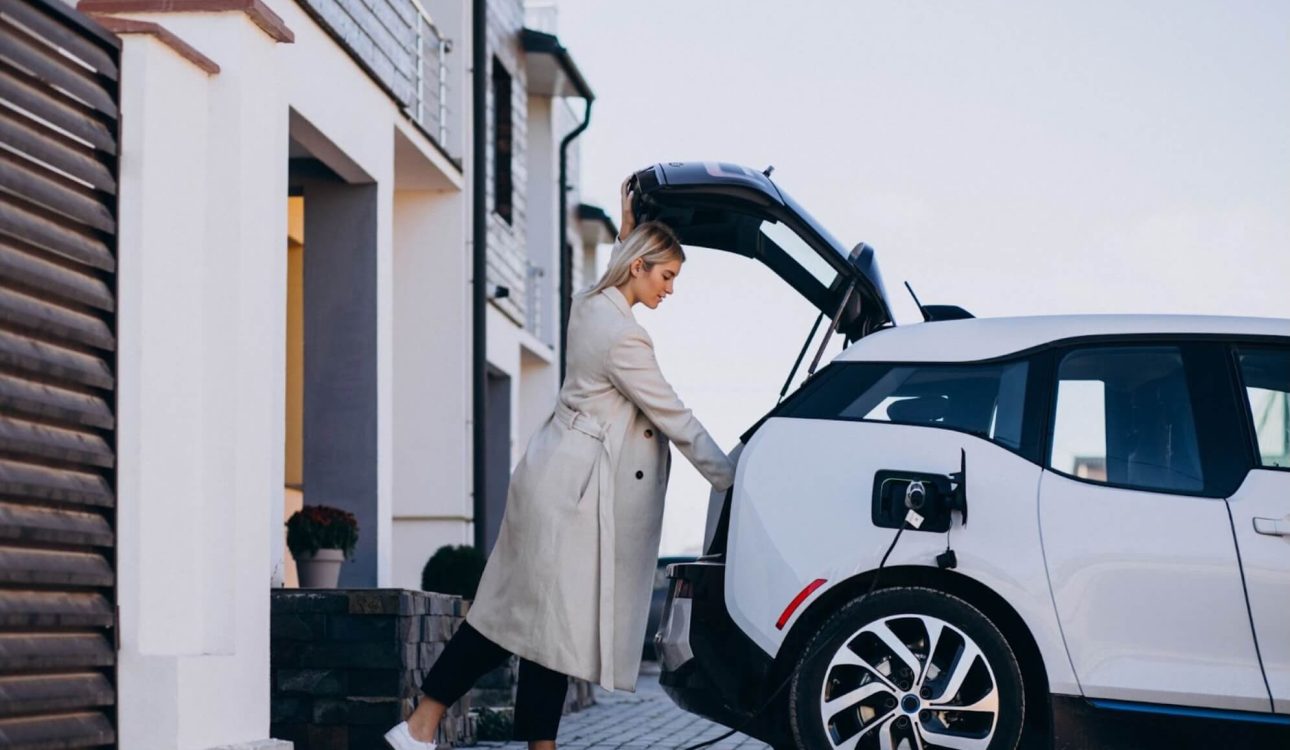

The 7kW charger is optimal for most UK homes, offering overnight charging without electrical upgrades. 3kW chargers are slow, while 22kW options require expensive three-phase power installation.
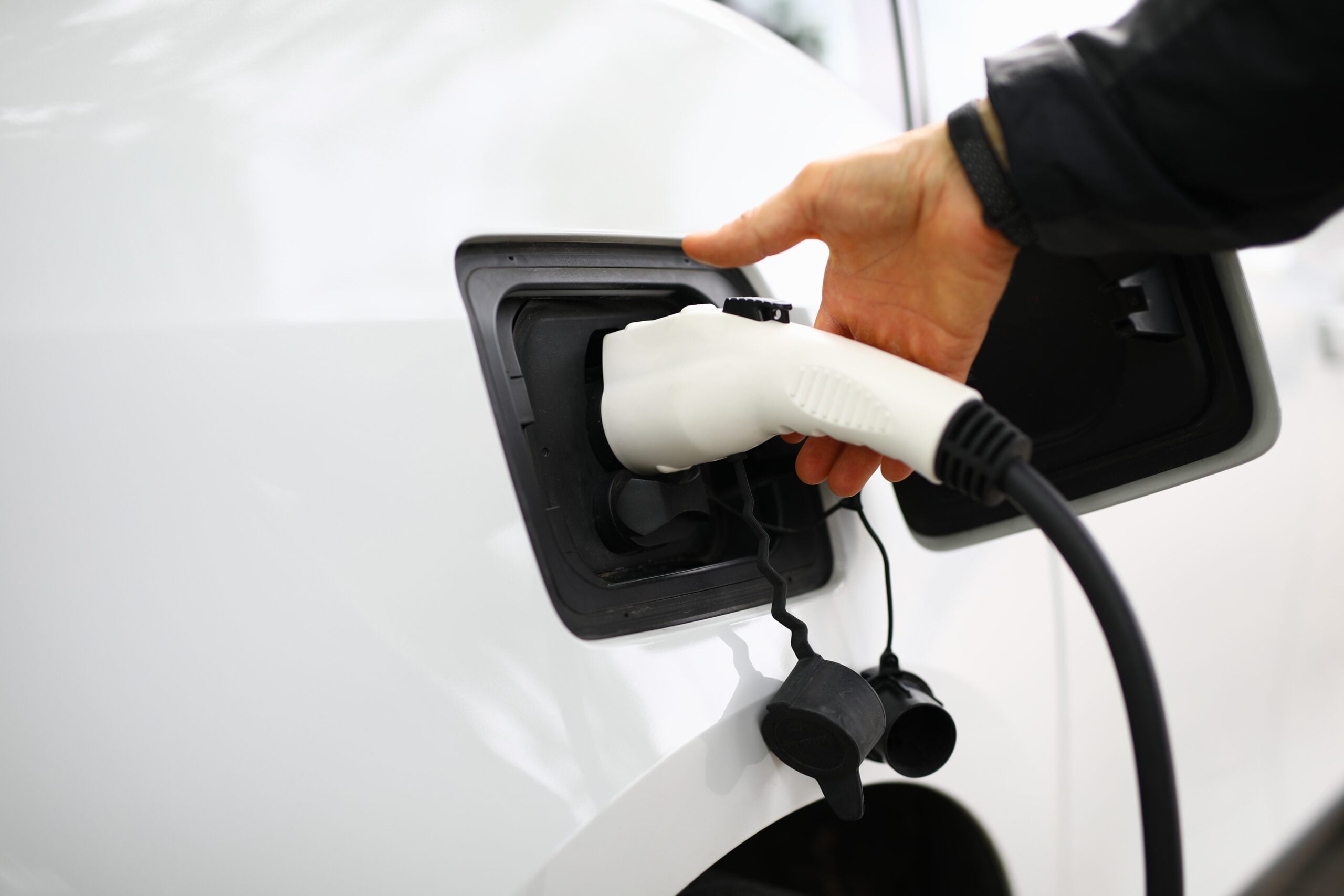
With electric vehicles becoming increasingly popular across the UK, choosing the right home charging solution has never been more important. The market offers various options from slow 3kW chargers to rapid 22kW units, but which is right for your home and vehicle? This guide cuts through the technical jargon to help you understand the real differences between these charging options.
Key Takeaways
- A 7kW charger is the most practical choice for most UK homes, providing full overnight charging without requiring electrical upgrades.
- 3kW chargers are increasingly outdated, taking 18-20 hours to fully charge modern EVs, while 22kW chargers require expensive three-phase power most homes don’t have.
- Smart charging during off-peak hours can reduce charging costs by up to 70%, from £15 to just £4.20 for a full 60kWh charge.
Why Choosing the Right EV Charger Size Matters
The size of your home EV charger directly affects how quickly your car’s battery fills up. You know the difference between filling a bathtub with a garden hose and a fire hose, right? That’s essentially what we’re talking about here.
Selecting the wrong charger size can lead to frustratingly slow charging times or unnecessary expense. If you commute daily and need a full charge overnight, a 3kW charger might leave you stranded. Conversely, paying thousands to upgrade to a 22kW system might be overkill if your car can’t actually use that much power.
Your home’s electrical system also plays a crucial role in determining what’s possible. Most UK homes simply aren’t wired to support the fastest charging options without significant upgrades.
What Are the Main Types of Home EV Chargers in the UK?
Let’s break down the three main charging options available for UK homes and what each offers in real-world terms.
3kW Chargers (Slow Charging)
The 3kW charger is the most basic option, often using your standard 13A socket or a basic wallbox. These chargers typically deliver between 2.3 and 3.0 kW of power.
With a 3kW charger, you’re looking at around 18-20 hours to fully charge a typical 60kWh EV battery. That’s basically an entire day of charging for a full battery.
These are increasingly seen as outdated for regular use, though they remain the cheapest option to install. Think of them as the emergency backup rather than your daily charging solution.
7kW Chargers (Fast Charging)
The 7kW charger is the gold standard for UK home charging. It delivers approximately 7.2-7.4kW of power through a dedicated wallbox installation.
This speed means a typical 60kWh EV battery charges in 8-9 hours, making overnight charging practical and convenient. Wake up, unplug, and drive away with a full battery every morning.
Most importantly, 7kW chargers work with standard UK domestic electrical systems without major upgrades. Nearly all modern EVs can accept this charging rate too.
22kW Chargers (Rapid Charging)
The 22kW home charger is the Ferrari of home charging options, delivering three times the power of a 7kW unit. This translates to charging a 60kWh battery in just 3-4 hours.
However, there’s a significant catch. These chargers require three-phase electrical power, which most UK homes simply don’t have. The upgrade costs can be substantial, starting from £1,500 but typically ranging between £3,500-£5,500.
Even more importantly, many EVs can’t actually accept 22kW of AC power due to limitations in their onboard chargers. Many popular models cap at 11kW, meaning they’ll never use the full capacity of a 22kW unit.
Here’s a simple comparison table to help visualise the differences:
| Charger Size | Power Supply | Charging Time (60kWh EV) | Suitable For |
|---|---|---|---|
| 3kW | Single-phase | 18–20 hours | Occasional use, PHEVs, small batteries |
| 7kW | Single-phase | 8–9 hours | Overnight charging, most UK homes |
| 22kW | Three-phase | 3–4 hours | Multiple EVs, 22kW-compatible vehicles |
Installation Requirements for Home EV Chargers
The installation process varies significantly depending on which charger you choose.
Single-Phase vs Three-Phase Power
Most UK homes operate on what’s called single-phase power. This standard domestic supply limits your maximum charging speed to 7kW (or technically, up to 7.4kW).
Three-phase power, necessary for 22kW charging, is typically found in commercial buildings or larger properties with unusually high power demands. It’s easy to check which one you have by examining your fuse box:
A single-phase supply will have one main fuse where power enters your home, while a three-phase will have three 100amp fuses.
Installation Costs and Considerations
For 7kW chargers, installation is straightforward for most properties with off-street parking. Professional installation typically costs between £500-£800, although government grants can reduce this by up to £350.
For 22kW chargers, you’ll first need to determine if you have three-phase power. If not, upgrading your electrical supply is a significant project involving your Distribution Network Operator (DNO).
These upgrades start from £1,500 but commonly range between £3,500-£5,500, excluding VAT. In some complex cases, costs can reach £15,000. That’s before you even purchase the more expensive 22kW charger unit itself.
Since June 2022, all new UK home chargepoints must be “smart” by law, featuring off-peak scheduling capabilities and grid protection features.
Smart Charging Features and Running Costs
Modern EV chargers do far more than just pump electricity into your car. They’re increasingly sophisticated devices that can save you serious money.
Smart Charging Capabilities
Today’s chargers can automatically schedule charging for off-peak hours when electricity rates are lowest, often cutting your costs by 50% or more. Many can be controlled via smartphone apps, letting you monitor and manage charging remotely.
Some smart chargers can even integrate with solar panels or home battery systems to maximise the use of green energy. The most advanced units can respond to grid signals, potentially earning you money by supporting the national grid during peak times.
Running Cost Comparison
The running costs of your EV charger depend primarily on your electricity tariff rather than the charger size. However, a smart charger that takes advantage of off-peak rates makes a massive difference:
Standard rate charging: Approximately 25p/kWh = £15 for a full 60kWh charge
Off-peak smart charging: As low as 7p/kWh = £4.20 for the same charge
That’s a potential saving of over 70% simply by charging during off-peak hours, typically overnight.
Which EV Charger Is Best for You?
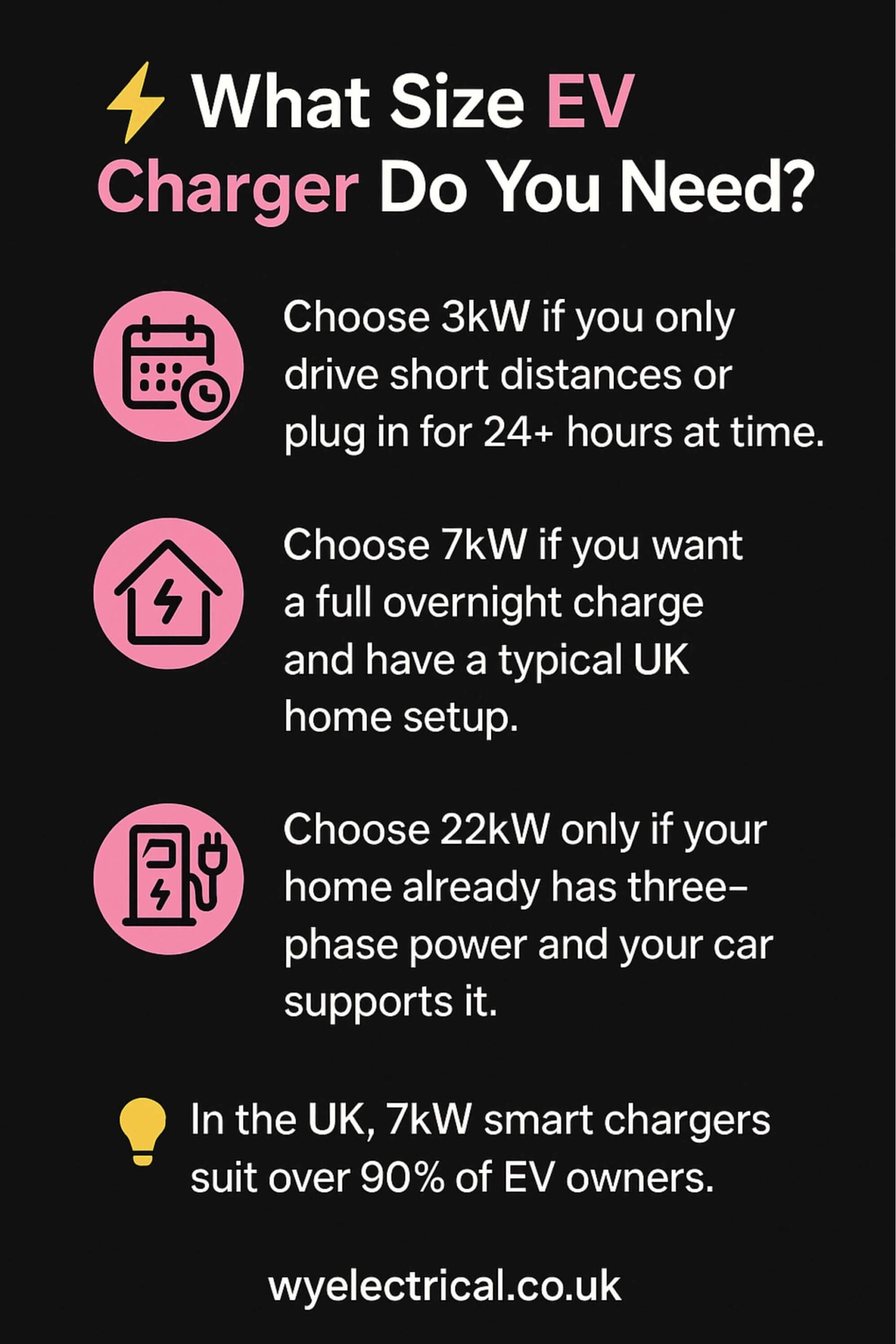
For the vast majority of UK homeowners, a 7kW smart charger offers the perfect balance of charging speed, installation simplicity, and cost-effectiveness.
A 7kW unit will fully charge most EVs overnight during off-peak hours, which aligns perfectly with most people’s driving and parking habits. It requires no expensive electrical upgrades and works with virtually all electric cars.
The 3kW option is increasingly obsolete for regular charging, offering inadequate charging speeds for modern EVs with larger batteries. They make sense only as occasional backup solutions.
A 22kW charger only makes practical and financial sense if you meet all three of these criteria:
- You already have three-phase power installed
- Your EV can accept 22kW AC charging (many cannot)
- You genuinely need rapid turnaround times at home
For most drivers, even those with high daily mileage, a 7kW charger paired with occasional use of public rapid chargers provides the most practical solution.
Final Verdict
For most UK homeowners, a 7kW smart charger is the sweet spot for home EV charging. It provides the perfect balance of charging speed, installation simplicity, and running costs. Unless you already have three-phase power and an EV that supports 22kW charging, upgrading to a 22kW system rarely makes financial sense. The thousands you’d spend on electrical upgrades would take years to recoup through slightly faster charging times. Ready to get your home EV charger installed? At West Yorkshire Electrical, we provide expert EV charger installation tailored to your specific needs. Our NICEIC-approved electricians ensure safe, compliant installations with smart tariff setup to maximise your savings.For most drivers, even those with high daily mileage, a 7kW charger paired with occasional use of public rapid chargers provides the most practical solution. If you’re comparing options, our guide to the top EV home chargers in the UK explains what works best for different homes and driving needs.
FAQs
Do I need three-phase power for a 22kW charger?
Yes, absolutely. A 22kW home charger requires a three-phase electrical supply. Most UK homes only have single-phase power, which limits charging to a maximum of 7kW.
Is 7kW fast enough for daily use?
For most EV owners, 7kW charging is perfectly adequate. It delivers a full charge overnight (8-9 hours for a typical 60kWh battery), which suits the majority of daily driving patterns.
Can I install a 22kW charger at home?
You can install a 22kW charger if your home has three-phase power or you’re willing to pay for an upgrade. However, check if your EV can actually accept 22kW AC charging, as many popular models are limited to 7kW or 11kW.
How long does it take to charge a Tesla on a 7kW charger?
Charging times vary by model, but a Tesla Model 3 with a 60kWh battery takes approximately 8-9 hours for a full charge on a 7kW home charger. The Long Range version with an 82kWh battery would take around 11-12 hours.
Can my EV use a 22kW charger to its full capacity?
Only certain EVs can utilise the full 22kW charging capacity. Many popular models like the Nissan Leaf, Kia e-Niro, and even some Tesla models have onboard chargers limited to 7kW or 11kW, meaning they can’t take advantage of a 22kW supply.
